
'Violence Will Be Met With Violence': US Launches Strikes On Iran After Drone Hits Cargo Ship In The Strait Of Hormuz
The US struck Iranian missile and radar sites after a drone hit a cargo ship in the Strait of Hormuz, testing a week-old interim deal as UN evacuations halt and Israel-Lebanon announce a peace framework the same day.
- World News
- 5 min read

;'%3e%3cpath%20d='m8,15.99c4.41,0,7.99-3.58,7.99-7.99S12.41,0,8,0,0,3.59,0,8s3.58,7.99,7.99,7.99Z'%20style='stroke:%23fff;%20stroke-miterlimit:10;%20stroke-width:.02px;'/%3e%3cpath%20d='m3.08,3.37l3.82,5.11-3.84,4.15h.87l3.37-3.64,2.72,3.64h2.94l-4.04-5.39,3.58-3.87h-.86l-3.1,3.35-2.5-3.35h-2.94Zm1.27.64h1.35l5.97,7.99h-1.35l-5.97-7.99Z'%20style='fill:%23fff;'/%3e%3c/g%3e%3c/svg%3e)


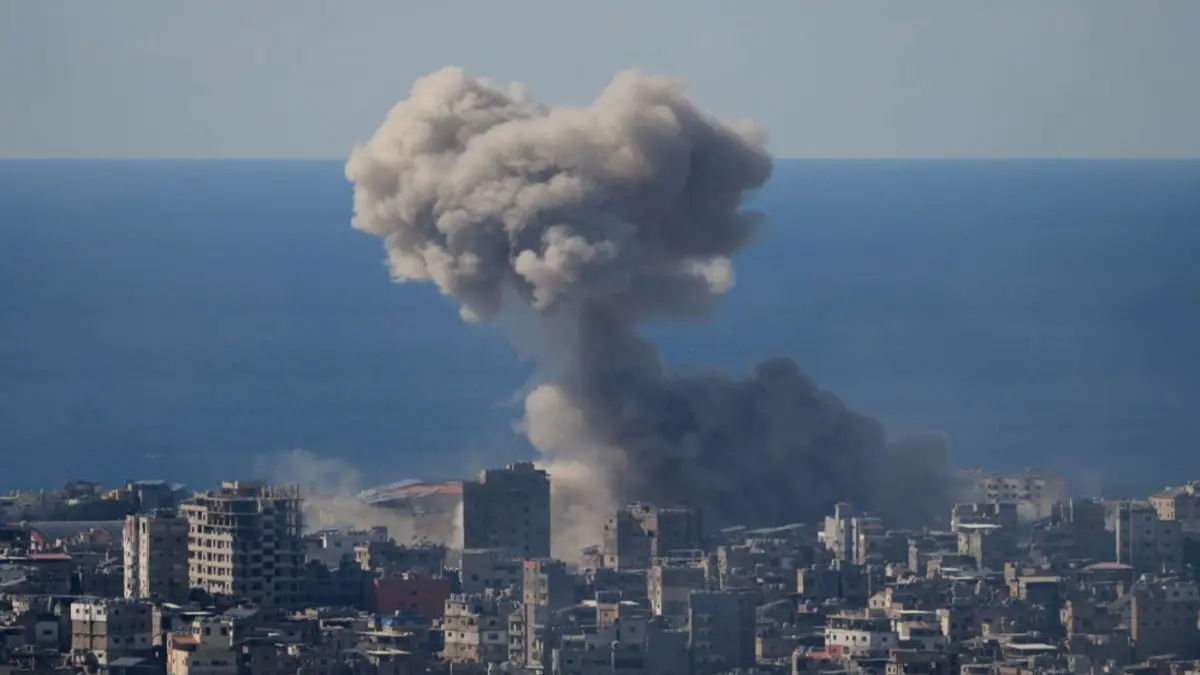
Tehran: The United States carried out strikes against Iran on Friday in retaliation for a drone attack a day earlier on a cargo vessel in the Strait of Hormuz. The incident represents the most serious challenge so far to an interim understanding reached a week ago between Washington and Tehran, which was intended to start winding down their months-long war and restore access to the critical waterway.
Prior to the strike, US President Donald Trump had criticised the drone strike, saying it breached the ceasefire. The US attacked Iran shortly after Trump, while talking to the reporters, declared, “You’ll find out,” when asked whether America would respond. US Central Command (CENTCOM) confirmed that the military targeted missile and drone sites along with coastal radar installations in Iran.
“I don’t like the fact that they took a shot yesterday, actually four of them,” Trump said at the White House shortly before the retaliatory strikes were launched. When questioned on why force was being used, given his repeated claims that talks with Tehran were progressing well, Trump remarked on Iran, “They’re a little bit different.” He then abruptly ended the exchange and reporters were escorted from his office.
Ceasefire Claims Clash As Tensions Escalate
Ebrahim Azizi, who chairs the Iranian parliament’s national security commission, addressed Trump on social media earlier on Friday, stating, “The Strait of Hormuz is governed by Iran, so: Respect the rules” and warned him not to mistake control for escalation. Azizi stressed, “This is not a violation of the ceasefire; it is ceasefire management.”
Advertisement
On Friday evening, Vice President JD Vance posted on social media that Iran should “pick up the phone” if it had concerns about the ceasefire arrangement. “But violence will be met with violence,” Vance added. The US strikes on Iran concluded about an hour after US CENTCOM first announced the military operation online, according to a US official familiar with the situation.
Earlier, on Thursday, the British military reported that a container ship had been struck by a projectile off the coast of Oman, just hours after Iran warned vessels to avoid using the route. The United Kingdom Maritime Trade Operations centre announced that no injuries were recorded. The timing is delicate for Washington and Tehran as they attempt to negotiate a permanent end to the war. Iran has repeatedly asserted its authority over the Strait of Hormuz, even after the interim deal reached with the US last week.
Advertisement
Shipping Evacuations Halted As UN Route Comes Under Threat
The attack on the cargo vessel occurred as a United Nations (UN) maritime agency began an operation this week to move stranded ships out of the strait. The effort relied on an alternative passage hugging the shores of Oman rather than transiting the central part of the strait. The International Maritime Organization (IMO) suspended the evacuations following the strike and said on Friday that they would not restart until assurances were in place that other ships would not be targeted.
IMO Secretary General Arsenio Dominguez stated that about 115 ships had managed to leave the strait in recent days, with around 500 still remaining in the area. The opening of the alternative route had been expected to ease pressure on the global economy and reduce Iran’s leverage in the continuing peace discussions with the US. The negotiations between the two sides are ongoing, covering issues such as securing passage through the key strait and ascertaining the future of Iran’s stockpile of highly enriched uranium. The interim agreement provides a 60-day period to finalise details.
78 Vessels Transited The Strait On Wednesday
In the meantime, the shipping analysts noted that the drone strike had undermined a week of growing commercial confidence in the Strait of Hormuz. The marine data company Windward posted on X that while the strait remained operationally open with 43 transits logged after the incident, the “pace of normalisation” has slowed. On Wednesday, before Thursday’s drone strike, 78 vessels transited the strait, which was the highest figure since the war began, though still below pre-war averages of 130 or more per day.
At least two tankers turned back while attempting to use the UN-backed route near Oman after Iran insisted that vessels follow only Tehran-approved passages, according to marine data and analytics firm Lloyd’s List Intelligence. Over 2 dozen ships were still transiting the strait’s southern route after the attack, Lloyd’s said on Friday.
Parallel Diplomatic Move Sees Israel-Lebanon Framework Signed
On the other hand, the same day, ambassadors from Israel and Lebanon announced an agreement deemed as a step towards peace after months of fighting between Israeli forces and the Lebanese militant group Hezbollah. Lebanon's ambassador to the US, Nada Hamadeh, said that the framework was aimed at “enabling our people to go back to their land and allowing all Lebanese to live in peace, security, and prosperity".
Israeli Prime Minister Benjamin Netanyahu called the plan a “great achievement” for Israel. “The most important thing, first and foremost, is that Israel will remain in the security zone in southern Lebanon,” he said, adding that the Israeli forces would stay until Hezbollah was disarmed and no longer posed a threat to Israel.
Further details regarding the fresh escalation in the Strait of Hormuz are awaited.