
‘War Must End In A Way That It Doesn’t Repeat’: Iran FM Araghchi Says Strait Of Hormuz Closed Only To 'Enemies' US, Israel
Iranian Foreign Minister Araghchi emphasized that while there has been no direct communication with Washington, Tehran is not seeking a mere ceasefire; rather, any resolution must guarantee that such a conflict never recurs.
- World News
- 5 min read

;'%3e%3cpath%20d='m8,15.99c4.41,0,7.99-3.58,7.99-7.99S12.41,0,8,0,0,3.59,0,8s3.58,7.99,7.99,7.99Z'%20style='stroke:%23fff;%20stroke-miterlimit:10;%20stroke-width:.02px;'/%3e%3cpath%20d='m3.08,3.37l3.82,5.11-3.84,4.15h.87l3.37-3.64,2.72,3.64h2.94l-4.04-5.39,3.58-3.87h-.86l-3.1,3.35-2.5-3.35h-2.94Zm1.27.64h1.35l5.97,7.99h-1.35l-5.97-7.99Z'%20style='fill:%23fff;'/%3e%3c/g%3e%3c/svg%3e)


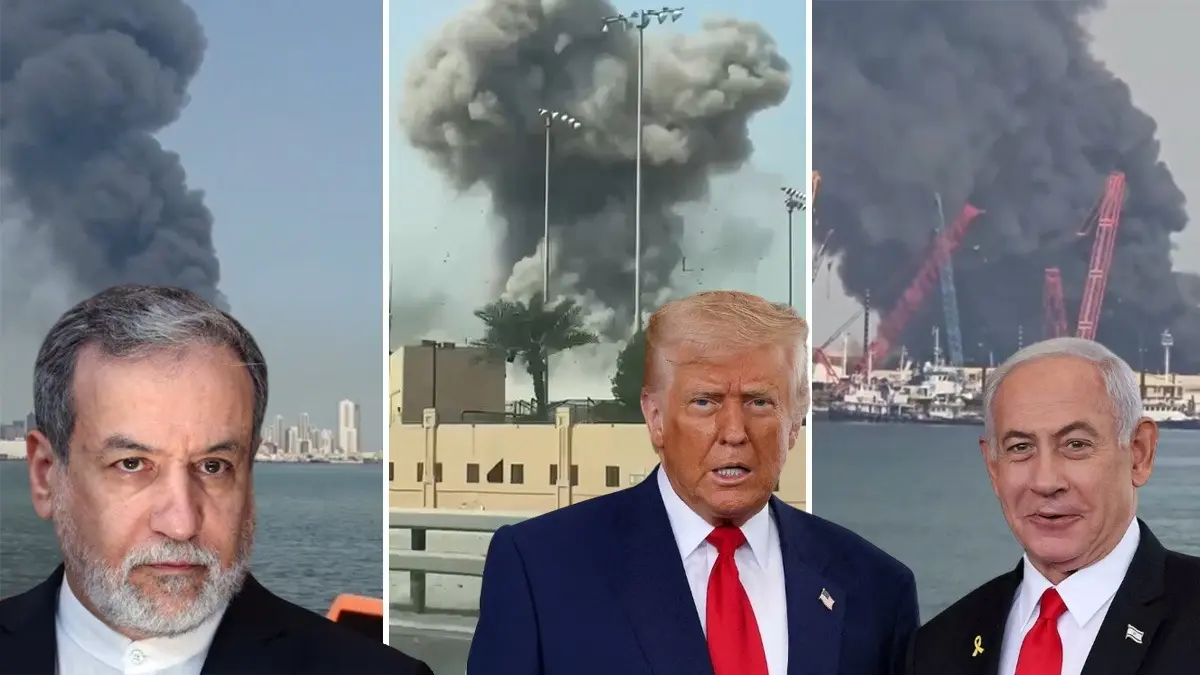
New Delhi: Amid the ongoing conflict in West Asia, Iranian Foreign Minister Abbas Araghchi clarified that while the Strait of Hormuz remains operational for global maritime traffic, it is strictly off-limits to vessels from the United States and Israel.
"As a matter of fact, this Straits of Hormuz is open. It is only closed to the tankers and ships belonging to our enemies, to those who are attacking us and the allies. Others are free to pass," Araghchi told MS Now in an interview on Saturday.
Araghchi observed that while many vessels are "choosing" to avoid the route due to safety anxieties, he maintained that these decisions are independent of Iranian policy.
No messages exchanged with US
Araghchi also emphasized that while there has been no direct communication with Washington, Tehran is not seeking a mere ceasefire; rather, any resolution must guarantee that such a conflict never recurs stating, “war needs to end in a way that ensures it doesn't happen again.”
Advertisement
Reflecting on a year he described as "unprecedented" for the Islamic Republic, marked by the martyrdom of the Supreme Leader, Araghchi characterized the period as one of immense sacrifice balanced by national pride and resilience.
He further claimed that the United States, after failing to force an unconditional surrender, is now desperately lobbying other nations to help reopen the Strait of Hormuz, concluding that "the U.S. has already learned a good lesson."
Advertisement
Surge in violence
Meanwhile, data from the UK Maritime Trade Operations indicates that the region has seen a surge in violence, with at least sixteen ships targeted in the Gulf and the Strait of Hormuz since the outbreak of hostilities on February 28.
These remarks follow a U.S. military operation conducted less than 24 hours earlier, which targeted defense installations on Kharg Island, a vital hub for Iran's oil industry.
The regional conflict was ignited by a massive joint military operation by the U.S. and Israel on February 28, which resulted in the death of the 86-year-old Supreme Leader Ali Khamenei.
In response, Iran launched retaliatory strikes against several Gulf states that host American military facilities, causing widespread disruptions to international flights, driving up oil prices, and sparking fears of an imminent global energy crisis.
Trump urges nations for help
Meanwhile, US President Donald Trump demanded about seven countries to send warships to keep the Strait of Hormuz open, but his appeals have brought no commitments as oil prices soar during the Iran war.
“I’m demanding that these countries come in and protect their own territory, because it is their own territory,” Trump said about the strait, claiming the shipping channel is not something the United States needs because of its own access to oil.
Why Strait of Hormuz is important?
Situated between Oman and Iran, the Strait of Hormuz is a vital maritime choke point that connects the Persian Gulf to the Arabian Sea.
Despite its narrow 21-mile width and restricted 2-mile shipping lanes, it handles approximately 20% of global oil consumption, facilitating the daily passage of over 20 million barrels of petroleum products.
While major exporters like Qatar and several OPEC nations rely heavily on this route to reach Asian markets, Saudi Arabia and the UAE have recently boosted exports and utilized bypass pipelines, capable of rerouting roughly 2.6 million barrels per day, as part of strategic contingency efforts to circumvent the strait.