
Updated 6 April 2022 at 06:39 IST
What is Digital Euro? Here's all about EU's digitised form of Central Bank money
Europe's virtual money, inspired by cryptocurrency, will be similar to China’s 'digital yuan,' the largest central bank digital currency (CBDC).
- World News
- 4 min read

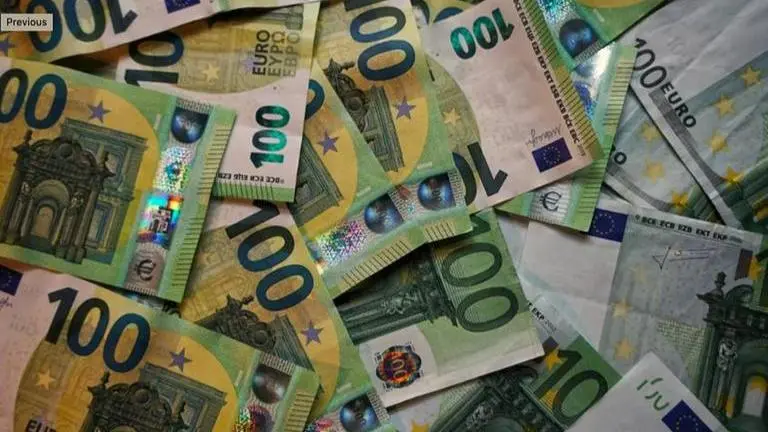
European Commission announced on Wednesday that it is planning to pass a bill for the approval of the digital Euro by early 2023. The law will make it legal for the European Central Bank to start technical processes to introduce the "virtual version" of a Euro banknote or a coin, European Union Commissioner for Financial Services Mairead McGuinness announced. Europe's virtual money, inspired by cryptocurrency, will be similar to China’s 'digital yuan,' the largest central bank digital currency (CBDC). The EU CBDC could launch the digital euro as soon as 2025.
When did EU come up with 'virtual currency' idea?
EU has been largely mulling introducing a CBDC-like currency for over several years now and even kick-started the project earlier last year, in 2021. European Central Bank (ECB) President Christine Lagarde had announced on Twitter in July 2021 that the European banks have “decided to move up a gear and start the investigation phase of the digital Euro project.”
"We have decided to move up a gear and start the investigation phase of the digital Euro project. In the digital age people and firms should continue to have access to the safest form of money – central bank money," Lagarde wrote in a post.
She continued, “in digital age people and firms should continue to have access to the safest form of money — central bank money.”
The latter also emphasized that the demand for virtual currency has finally seeped into the world. EU "should respond to that demand and make sure that we have a solution that is European-based, that is secure, that is available under friendly terms, that can be used as a means of payment at reasonable terms," European Central Bank (ECB) President Christine Lagarde said in a statement. She noted that EU must not jeopardize the whole banking system, "which should be part and parcel of the proposal.”
What sparked the trend of 'digital cash'?
As digital currencies such as Bitcoin raised to prominence over the past few years, there are strong arguments for central banks to start issuing “digital cash”. And therefore, the Governing Council of the European Central Bank (ECB) decided to launch the investigation phase of its own digital euro project to keep pace with the rising trend. In 2021, it announced that there were no technical obstacles identified during the preliminary experimentation phase. Following the key announcement, the President of the Eurogroup, Paschal Donohoe congratulated the EU's Governing Council and expressed his full support for the project.
Advertisement
“It has been nine months since we published our report on a digital Euro. In that time, we have carried out further analysis, sought input from citizens and professionals, and conducted some experiments, with encouraging results. All of this has led us to decide to move up a gear and start the digital Euro project”, meanwhile ECB President Christine Lagarde said in a statement.
“Our work aims to ensure that in the digital age citizens and firms continue to have access to the safest form of money, central bank money”.
What is Digital Euro?
According to Deutsche Bundesbank Eurosystem, a 'digital Euro' would be a digital form of central bank money, in this case, Euro. It could be used the same way as cash but only in the virtual form. The Digital Euro, despite its virtual nature, is a retail CBDC (Central Bank Digital Currency). This implies that the Eurosystem would supply households with an additional form of central bank money that can be spent or saved easily, efficiently, quickly, and securely. EU's investigation involved examining the virtual currency to ensure that it met its objectives to be a riskless, accessible, and efficient form of digital central bank money. EU now needs a legislative framework to legalize the digital Euro, and for that, it needs to hold meetings and take the consent of the European co-legislators.
ECB will engage with the European Parliament and other European policymakers to assess the possible impact of a digital Euro on the market. It will also select suitable design options to ensure privacy and avoid risks for Euro area citizens, intermediaries, and the overall economy. Additionally EU will appoint a Market Advisory Group (MAG) to take account of prospective users’ and distributors’ views of a digital Euro.
Advertisement
Published By : Zaini Majeed
Published On: 6 April 2022 at 06:39 IST