
What Is Meteotsunami- The Phenomenon That Struck Argentina’s Atlantic Coast Killing One, Injuring 35
The Atlantic coast of Argentina was struck by a rare and lethal weather event known as a meteotsunami, resulting in one fatality and over 35 injuries. Read know to know what it is.
- World News
- 3 min read

;'%3e%3cpath%20d='m8,15.99c4.41,0,7.99-3.58,7.99-7.99S12.41,0,8,0,0,3.59,0,8s3.58,7.99,7.99,7.99Z'%20style='stroke:%23fff;%20stroke-miterlimit:10;%20stroke-width:.02px;'/%3e%3cpath%20d='m3.08,3.37l3.82,5.11-3.84,4.15h.87l3.37-3.64,2.72,3.64h2.94l-4.04-5.39,3.58-3.87h-.86l-3.1,3.35-2.5-3.35h-2.94Zm1.27.64h1.35l5.97,7.99h-1.35l-5.97-7.99Z'%20style='fill:%23fff;'/%3e%3c/g%3e%3c/svg%3e)


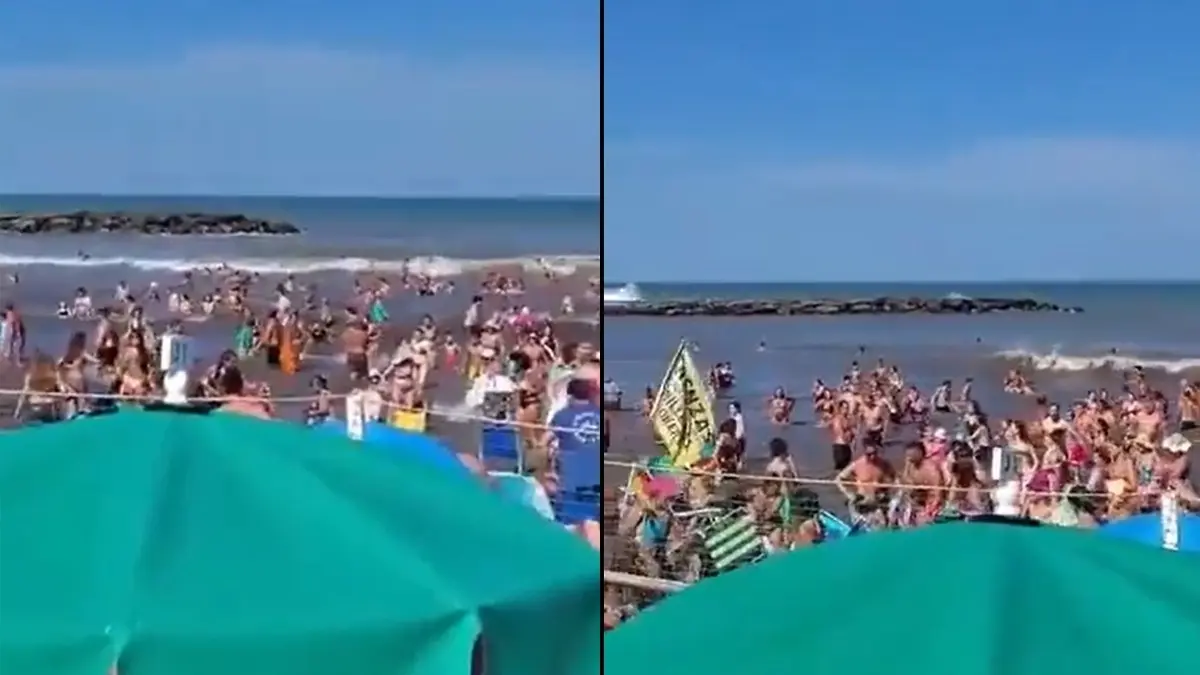
New Delhi: A rare and deadly meteotsunami struck the Atlantic coastline of Argentina's Buenos Aires Province, leaving one person dead and at least 35 injured on Monday afternoon.
According to local media and civil defense officials, the surge hit around 4:15 p.m. near the popular resort city of Mar del Plata.
The lone fatality occurred in Santa Clara del Mar, where a young man was swept away by the sudden wall of water and thrown against coastal rocks. In addition to the dozens of minor injuries reported, another individual suffered a heart attack during the chaos.
Provincial authorities described the event as a sudden, extraordinary rise in sea levels. In response, emergency services, including health, security, and tourism agencies, were deployed to the region, and beach resorts were immediately evacuated as a safety precaution.
Advertisement
What is Meteotsunami?
A meteotsunami (or meteotsunami in Spanish) is a rare meteorological phenomenon that behaves like a traditional tsunami but is triggered by weather patterns rather than earthquakes.
A meteotsunami is a "meteorological tsunami." While a regular tsunami is caused by underwater seismic activity (earthquakes or landslides), a meteotsunami is a tsunami-like wave generated by atmospheric disturbances.
Advertisement
It often begins with the sea receding several meters from the shore, followed by a rapid, powerful surge of water that can reach heights of several meters (in the recent 2026 case, witnesses described a wave over 5 meters high).
In various parts of the world, these are known as rissaga (Spain), abiki (Japan), or marrubio (Italy).
Why does it happen?
Meteotsunami occurs through a specific combination of atmospheric and oceanic conditions.
- Air Pressure Disturbances: Fast-moving weather events, such as severe thunderstorms, squalls, or rapid changes in barometric pressure, create a small wave on the ocean surface.
- Resonance (The "Swing" Effect): If the speed of the moving storm matches the speed of the wave in the water, the wave absorbs energy from the atmosphere and grows significantly. This is like pushing a child on a swing at the perfect moment to make them go higher.
- Coastal Amplification: As this wave enters shallow water or narrow inlets (like the bays around Mar del Plata), the seafloor topography forces the water upward, turning a small swell into a dangerous "mini tsunami.
Meteotsunami vs. Regular Tsunami
While they look almost identical when they hit the shore, their origins and scales are very different. A meteotsunami is driven by atmospheric conditions such as rapid changes in air pressure, severe storms, or squalls, whereas a seismic tsunami is triggered by geological disruptions like earthquakes, underwater landslides, or volcanic eruptions.
The timeline for safety is also a major differentiator; because meteotsunamis are localised and weather-driven, they are notoriously difficult to predict, often providing only a few minutes of warning.
In contrast, seismic tsunamis can be tracked across entire oceans, potentially offering hours of lead time if the source is far away.
Furthermore, while a seismic tsunami can be basin-wide and impact multiple continents, a meteotsunami is typically a local or regional event affecting a specific stretch of coastline.
Despite their smaller geographic footprint, meteotsunamis are far more frequent, occurring hundreds of times per year, while major seismic tsunamis remain rare events following massive tectonic shifts.