
White House Revises India-US Trade Deal Fact Sheet: ‘Pulses’ Dropped, USD 500 Billion Purchase Line Softened to ‘Intends’
The White House has revised its India-US trade framework fact sheet, altering key terms on market access and purchase commitments. Additionally, the language describing India’s intended purchases of U.S. goods shifted from “committed” to “intends to buy,” reducing binding implications.
- World News
- 4 min read

;'%3e%3cpath%20d='m8,15.99c4.41,0,7.99-3.58,7.99-7.99S12.41,0,8,0,0,3.59,0,8s3.58,7.99,7.99,7.99Z'%20style='stroke:%23fff;%20stroke-miterlimit:10;%20stroke-width:.02px;'/%3e%3cpath%20d='m3.08,3.37l3.82,5.11-3.84,4.15h.87l3.37-3.64,2.72,3.64h2.94l-4.04-5.39,3.58-3.87h-.86l-3.1,3.35-2.5-3.35h-2.94Zm1.27.64h1.35l5.97,7.99h-1.35l-5.97-7.99Z'%20style='fill:%23fff;'/%3e%3c/g%3e%3c/svg%3e)


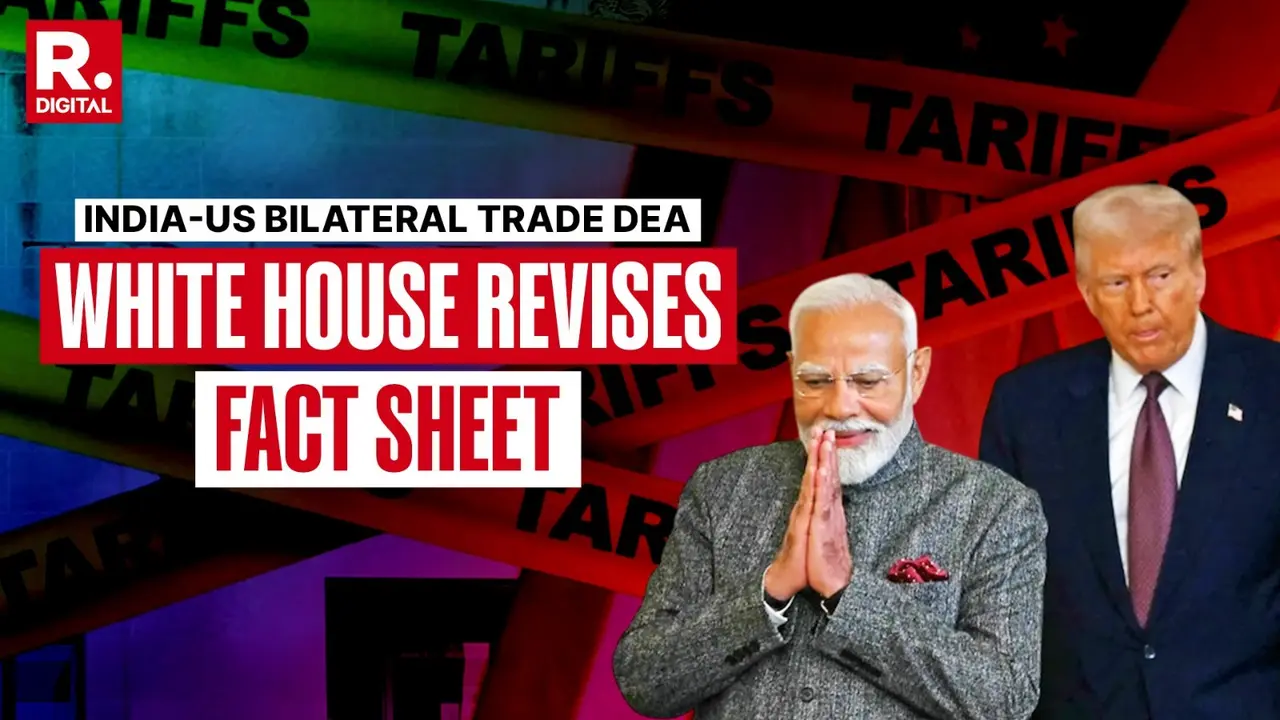
New Delhi: The White House has quietly revised its official fact sheet on the proposed India-US trade framework, altering key language on market access and purchase commitments, including removing references to certain agricultural imports and softening wording on a massive proposed buying target.
The updated document, released after the original version circulated widely, no longer mentions “certain pulses” among U.S. agricultural goods that India would allow greater access to. In the earlier version, the list of American farm exports expected to benefit from tariff reductions explicitly included pulses along with dried distillers grains (DDGs), red sorghum, tree nuts, fresh and processed fruit, soybean oil, wine and spirits. In the revised text, pulses have been omitted, while the rest of the list remains intact.
The revision is significant because pulses are a politically sensitive commodity in India, where domestic production and price stability directly affect farmers and consumers. Their removal from the list suggests New Delhi may be seeking to shield the sector while broader trade negotiations continue.
Shift From ‘Committed’ to ‘Intends’
Another notable change concerns India’s proposed purchases of U.S. goods. The original fact sheet stated that India “committed” to buy more American products and purchase over USD 500 billion worth of U.S. energy, technology, coal and other goods. The updated version replaces the stronger term with “intends to buy more American products and purchase over USD 500 billion”, a wording shift that analysts say reduces the sense of a binding pledge.
Advertisement
Digital Trade Language Adjusted
The revised fact sheet also clarifies language on digital trade. The earlier version suggested India “will remove its digital services taxes”. The updated wording now indicates India “committed to negotiate a robust set of bilateral digital trade rules” addressing discriminatory or burdensome practices and barriers, including rules tied to customs duties on electronic transmissions. The explicit removal pledge is no longer stated in the same direct form, shifting the emphasis toward negotiations rather than unilateral action.
Tariffs, Market Access Still Central
Despite these edits, the broader structure and goals outlined in the fact sheet remain largely intact. The document still says India will eliminate or reduce tariffs on U.S. industrial goods and a wide range of American agricultural products, and that both countries will address non-tariff barriers affecting bilateral trade in priority sectors. It also reiterates that Washington and New Delhi will negotiate rules of origin to ensure that the benefits of any agreement accrue primarily to the two countries.
Advertisement
Strategic and Technology Cooperation
In addition, the fact sheet continues to highlight plans for closer economic security alignment between the United States and India, aimed at strengthening supply-chain resilience and promoting innovation. This includes cooperation on investment reviews, export controls and other measures designed to address non-market policies of third countries. The two sides also intend to significantly expand bilateral trade in technology products and deepen joint technology partnerships.
The revisions come as India and the United States work toward a broader economic framework that both governments have described as part of a long-term strategic partnership. Officials have repeatedly said discussions are ongoing and that several elements of the arrangement are still being negotiated.
Such edits to official summaries are not unusual during complex trade talks, particularly when initial drafts are released before all provisions are settled. Changes in wording can reflect evolving diplomatic understandings or efforts to avoid language that might be interpreted as legally binding before formal agreements are signed.
For now, the updated fact sheet appears to present a more cautious tone, maintaining the overall ambition of deeper economic engagement while recalibrating specific commitments. Further revisions could follow as negotiations advance and both sides work to reconcile differences on sensitive sectors such as agriculture, digital taxation and large-scale procurement targets.