
Why Japan PM Is Calling For Early Elections | Explained
Japan will dissolve parliament on January 23 and hold snap elections on February 8, Prime Minister Sanae Takaichi announced on Monday. The early vote will be her first electoral test, aimed at shoring up her fragile majority amid China tensions and rising cost-of-living concerns.
- World News
- 3 min read

;'%3e%3cpath%20d='m8,15.99c4.41,0,7.99-3.58,7.99-7.99S12.41,0,8,0,0,3.59,0,8s3.58,7.99,7.99,7.99Z'%20style='stroke:%23fff;%20stroke-miterlimit:10;%20stroke-width:.02px;'/%3e%3cpath%20d='m3.08,3.37l3.82,5.11-3.84,4.15h.87l3.37-3.64,2.72,3.64h2.94l-4.04-5.39,3.58-3.87h-.86l-3.1,3.35-2.5-3.35h-2.94Zm1.27.64h1.35l5.97,7.99h-1.35l-5.97-7.99Z'%20style='fill:%23fff;'/%3e%3c/g%3e%3c/svg%3e)


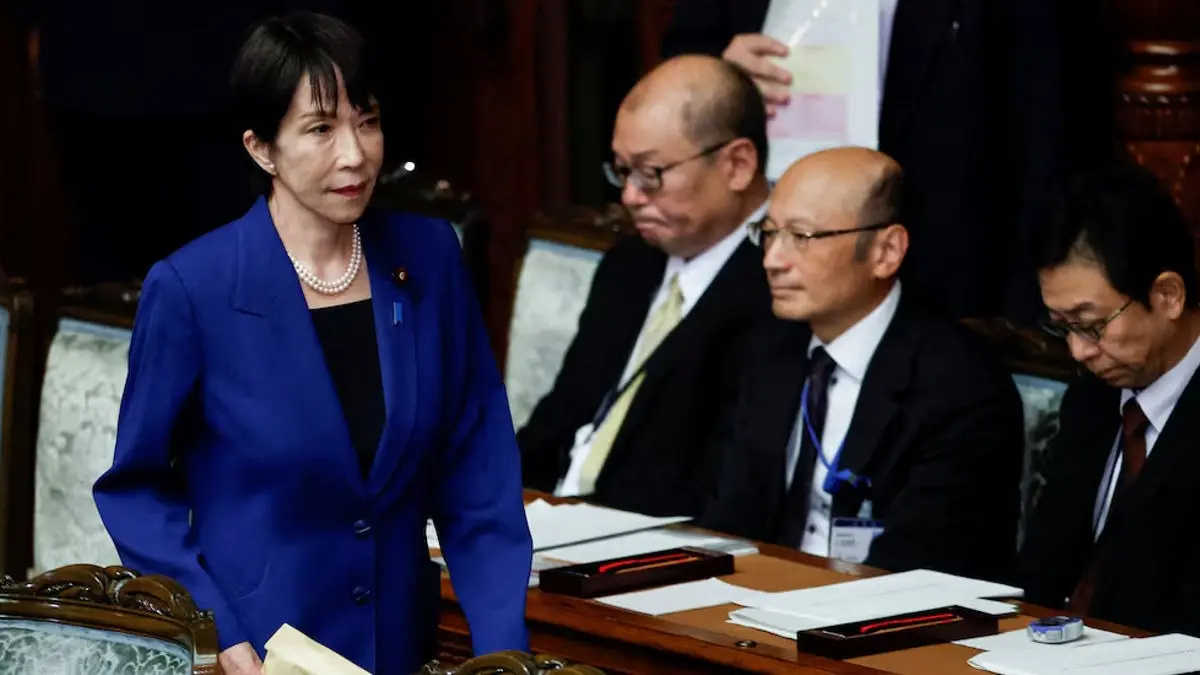
Tokyo: Japan will dissolve the parliament on Friday (January 23) for a national election expected on February 8, Prime Minister Sanae Takaichi said in her statement in a press conference today (January 19). This comes amid the recent reports of the country's heightened tensions with China, in which Takaichi is deeply embroiled.
The snap vote will decide all 465 seats in parliament’s lower house and mark Takaichi's first electoral test since becoming Japan's Prime Minister. Calling an early election would allow her to capitalise on strong public support to tighten her grip on the ruling Liberal Democratic Party and shore up her coalition’s fragile majority.
Attempt to pursue policies
Takaichi said, this move aims to seek voter backing for her spending plans and other policies. "I am staking my own political future as prime minister on this election," she told reporters. She further said that she wanted voters to judge if they trust her with the 'management of the nation'. She promised a two-year halt to an 8% consumption tax on food and said her spending plans would create jobs, boost household spending and increase other tax revenues.
On February 8, the Lower House of Japan will witness a close competition between the ruling Liberal Democratic Party (LDP) and coalition partner Japan Innovation Party (JIP) and the opposition’s new centrist party, the Centrist Reform Alliance (CRA). Takaichi's conservative bloc holds only a slim majority in the lower house since its last win. However, if that changes as a consequence of the snap elections, it will enable Takaichi to pass key policies more easily.
Advertisement
Opposition challenges amid a rising cost of living
Sanae Takaichi was elected the first female prime minister of Japan in October 2025. Amid rising tensions with China, the 64-year-old has become a central figure looming over the country's political landscape after she openly suggested that Japan will not hesitate to turn towards military intervention if China tries to invade Taiwan.
After her statements in November 2025, a war of words followed between China and Japan, deepening the dispute between the two countries, following which Beijing issued formal warnings to travellers and students about visiting Japan.
Advertisement
Amid the rising cost of living in Japan, the row had triggered concerns among voters regarding the economic consequences of a conflict with China. A poll released by public broadcaster NHK last week found 45 per cent of respondents cited prices as their main worry, followed by diplomacy and national security at 16 per cent.
The LDP and its former coalition partner, Komeito, lost their majorities, leading Takaichi to come into a coalition with the populist Japan Innovation Party to form the ruling conservative bloc. Komeito has now joined forces with the Constitutional Democratic Party of Japan to challenge Takaichi and attract swing voters.
A political gambit
The election will examine whether the voters would want to choose higher spending at a time when the rising cost of living stands out as the collective top concern, and it will also test whether Takaichi's persona can help her political party secure a higher majority in the lower house.
The next lower house polls were not due until October 2028. Given the political circumstances of Japan, this move to call for snap elections can be construed as a political gambit by Takaichi.