
World’s Most Awkward Middleman: Pakistan’s US-Iran Peace Gig Collapses; Helpless Neighbour Left With Tea Bills, Zero Influence As Nobody Listens
Trump cancelled a planned envoy trip to Islamabad for US-Iran talks, calling it a waste of time, while Iran’s Araghchi met Pakistani leaders but doubted US sincerity, leaving Pakistan’s mediation bid stranded and exposing its helpless role as neither side heeds it.
- World News
- 6 min read

;'%3e%3cpath%20d='m8,15.99c4.41,0,7.99-3.58,7.99-7.99S12.41,0,8,0,0,3.59,0,8s3.58,7.99,7.99,7.99Z'%20style='stroke:%23fff;%20stroke-miterlimit:10;%20stroke-width:.02px;'/%3e%3cpath%20d='m3.08,3.37l3.82,5.11-3.84,4.15h.87l3.37-3.64,2.72,3.64h2.94l-4.04-5.39,3.58-3.87h-.86l-3.1,3.35-2.5-3.35h-2.94Zm1.27.64h1.35l5.97,7.99h-1.35l-5.97-7.99Z'%20style='fill:%23fff;'/%3e%3c/g%3e%3c/svg%3e)


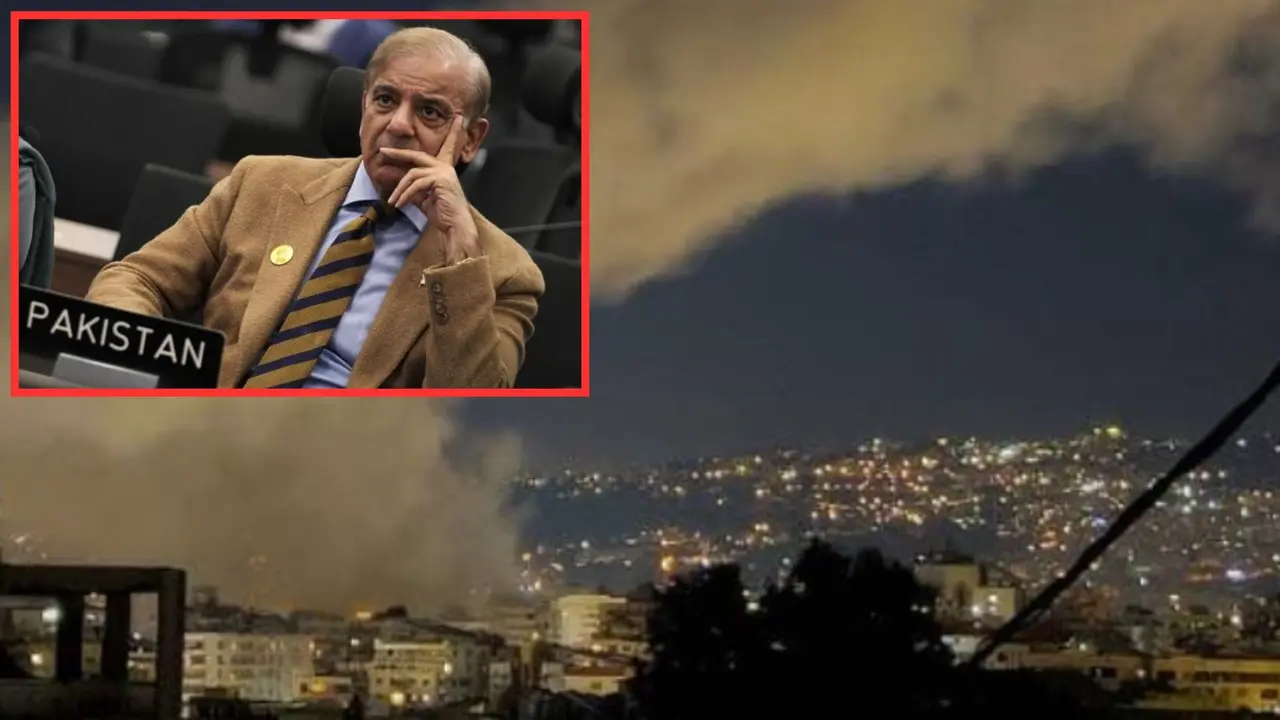
Islamabad: Pakistan’s desperate effort to position itself as the diplomatic link between Washington and Tehran collapsed almost as soon as it began. The country that wanted to host history was left watching from the sidelines, an unwilling spectator to a peace process that no longer required it. Pakistan, which had sought to position itself as an influential broker in the US-Iran dispute, was left as a confused bystander scratching its head. Neither side took it seriously nor ever intended to listen to it, reducing its mediation gambit to a humiliating sideshow and stripping it of the relevance it desperately craved.
On Friday, for a very brief shining moment, Islamabad could almost hear the Nobel Peace Prize committee clearing its throat. The White House had just announced that Steve Witkoff and Jared Kushner were packing their bags for Pakistan, and suddenly, from Asim Munir to Shehbaz Sharif's Cabinet, every official in the capital was practising their best “neutral mediator” face in the mirror. The invitations were likely being drafted, talking points polished, and someone was probably measuring the drapes in the conference room where history would be made.
And then Donald Trump appeared, with one typo-laden Truth Social post, turning Pakistan’s grand diplomatic coming-out party into a “sorry, we’re closed” sign. “Cancelled the trip… Too much time wasted on travelling,” Trump declared, as if Islamabad were an inconvenient petrol stop on the way to somewhere important.
Tehran delegation, meanwhile, was in the city, sipping tea with Prime Minister Shehbaz Sharif and Army Chief Asim Munir, calling the visit “very fruitful” while politely explaining that it still wouldn’t talk to the Americans. As the two sides rejected listening to the self-proclaimed peace-broker, Pakistan appeared dressed up pretending to be the world’s newest peacemaker, desperate to make both Trump and Iran happy, only to be ghosted by one and gently patted on the head by the other. The credit it craved evaporated, leaving Islamabad scratching its head, holding an empty guest list, and wondering how it became the punchline in a joke it thought it was hosting.
Advertisement
From Peace-Maker To Failed Broker
Pakistan's reversal of feelings began on Friday, when White House Press Secretary Karoline Leavitt announced that US Special Envoy Steve Witkoff and Jared Kushner, President Donald Trump’s son-in-law, would fly to Islamabad on Saturday for negotiations. Notably, Pakistan, which pretended to be quietly working behind the scenes to bring the two adversaries to the table, made a rare moment of validation.
By Saturday morning, that optimism of brokering a successful peace deal had evaporated. Trump took to Truth Social to scrap the visit entirely, dismissing the trip as a waste of time and resources. In Trump's single social media post, Pakistan’s carefully choreographed effort to host US-Iran talks was reduced to a footnote.
Advertisement
Trump’s Blunt Rejection, Iran’s Cold Shoulder
Amidst Pakistan's efforts to broker a peace deal between the US and Iran, Trump’s message was characteristically blunt. “I just cancelled the trip of my representatives going to Islamabad, Pakistan, to meet with the Iranians. Too much time wasted on traveling, too much work!” he wrote, the typo doing little to soften the blow. He went further, deriding Iran’s leadership as confused and riven by infighting, saying, “Nobody knows who is in charge, including them. Also, we have all the cards; they have none!”
The cancellation pulled the rug from under Pakistan’s diplomatic push as Islamabad had not only offered its capital as neutral ground but had also invested political capital and logistical resources into facilitating a second round of talks after a ceasefire ended on April 22. However, the second round of peace negotiations between the US and Iran never materialised.
Meanwhile, Iranian Foreign Minister Abbas Araghchi, who was already in Pakistan, on Saturday met Shehbaz Sharif, with Deputy Prime Minister and Foreign Minister Senator Muhammad Ishaq Dar, and Chief of Army Staff Field Marshal Syed Asim Munir also present. After the meeting, Araghchi praised peace negotiation efforts on X, calling the visit to Islamabad “very fruitful”. However, his next line underlined Pakistan’s predicament, saying, “Shared Iran’s position concerning workable framework to permanently end the war on Iran. Have yet to see if the U.S. is truly serious about diplomacy.”
In short, Tehran was talking to Pakistan, but not through Pakistan to the United States, with only speculations surrounding the event. Iran has repeatedly accused Washington of lacking seriousness and has refused to commit to direct negotiations with the US, leaving Islamabad to ferry messages that neither side seems eager to receive.
Broker Without Buyers
The Islamabad episode exposed the fragility of Pakistan’s self-appointed role as mediator, as the diplomatic brokerage demands 2 willing parties, though Islamabad had none, with both the US and Iran nudging Pakistan. Trump’s last-minute withdrawal signalled that Washington sees little value in Pakistan’s venue or its involvement, treating the offer as expendable when schedules get tight. “Too much time wasted on traveling” is hardly the language of a partner taking Islamabad’s efforts seriously.
On the other hand, Iran has used Pakistan’s platform to restate its grievances but has shown no appetite for letting Islamabad shape the outcome. Araghchi’s warm words about Pakistan’s “brotherly efforts” contrast with his scepticism about US intentions and point out the fact that Pakistan is powerless to resolve the dispute. Tehran has not accepted Islamabad’s entreaties to sit directly with American officials, and it has continued to blame Washington for the impasse.
The end result of the peace broker was a diplomatic no-man’s land as Pakistan spent weeks on quiet shuttle diplomacy, arranging meetings, hosting dignitaries, and absorbing the security and administrative costs that come with high-stakes negotiations. The payoff so far has been a cancelled US visit and an Iranian minister who leaves with compliments but no commitments.
Left Holding The Bill
In Pakistan, a country grappling with economic strain and regional instability, the collapse of the peace negotiations was not only embarrassing but, it was also monetarily costly. Every aborted round of talks represented sunk diplomatic effort, wasted resources, and diminished credibility. Islamabad now faces awkward questions at home about why it inserted itself into a dispute where neither principal actor appears to respect its role.
The flip-flop from the White House has been particularly jarring, until Trump’s post that the US was publicly confirming the trip, giving Pakistan every reason to believe it was central to the process. Meanwhile, the abrupt cancellation suggested Pakistan was informed via social media alongside everyone else, a slight that will not be lost on its foreign policy establishment.
Amidst a jolt from the US, Iran’s position offered little comfort, as the Iranian delegates met Pakistani leaders but openly doubted the US's sincerity. Tehran used Islamabad as a sounding board while denying it leverage, and Pakistan is left conveying Iran’s mistrust to the Trump administration that has just demonstrated it does not “give a damn” about the Islamabad channel.
In the space of 24 hours, Pakistan went from prospective host to diplomatic afterthought, pitiful in its eagerness, helpless in its lack of influence, and exposed as a failed broker between two powers that are not listening.