
Yemen President Mansur Hadi buckles under pressure; resigns over threats from Saudi Arabia
Saudi Arabia has pushed the President of Yemen, Abdrabbuh Mansur Hadi to resign early this month, according to Saudi and Yemeni officials
- World News
- 3 min read

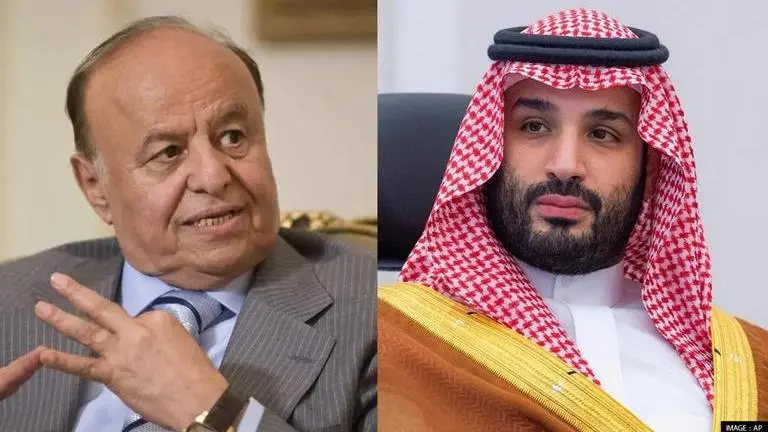
Saudi Arabia has pushed the President of Yemen, Abdrabbuh Mansur Hadi to resign early this month, according to Saudi and Yemeni officials, who also claimed that Saudi authorities have mostly confined him to his residence in Riyadh and prohibited interactions with him in the days following, The Wall Street Journal reported. Hadi, on April 7, had announced his retirement, further handing his powers to an eight-member council made up of various Yemeni groups, as Saudi Arabia seeks to end a seven-year civil conflict in Yemen that has resulted in a humanitarian catastrophe and strained relations with the United States.
According to the Journal, Riyadh Crown Prince Mohammed bin Salim had released a written decree to Hadi, transferring his power to a panel that comprises Saudi and Yemeni authorities. The officials further stated that in order to persuade Hadi to resign, some Saudi officials had threatened to release what they claimed was proof of his wrongdoings and corruption, The Wall Street Journal reported. Hadi has been restricted to his Riyadh home since leaving the government, with no access to phones, according to a Saudi official.
Did Saudi Arabia and UAE influence Yemen's President's decision to resign?
In addition to this, Yemen's exiled president stepped down, as international as well as regional attempts to resolve the nation's long-running civil conflict after it gained traction with a two-month ceasefire. Furthermore, Saudi Arabia and the United Arab Emirates, seem to have influenced President Abed Rabbo Mansour Hadi's decision, promptly embracing it with an offer of $3 billion in aid. The new council's leader has close links to Riyadh, Associated Press reported.
According to a statement broadcast on state-run media, Hadi stated that the newly formed council would manage the internationally recognised government and oversee discussions with the Iranian-backed Houthis. This effort is aimed to unite the anti-Houthi party after years of infighting and disagreements and was almost definitely coordinated in Riyadh.
Advertisement
Hadi was elected as the president of Yemen in the year 2012 with a mandate to manage the country's democratic transition following the Arab Spring revolt that toppled Saleh's lengthy reign. However, in 2014, the Houthis, a religious organisation that became a rebel militia, joined with Saleh and took Sanaa, forcing Yemen president Hadi and his administration to flee to Saudi Arabia. Saudi Arabia then established a military alliance and entered the conflict a few months later, attempting to restore Hadi's government to power.