
Zojila Tunnel Breakthrough on June 09: All-Year Access to Ladakh, Boost for Tourism, Defence & Trade
India’s 13.153-km Zojila Tunnel, the world’s longest high-altitude bi-directional road tunnel, is set for its final breakthrough on June 9, promising all-weather connectivity between Kashmir and Ladakh, faster travel, and enhanced defence logistics.
- India News
- 2 min read

;'%3e%3cpath%20d='m8,15.99c4.41,0,7.99-3.58,7.99-7.99S12.41,0,8,0,0,3.59,0,8s3.58,7.99,7.99,7.99Z'%20style='stroke:%23fff;%20stroke-miterlimit:10;%20stroke-width:.02px;'/%3e%3cpath%20d='m3.08,3.37l3.82,5.11-3.84,4.15h.87l3.37-3.64,2.72,3.64h2.94l-4.04-5.39,3.58-3.87h-.86l-3.1,3.35-2.5-3.35h-2.94Zm1.27.64h1.35l5.97,7.99h-1.35l-5.97-7.99Z'%20style='fill:%23fff;'/%3e%3c/g%3e%3c/svg%3e)


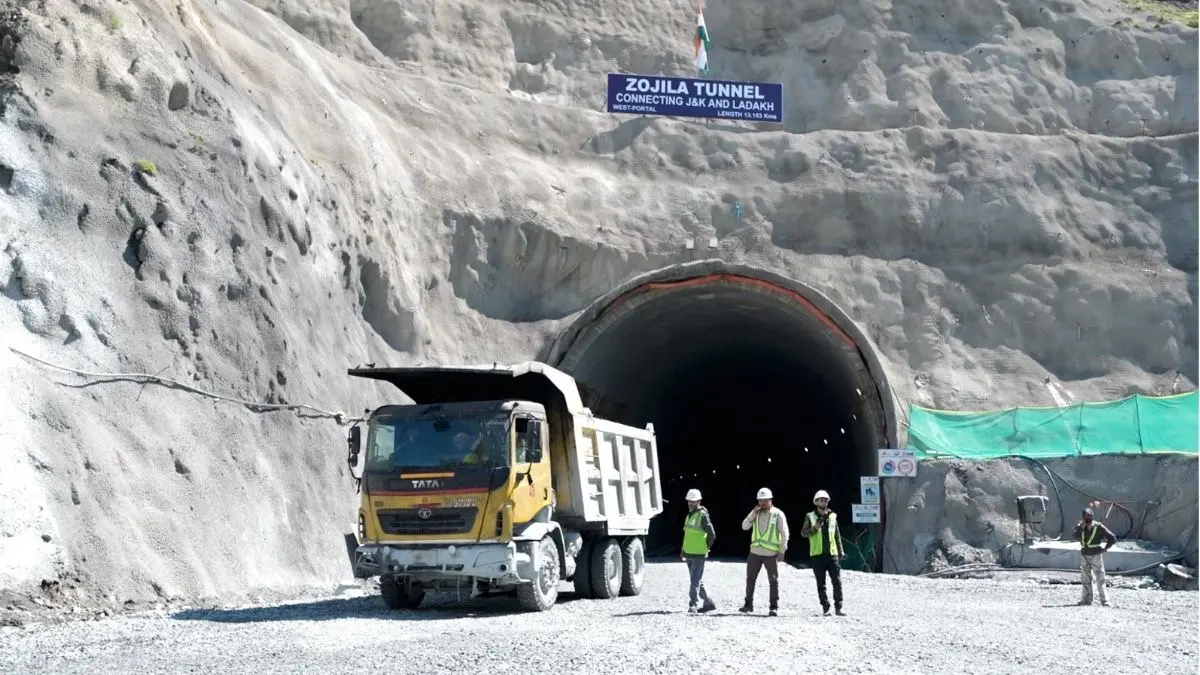
Sonmarg: India’s 13.153-km Zojila Tunnel, the world’s longest high-altitude bi-directional road tunnel at 11,578 feet, will achieve final breakthrough on June 9, bringing all-weather connectivity between Kashmir and Ladakh.
Union Road Transport and Highways Minister Nitin Gadkari will trigger the breakthrough blast at Minimarg (Drass) on Tuesday. He is expected to address a press conference later on the project and the infrastructure boom in the Union Territory of Jammu Kashmir and Ladakh.
Gadkari wrote on X, "India's most challenging infrastructure project taking shape in the rugged heights of the Himalayas: the Zojila Tunnel! Main Tunnel Breakthrough Ceremony, June 9, 2026".

The tunnel connects Baltal in Sonamarg to Meenamarg near Drass in Kargil. It bypasses the Zojila Pass that remains blocked for six to seven months every year due to heavy snowfall and frequent avalanches.Once operational, it wil slash travel time on the stretch from over three hours to just 15 minutes.
Advertisement
The tunnel will ensure safe, round-the-year movement for civilians and Army convoys, providing reliable logistics and troop deployment to Ladakh even during harsh winters.
“For generations, we have been cut off from the world for six to seven months. The tunnel will change everything , our children can study, businesses can run, and patients can reach hospitals anytime,” said Farooq Rishi, a shopkeeper in Sonamarg.
Advertisement
However, Tashi Angmo, a resident of Drass, said, “Tourists avoid coming in winter. Now we can expect steady visitors and better income. It feels like Ladakh is finally being brought closer to the rest of India.
The project, began on October 1, 2020 and the yunnelling from both ends used the New Austrian Tunnelling Method (NATM) to handle the fragile Himalayan geology.
The full corridor spans 30.894 km, including approach roads, bridges, snow protection structures and Nilgrar twin tunnels. The first phase was completed in March 2025. The total project cost is Rs 6,809.69 crore.
Meanwhile, the tunnel features advanced smart systems with SCADA, CCTV, ventilation and reliable power backup. Progress in tough sections was limited to 2.5-3 metres per day.
As per insiders, the project has achieved 10 million safe man-hours as of April 2026, with innovative techniques saving over Rs 5,000 crore.Tuesday’s breakthrough completes the main excavation phase.
The tunnel is set to significantly boost tourism, trade, economic activity and defence preparedness along the Srinagar-Kargil-Leh corridor on National Highway-1.
Get Current Updates on India News, Entertainment News, Cricket News along with Latest News and Web Stories from India and around the world.