Samsung Galaxy S26 and S26+ Review: Excellent Phones Without the Full 'Ultra' Experience
After using both phones extensively, I came away appreciating the Samsung Galaxy S26 and Galaxy S26+ for very different reasons. But do they deserve your money?
- Tech News
- 8 min read

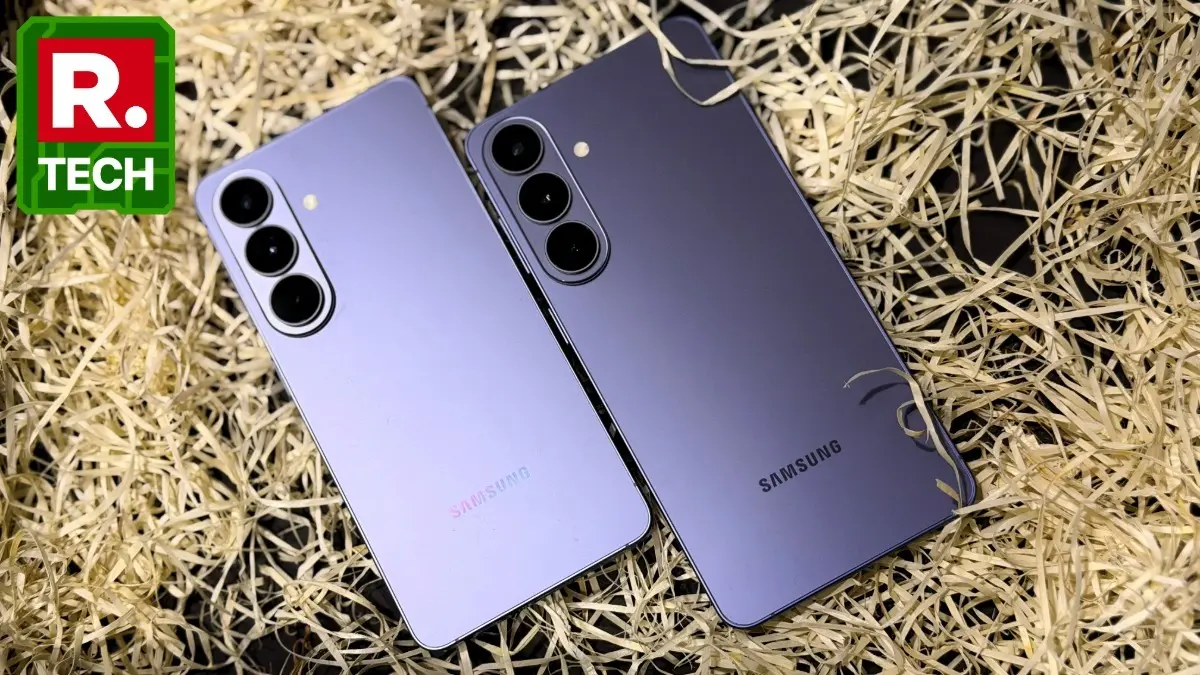
Samsung’s Galaxy S series has started developing a predictable hierarchy. The Ultra gets almost everything the company can possibly throw into a smartphone, while the standard and Plus variants inherit just enough of that experience to remain premium without threatening the Ultra’s existence.
That is exactly what the Galaxy S26 and Galaxy S26+ feel like.
After using both phones extensively, I came away appreciating them for very different reasons. The Galaxy S26 is one of the most comfortable flagship phones I’ve held in years, while the S26+ feels like the safer option for people who want a large-screen Samsung flagship without paying Ultra money.
At the same time, both phones also feel deliberately restrained in places where Samsung clearly wants the Ultra to remain superior.
Advertisement

Samsung finally understands compact flagships again
The Galaxy S26 is easily the more interesting phone of the two. With its 6.3-inch Dynamic LTPO AMOLED 2X display, 120Hz refresh rate, HDR10+ support, and peak brightness of 2600 nits, it still delivers a flagship-grade viewing experience without becoming physically exhausting to use.
And that matters more than specification sheets often admit.
Advertisement
After months of carrying oversized phones that constantly stretched my fingers and refused to sit comfortably in pockets, using the S26 felt refreshing. I could comfortably use it with one hand while replying to messages during commutes, browsing social media while walking, or quickly editing stories without needing awkward finger gymnastics.
The S26+ is very different. Its 6.7-inch Dynamic LTPO AMOLED 2X panel offers the same 120Hz refresh rate, HDR10+, and brightness levels, but the sheer size changes how you interact with it. Watching movies and reading articles is unquestionably better on the larger display, but prolonged one-handed usage quickly becomes uncomfortable.
There were multiple instances where reaching the top corners required shifting my grip carefully, especially while walking outdoors or using the phone in crowded public spaces. The phone also feels noticeably more conspicuous in pockets.
That said, the S26+ exists for a very specific audience. It is for people who want a large-screen flagship without spending Ultra-level money. And viewed from that perspective, it makes sense.
The design is sleek, but not practical all the time
Samsung’s flagship design language has become increasingly homogeneous, and both phones borrow heavily from the Galaxy S26 Ultra visually. Thankfully, that works in their favour.
Both devices look cleaner and sleeker than previous generations. The flat edges and minimal camera layout give them a more refined appearance. However, practicality takes a hit.
The protruding camera rings make both phones wobble aggressively when placed flat on a table. I noticed this constantly while typing on the phones during meetings or while quickly responding to messages at a café. It’s one of those small annoyances that becomes impossible to ignore once you notice it.
The Exynos 2600 performs well, until you push it too far
Both phones are powered by Samsung’s Exynos 2600 chipset.
For everyday usage, performance is fast and responsive. Apps open quickly, animations remain smooth, multitasking feels fluid, and One UI 8.5 does an excellent job of masking occasional performance inconsistencies through polished optimisation.
As long as I kept background apps under control, both phones felt snappy.
The problems begin during sustained heavy workloads.
While editing photos using Galaxy AI tools, downloading large files over mobile data, rendering videos, or gaming for extended periods, I noticed the processor beginning to struggle. During a 10-minute Asphalt 9 session on both phones, the devices started warming up noticeably.
Games like BGMI and Call of Duty Mobile run well at moderate graphics settings, but increasing graphics and frame rate combinations significantly can result in inconsistent performance and occasional frame drops.
Samsung has clearly improved Exynos performance compared to previous generations, but the chip still lacks the confidence and sustained stability that flagship Snapdragon processors usually deliver under stress.
The displays are excellent outdoors
One thing Samsung continues to dominate is display quality.
Both phones get extremely bright outdoors, and readability under harsh sunlight was never an issue during my usage. Whether I was navigating through maps outdoors, reading articles during daytime travel, or watching videos near windows with direct sunlight, the displays remained comfortable to use.
Watching movies on both devices was enjoyable, but the S26+ naturally offers a more immersive experience simply because of the larger screen. The S26’s compactness is wonderful for usability, but cinematic content benefits from the additional screen real estate on the Plus variant.
The cameras are mostly great, but the S26+ has an edge
On paper, both phones share identical camera hardware:
- 50MP primary camera
- 10MP telephoto camera
- 12MP ultrawide camera
- 12MP selfie camera
In practice, though, I consistently preferred photos from the S26+.
The S26 tends to prioritise colour accuracy slightly more aggressively, occasionally sacrificing minute details in the process. The S26+, meanwhile, does a better job of retaining finer textures without introducing obvious noise.
The difference isn’t dramatic in daylight. Both phones capture detailed, vibrant, social-media-ready images with Samsung’s familiar processing style. The distinction becomes more visible indoors and in low light.
Night shots from both devices can look slightly artificial at times, especially under mixed lighting, but they still produce strong results overall. Samsung’s image processing continues to favour brightness and vibrancy over realism, and depending on your preferences, that can either look appealing or slightly overprocessed.
The ultrawide camera is acceptable, though clearly weaker than the primary sensor. The telephoto camera, however, remains genuinely useful. Its 3x optical zoom helped me capture sharper portraits and clearer distant objects consistently. It’s nowhere near as versatile as the telephoto system on the Galaxy S26 Ultra, but it still outperforms zoom implementations on phones like the iPhone 17 or Xiaomi 17.
Video recording is another strong area. Both phones can shoot up to 8K video with solid stabilisation. Samsung’s Galaxy AI tools around editing and post-processing have also become much more refined this year.
Still, if I had to pick a phone purely for content creation, I would probably still lean toward the iPhone 17. Apple’s video consistency and reliability remain difficult to beat, even if Samsung now offers a broader set of AI-powered editing tools.
Galaxy AI finally feels less gimmicky
This is probably the first time I’ve felt Samsung’s AI features quietly improving the experience rather than constantly advertising themselves.
Galaxy AI is now deeply integrated across the system. Features like AI-assisted editing, summarisation, contextual suggestions, and writing tools feel faster and more natural than before. More importantly, they no longer interrupt the experience constantly.
That subtlety matters because most smartphone AI implementations today feel desperate to prove their existence every five minutes.
Battery life is decent, charging speeds are disappointing
The Galaxy S26+ packs a 4900mAh battery, and in my usage, it comfortably lasted an entire day on a single charge even with heavy social media usage, photography, navigation, and moderate gaming. The smaller 4300mAh battery on the S26 naturally drains faster. It usually needed charging earlier in the evening during heavier usage days.
Charging speeds, however, feel outdated.
Samsung still ships these phones with 25W charging, and in 2026, that feels uncompetitive even by Samsung’s own standards. The Galaxy S26 Ultra finally moved to faster charging this year, which makes the slower speeds on the S26 and S26+ feel even more deliberate.
Waiting for these phones to charge after using devices from Chinese brands with significantly faster charging standards felt frustrating.
One UI 8.5 remains one of Android’s best interfaces
One UI 8.5, based on Android 16, is easily one of the most polished smartphone interfaces available today. Animations are smooth, multitasking features remain useful, and the software experience feels cohesive in a way many Android skins still struggle to achieve.
What I appreciate most is that Samsung has stopped chasing iOS imitation as aggressively as many Android brands still do. One UI feels distinct, mature, and genuinely optimised for large-screen devices.
Verdict
S26 Rating: 3.5/5
S26+ Rating: 4/5
The Galaxy S26 and Galaxy S26+ are good flagship phones, but they exist in the shadow of the Ultra.
The Galaxy S26 impressed me more because of how comfortable and practical it felt in everyday life. Compact Android flagships have become increasingly rare, and Samsung deserves credit for resisting the trend toward oversized slabs.
The Galaxy S26+, meanwhile, delivers a strong large-screen experience for users who want flagship features without stepping into Ultra pricing territory.
At the same time, both phones feel strategically limited. The cameras are excellent but not exceptional. Performance is fast but inconsistent under stress. Charging speeds feel dated. And several premium features remain intentionally reserved for the Ultra.
The Galaxy S26 starts at ₹79,999, while the Galaxy S26+ starts at ₹94,999.
For most people, the S26 is probably the smarter buy simply because of how usable it feels every day. The S26+ makes sense if media consumption and screen size matter more to you than portability.
Just don’t buy either, expecting the complete Samsung flagship experience. The company still wants you to look at the Ultra for that.