
Decoding George Soros and his links with OCCRP
OCCRP accused Adani Group of investing hundreds of millions of Dollars in publicly traded group stocks through Mauritius-based 'opaque' investment funds.
- Republic Business
- 3 min read

;'%3e%3cpath%20d='m8,15.99c4.41,0,7.99-3.58,7.99-7.99S12.41,0,8,0,0,3.59,0,8s3.58,7.99,7.99,7.99Z'%20style='stroke:%23fff;%20stroke-miterlimit:10;%20stroke-width:.02px;'/%3e%3cpath%20d='m3.08,3.37l3.82,5.11-3.84,4.15h.87l3.37-3.64,2.72,3.64h2.94l-4.04-5.39,3.58-3.87h-.86l-3.1,3.35-2.5-3.35h-2.94Zm1.27.64h1.35l5.97,7.99h-1.35l-5.97-7.99Z'%20style='fill:%23fff;'/%3e%3c/g%3e%3c/svg%3e)


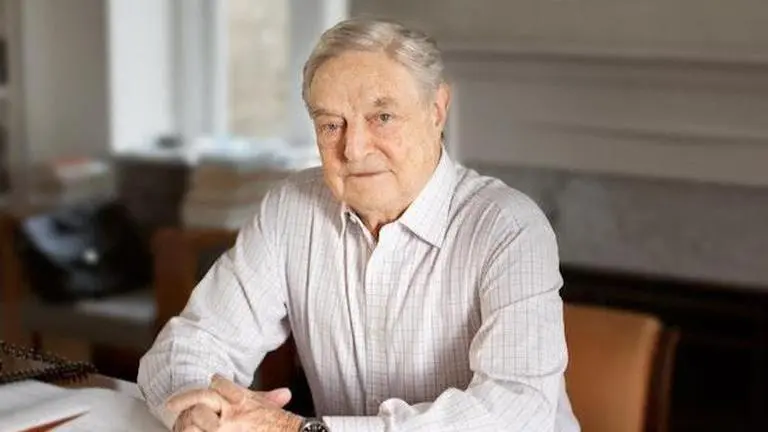
The OCCRP, functioning as a worldwide network of investigative journalists, is dedicated to "uncovering crime and corruption, enabling the public to hold those in power accountable," according to its website. One of the contributors to the network is George Soros's Open Society Foundations. On January 24, short-selling entity Hindenburg Research published a report alleging that the Adani Group had been involved in a prolonged "scheme of stock manipulation and accounting fraud." In the subsequent month, George Soros entered the fray, asserting that Prime Minister Narendra Modi would need to respond to queries from international investors and the Parliament concerning allegations of fraud and stock manipulation linked to Gautam Adani's industrial empire.
The Indian conglomerate strongly rejected the allegations presented by Hindenburg Research. Following the release of the Hindenburg report, the Enforcement Directorate (ED) identified approximately a dozen companies as the principal beneficiaries of short-selling involving Adani Group shares. Controversies surrounding business conglomerates and financial institutions are not unfamiliar territory for George Soros and the organisations associated with him.
Who is George Soros?
George Soros is a hedge fund manager turned philanthropist. Born in Budapest, Hungary, in 1930 to Jewish parents, he experienced the Nazi occupation of his country from 1944 to 1945. During this period, his family managed to survive the persecution of Jewish people by obtaining false identity papers and concealing their true backgrounds, as attested by witnesses. Following the rise of communism in Hungary, Soros left for London in 1947. To support his education at the London School of Economics, he took on part-time roles as a railway porter and a nightclub waiter. In 1956, he immigrated to the United States, initially working as an analyst of European securities. By 1973, he had established his own hedge fund, gaining fame for his successful currency trades, particularly his notable bet against the British Pound in 1992.
Critics have pointed out that Soros' shorting of the Pound led to the Bank of England's challenges and ultimately the UK's exit from the European Exchange Rate Mechanism. This move reportedly yielded his fund substantial profits exceeding a billion Dollars. He was also accused of taking positions through his Quantum Fund against a group of Asian currencies, particularly those of Thailand and Malaysia, prior to the 1997 Asian financial crisis. This could have signalled a potential overvaluation of the Thai Baht in the market.
Advertisement
Soros is recognised as a trailblazer in the modern hedge fund industry and is credited with popularising the concept of short-selling. In December 2022, he faced a conviction for insider trading by a French court, resulting in a 2.2 million Euro fine, an amount prosecutors claimed he had gained from his trading activities. Soros vehemently contested the verdict, deeming it unjustified.