
Will the African debt crisis affect Indian business interests?
Indian businesses operating in Africa may face intense competition from China while African countries are working on restructuring their national debts.
- Republic Business
- 5 min read

;'%3e%3cpath%20d='m8,15.99c4.41,0,7.99-3.58,7.99-7.99S12.41,0,8,0,0,3.59,0,8s3.58,7.99,7.99,7.99Z'%20style='stroke:%23fff;%20stroke-miterlimit:10;%20stroke-width:.02px;'/%3e%3cpath%20d='m3.08,3.37l3.82,5.11-3.84,4.15h.87l3.37-3.64,2.72,3.64h2.94l-4.04-5.39,3.58-3.87h-.86l-3.1,3.35-2.5-3.35h-2.94Zm1.27.64h1.35l5.97,7.99h-1.35l-5.97-7.99Z'%20style='fill:%23fff;'/%3e%3c/g%3e%3c/svg%3e)


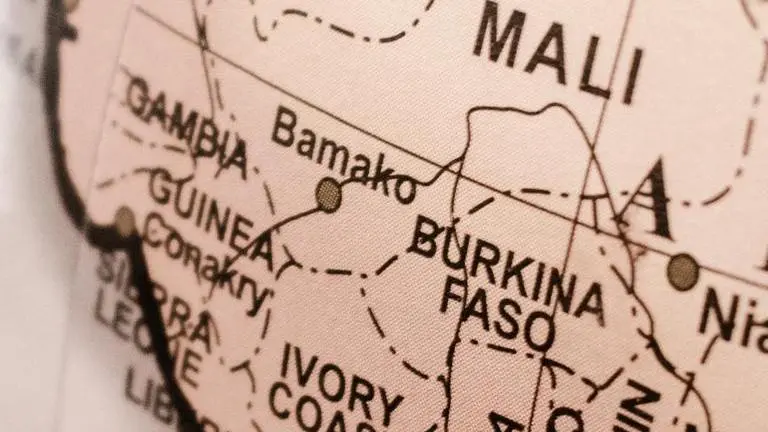
Ghana has recently initiated a three-year program worth $3 billion, which received approval from the IMF's board on May 17th. This approval was granted based on assurances provided by Ghana's bilateral creditors, including China, regarding the restructuring of its debt.

All of it is amidst the African debt crisis, which has become a pressing economic issue in the region. African nations have accumulated over $644 billion in external debt due to various factors such as borrowing to finance infrastructure projects, economic development, and budget deficits.
The crisis is characterised by high levels of debt relative to GDP, making it challenging for countries to service their debts and meet other financial obligations. As per One Data reports, the indebted amount of African countries equals 24 per cent of their combined GDP.
The African debt crisis has the potential to impact Indian business interests in several ways. The volatile economic situation and mounting foreign debts may decrease the demand for Indian goods in the region, affecting industries such as pharmaceuticals, agro-based products, textiles, and IT. The total Indian FDI outflows to African countries were recorded close to $5 billion in 2016, since which the investments have only increased.
Advertisement
Furthermore, China's increasing dominance in the African market, driven by extensive investments and creditor status, poses a significant challenge to Indian businesses.
Dragon’s Tail on African Shores
China and Africa have forged a longstanding partnership, with China initiating investments in African countries since the 1980s, albeit on a relatively modest scale initially. Over time, China's investment footprint in Africa has expanded significantly reaching $43.4 billion by 2020.
Advertisement
Notably, since the year 2000, China's investments in Africa have experienced even more remarkable growth, propelled by the establishment of the Forum on China-Africa Cooperation (FOCAC).

China is the largest trading partner to most African countries | Image credit: Pexels
According to a report from the Atlantic Council, China is currently the largest trading partner, investor, and creditor for most African countries. As per a report from Business Insider, Chinese lenders account for 12% of Africa’s private and public external debt. These investments and billions in credits from China come with strings attached to the long-term plans to outthrow Western influence in the region, both financially as well as militarily.
Classified American intelligence reports also suggest that China is planning to build its first permanent military presence on the Atlantic Ocean by building a permanent military base in Equatorial Guinea. It must be noted that Equatorial Guinea’s debt to China is close to 50 per cent of its GDP.
The 2022 African Youth Survey conducted by the Ichikowitz Family Foundation across fifteen countries also depicts that over 54 per cent of interviewed youngsters have a positive outlook on Chinese investments. This sentiment is influenced not only by the availability of Chinese products but also by infrastructure assistance and job creation in Africa.
The popularity of this sentiment prevails even after the concerns regarding resource exploitation, job displacement, and cultural impact by the Chinese businesses in Africa.
Competition and funding challenges for Indian businesses
Indian businesses operating in Africa may face intense competition from Chinese markets. If Africa struggles to efficiently negotiate debt restructuring and secure favourable terms, it may become a riskier investment destination.
This could make it difficult for Indian businesses to secure funds and loans to expand their operations in affected regions. Consequently, they might have to abandon plans for expansion in potentially untapped markets, while China takes advantage of its influence to pursue further business opportunities. It must be noted that Indian exports to Africa have reached over $37 billion in 2021, making it the second-largest import source for the region. India's major imports to Africa include mineral oil, pharmaceuticals, cereals, and other essential common goods.

Indian businesses are bound to face stern competition from Chinese manufacturers | Image credit: ANI
Apart from that, Indian businesses in Africa might also face extreme competition from Chinese products which have better, faster, and cheaper access to African markets. According to the World Investment Report 2016, India was the eighth-largest investor in Africa in 2014 also creating 4,195 of average jobs per year in the continent.
However, these investments and jobs created by India have been largely outnumbered by China, indicating the clear dominance China and its businesses enjoy in the region. As per the Chinese customs authorities, Chinese exports to Africa were over $164.49 billion, making it the biggest player in the African market.
Potential for India and our businesses
Resolving the current African debt crisis is more complex than in previous situations due to the involvement of multiple stakeholders, including private lenders and Western states.
However, the active interest of the Indian government in debt restructuring can extend India's presence in the region, potentially enabling Indian businesses to leverage African markets. State-level interactions and engagement with sub-national actors contribute to the bilateral relationships with African countries, creating opportunities for Indian businesses.
The African debt crisis holds implications for Indian business interests. Increased competition from Chinese markets, challenges in securing funding for expansion, and the need for efficient debt restructuring are key factors that Indian businesses need to consider.
However, active engagement by the Indian government and leveraging bilateral relationships can help Indian businesses navigate these challenges and capitalise on opportunities in the African market.