
100% Tariffs On Branded Pharmaceuticals: What Does It Signal For Indian Pharma Majors?
The earnings risk for India-headquartered pharma companies will be concentrated in “specialty portfolios—for example, companies with proprietary dermatology, oncology, or other niche specialty products," said Abhay Kumar Shrivastava, Chair for PHDCCI Pharmaceutical Manufacturing Committee.
- Republic Business
- 3 min read

;'%3e%3cpath%20d='m8,15.99c4.41,0,7.99-3.58,7.99-7.99S12.41,0,8,0,0,3.59,0,8s3.58,7.99,7.99,7.99Z'%20style='stroke:%23fff;%20stroke-miterlimit:10;%20stroke-width:.02px;'/%3e%3cpath%20d='m3.08,3.37l3.82,5.11-3.84,4.15h.87l3.37-3.64,2.72,3.64h2.94l-4.04-5.39,3.58-3.87h-.86l-3.1,3.35-2.5-3.35h-2.94Zm1.27.64h1.35l5.97,7.99h-1.35l-5.97-7.99Z'%20style='fill:%23fff;'/%3e%3c/g%3e%3c/svg%3e)


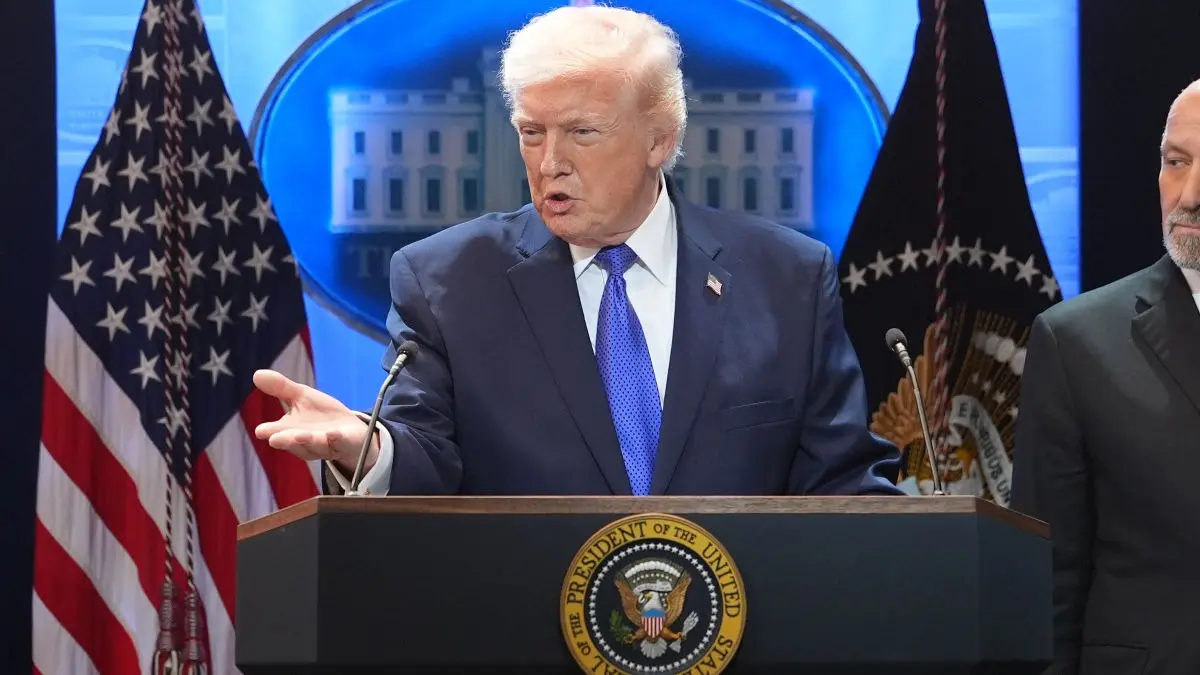
In the backdrop of 17 pricing deals inked between the US and pharmaceutical majors, United States will implement upto 100% tariffs on branded pharmaceutical imports.
This geopolitical move is expected to have minimal impact given several exemptions have already been negotiated.
While the larger chunk of manufacturing for companies' specialty portfolio falls under exempt jurisdiction, drugs such as Sezaby, and Xelpros manufactured by Sun Pharma are likely to brace for impact.
Meanwhile, branded pharmaceutical imports from countries such as Japan, EU, Switzerland, Liechtenstein, and Korea will face 15% US tariffs.
Advertisement
Which Pharma Exemptions Have Already Been Negotiated?
Currently, 16 big pharma firms are exempt for three years after concluding deals with Trump to lower the prices of new and existing medicines under most-favoured-nation (MFN) principles, according to Senior Economist at ING, Diederik Stadig.
ING noted, "It’s likely that drugmakers now negotiating with the Department of Health and Human Services would be exempt. As such, the scope of this 100% tariff is rather limited, as evidenced by the US import figures below."
Advertisement
Trump's Pharma Shock: What Does It Mean For Indian Players?
Abhay Kumar Shrivastava, Chair - PHDCCI Pharmaceutical Manufacturing Committee, noted, "The 100% tariff framework is primarily targeted at patented and branded drugs, particularly in specialty therapies such as oncology biologics, novel diabetes treatments, and rare-disease drugs. However, generics and most essential medicines remain exempt, resulting in limited immediate impact on India’s core export basket to the US.
The earnings risk for India-headquartered pharma companies will be concentrated in “specialty portfolios—for example, companies with proprietary dermatology, oncology, or other niche specialty products.”
"Indian firms are responding through geographic diversification to reduce reliance on the US market, alongside selective US onshoring and partnerships to mitigate potential tariff exposure, he said.
Currently, India’s largest market for pharmaceutical exports is the US, making for nearly 40% share.
100% US Tariffs On Branded Pharma: A Geopolitical Move
This leaves only companies without an MFN deal or a country-level bilateral agreement exposed to a possible 100% levy.
The key countries involved include Singapore, India, and China –none of which currently export a substantial volume of branded pharmaceuticals to the US.
"The economic impact will therefore be negligible. Rather, the tariff is geopolitical in nature and should be seen as a shot across the bow for more intense competition between the US and China in biotech and pharma," it said.
On China, the financial institution noted that "roughly one‑third of all new molecules in global pipelines now originate in China – up from just 4% 12 years ago."
"The country has surpassed Europe and is nearing the US in the number of global drug approvals. This is why we believe that the next Pfizer will be Chinese rather than American or European."
"This is a geopolitical tariff with negligible short-term economic effects. We’re likely to see many more such policies in pharma, as the sector is now formally considered important to national security by US policymakers," it added.