
Over ₹15 Lakh Crore Of Investor Wealth Wiped Off In 20 Days; Stock Market Nosedives As 2026 Sets Off On Trump-Induced Choppy Note
Indian equity markets have come under sustained pressure in early 2026, with benchmark indices recording sharp declines amid broad-based selling across sectors.
- Republic Business
- 6 min read

;'%3e%3cpath%20d='m8,15.99c4.41,0,7.99-3.58,7.99-7.99S12.41,0,8,0,0,3.59,0,8s3.58,7.99,7.99,7.99Z'%20style='stroke:%23fff;%20stroke-miterlimit:10;%20stroke-width:.02px;'/%3e%3cpath%20d='m3.08,3.37l3.82,5.11-3.84,4.15h.87l3.37-3.64,2.72,3.64h2.94l-4.04-5.39,3.58-3.87h-.86l-3.1,3.35-2.5-3.35h-2.94Zm1.27.64h1.35l5.97,7.99h-1.35l-5.97-7.99Z'%20style='fill:%23fff;'/%3e%3c/g%3e%3c/svg%3e)


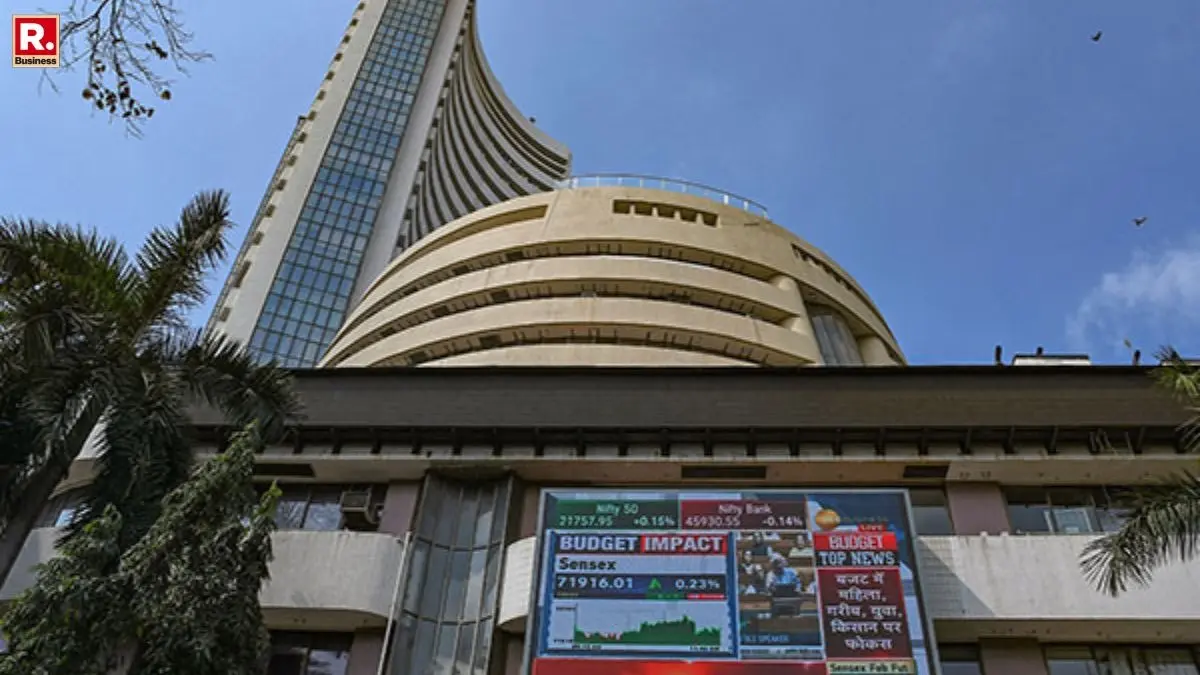
Indian equity markets have come under sustained pressure in early 2026, with benchmark indices recording sharp declines amid broad-based selling across sectors. The BSE Sensex and NSE Nifty 50 have slipped to multi-month lows, erasing significant investor wealth and reflecting heightened caution among both foreign and domestic investors.
In one of the steepest sessions of the year, the Sensex fell over 1,000 points to around 82,180, while the Nifty dropped more than 350 points to close near 25,230. The fall pushed the Nifty to its lowest level in nearly three months and wiped out close to ₹10 lakh crore in market capitalisation from BSE-listed companies in a single session. Based on changes in BSE market capitalisation, investor wealth erosion since the start of 2026 is estimated at over ₹15 lakh crore.
How Much Has The Market Lost So Far In 2026?
Since the start of the calendar year 2026, the benchmarks have steadily moved lower. The Nifty 50, which was trading above the 26,000 mark at the end of 2025, has slipped by roughly 700–800 points, translating into a decline of around 3%. The Sensex, which was hovering near 85,000 levels late last year, has fallen by close to 2,800–3,000 points, or approximately 3–3.5%.
Losses have been more pronounced beyond the headline indices. Mid-cap and small-cap stocks have seen deeper corrections, with broader market indices falling between 5% and 8% so far this year, reflecting a sharp reduction in risk appetite.
Advertisement

Foreign Selling Emerges As A Key Drag
One of the dominant factors weighing on markets has been persistent selling by foreign institutional investors (FIIs). Since the beginning of 2026, FIIs have sold Indian equities worth over ₹29,000 crore, according to exchange data. Selling has been concentrated in large-cap stocks, particularly in financials, information technology, and consumer-facing companies.
“From a technical standpoint, the breaking of critical support levels has increased selling momentum, particularly in banking, IT, and export-oriented sectors. Nonetheless, the correction should also be considered a healthy period of consolidation after a lengthy rally,” says Piyush Jhunjhunwala, Founder & CEO, Stockify.
Advertisement
Domestic institutional investors (DIIs), including mutual funds and insurance firms, have stepped in as net buyers on several occasions. While domestic inflows have helped cushion the fall, they have not been sufficient to offset the scale and consistency of foreign outflows.
Why Markets Are Falling?
The current market decline reflects a combination of global and domestic pressures. Global risk sentiment has remained fragile amid uncertainty around trade policies, geopolitical developments, and the trajectory of interest rates in major economies. This has prompted overseas investors to pare exposure to emerging markets, including India.
“At the beginning of 2026, the markets were mainly affected by the continuous outflow of foreign investments, which was caused by high global interest rates, geopolitical tensions, and unclear trade policies," said Jhunjhunwala, adding that, "Like where capital is moving to the safer developed markets and dollar-denominated assets, the emerging markets, including India, have also seen pressure being put on their large-cap indices like the Sensex and Nifty. Meanwhile, on the domestic front, not-so-great corporate earnings growth in some sectors, increased input costs, and a falling rupee, have all made investors more nervous. Furthermore, with the markets having entered the year with a rather rich valuation, there was hardly any room for disappointment, leading to the booking of profits at the first sign of risk.”
While some companies have delivered stable numbers, others have reported weaker-than-expected profitability or cautious outlooks, leading to stock-specific sell-offs. Technical factors have also played a role, with the breach of key support levels on the Nifty triggering algorithmic and momentum-based selling.
Stocks That Have Lost The Most
Several heavyweight stocks have contributed significantly to the benchmark decline. Bajaj Finance has fallen more than 4% in recent sessions, emerging as one of the biggest drags on the Sensex. Sun Pharmaceutical Industries has slipped over 3%, while Jio Financial Services, Coal India and Bajaj Finserv have each declined in the range of 3–5%.
Shoppers Stop emerged as a major laggard, falling 6% after its latest quarterly earnings revealed a sharp sequential contraction in profitability. Similarly, Bajaj Electricals witnessed a nearly 6% drop as demand concerns weighed on the broader consumer durables space.
Information technology stocks have been among the worst hit. LTIMindtree plunged nearly 7% following a sharp sequential drop in quarterly profit, while other IT majors also recorded notable losses. In the broader market, Newgen Software tumbled around 15% after reporting a steep decline in profit, highlighting the pressure on mid-cap technology stocks. Coforge and Persistent Systems saw declines of over 5% following updates regarding increased labor compliance costs.
Real estate stocks have seen heavy selling as well. Counters such as Oberoi Realty and UPL fell more than 8% after disappointing quarterly results, adding to weakness in the realty index.
Sectoral Performance Reflects Broad Weakness
The sell-off has been widespread, with all major sectoral indices ending in the red on multiple sessions. The Nifty Realty index has been among the worst performers, falling close to 5% on peak selling days. The IT index has declined by over 2%, reflecting concerns around global demand and earnings visibility.
Automobile stocks have also remained under pressure, with the auto index slipping around 2–3%. Banking stocks have not been immune, although losses in lenders have been relatively contained compared with other sectors. The Nifty Bank index has fallen by around 1% on heavy sell-off days, supported by selective buying in large private lenders.
Market breadth has remained weak, with declining stocks far outnumbering advancing ones. On some sessions, nearly 48 of the 50 Nifty constituents ended lower, underscoring the extent of selling pressure.
Pockets Of Resilience Amid The Sell Off
In an otherwise sea of red, Hindustan Zinc showed relative strength. The company’s stock has remained resilient as silver prices on the MCX continue to trade near historic highs of ₹3.2 lakh per kg, providing a natural hedge for miners of precious metals.
Select pharmaceutical names have also seen buying interest, helping the pharma index outperform the broader market at times.
Defensive sectors such as FMCG have declined less sharply than cyclical sectors, reflecting their relatively stable earnings profile during periods of market stress.
What Could Change The Market’s Direction?
Market participants are closely watching a few key indicators for signs of stabilisation. A slowdown or reversal in foreign investor selling could provide immediate relief to indices. Greater clarity on global trade conditions and interest rate trajectories may also help improve risk sentiment.
Earnings performance in upcoming quarters will be another critical factor, particularly for IT and financial stocks that carry significant weight in benchmark indices. Until there is greater visibility on these fronts, volatility is expected to remain elevated. “While global macro developments are likely to continue causing near-term volatility, any positive change in earnings visibility, ease in geopolitical worries, or clarity in policy direction could be the factors that support market stabilization. A recovery of the market is to be more gradual than sharp, with stock-specific opportunities coming up before the wider index-led rebound takes place,” adds Piyush Jhunjhunwala.