
‘All a Little Shocking’: Chris Wood of Jefferies on Trump’s Probe of Fed Chair Powell
A reported criminal investigation by the US Justice Department into Federal Reserve Chair Jerome Powell has drawn market attention, with analysts flagging it as a significant escalation in executive pressure on the central bank. A Jefferies GREED & Fear note outlines how the development could influence perceptions of Fed independence, debt management priorities, and future leadership at the institution.
- Republic Business
- 3 min read

;'%3e%3cpath%20d='m8,15.99c4.41,0,7.99-3.58,7.99-7.99S12.41,0,8,0,0,3.59,0,8s3.58,7.99,7.99,7.99Z'%20style='stroke:%23fff;%20stroke-miterlimit:10;%20stroke-width:.02px;'/%3e%3cpath%20d='m3.08,3.37l3.82,5.11-3.84,4.15h.87l3.37-3.64,2.72,3.64h2.94l-4.04-5.39,3.58-3.87h-.86l-3.1,3.35-2.5-3.35h-2.94Zm1.27.64h1.35l5.97,7.99h-1.35l-5.97-7.99Z'%20style='fill:%23fff;'/%3e%3c/g%3e%3c/svg%3e)


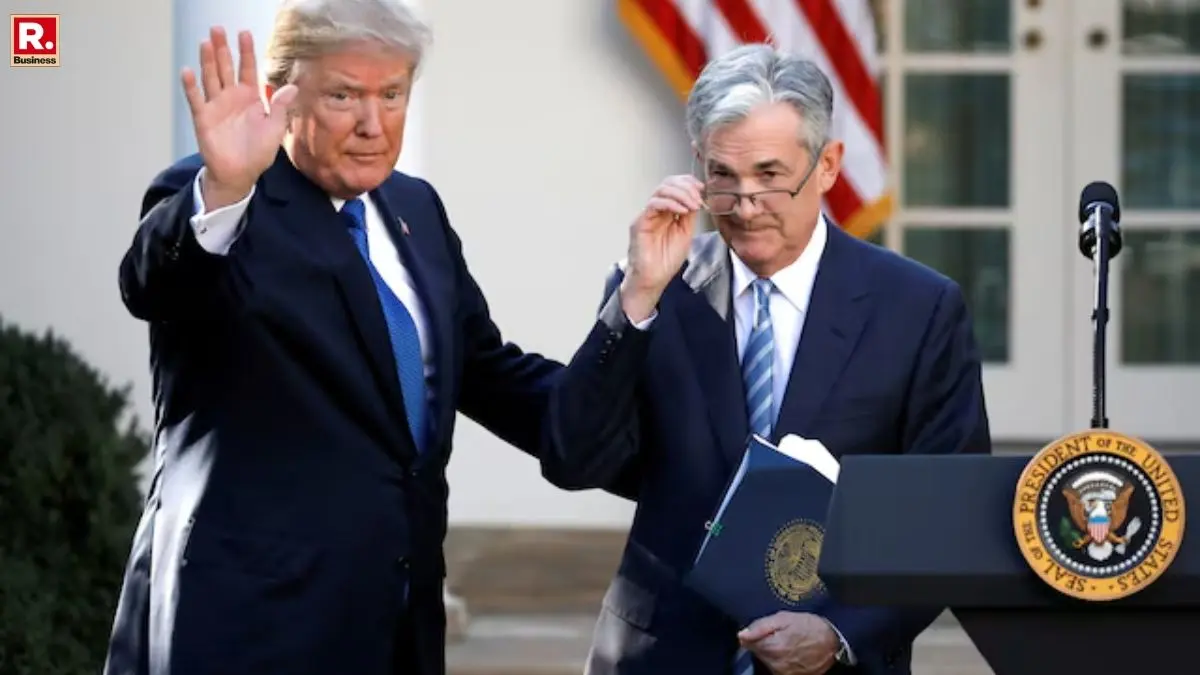
The US Justice Department has reportedly opened a criminal investigation into Federal Reserve Chair Jerome Powell, a development that market participants have described as a major shift in the relationship between the executive branch and the central bank.
The development has been cited by analysts as one of the most significant market-moving events of the week, with attention focused on its implications rather than the legal outcome of the probe.
According to Jefferies’ GREED & Fear report, the escalation could have lasting consequences for how the Federal Reserve is perceived and how future leadership at the institution is shaped.
Christopher Wood of Jefferies notes that criminal proceedings can have profound personal and institutional consequences, describing them as “life-changing experiences”. He writes, “If all this is a little shocking, it is also the case that investors have become somewhat numbed to the Trump-driven news cycle.”
Advertisement
The report adds that the episode could affect how future Federal Reserve chairs are viewed, with concerns that they may increasingly be perceived as political appointees rather than independent officials.
Advertisement
Focus Shifts to Debt Management
The Jefferies note places the reported investigation in the context of fiscal priorities, suggesting that current pressure on the Federal Reserve is closely linked to the cost of servicing US government debt.
The report states that this focus represents a departure from the Federal Reserve’s traditional mandate of managing inflation and supporting maximum employment.
As a result, the US Treasury is increasingly viewed by markets as exerting greater influence over macroeconomic policy. The report points to growing discussion around “Treasury QE” and a decline in bond market volatility as indicators of this shift.
Broader Critique of Fed Policy
The reported probe follows a wider intellectual and policy challenge to the Federal Reserve’s post-2008 monetary framework.
US Treasury Secretary Scott Bessent has publicly criticised what he described as the Fed’s “unorthodox” policies since the global financial crisis.
The critique highlighted concerns around wealth inequality, the Federal Reserve’s failure to anticipate the post-pandemic inflation surge, and operational spending issues, including renovation costs that reportedly rose to “US$2.5 billion by late 2024 against an initial 2018 budget of US$75 million.”
Market Response
While the news has been described as unexpected, the Jefferies note observes that many investors have become accustomed to rapid and unconventional developments in the policy and political landscape.
The report concludes that markets are now closely watching how institutional dynamics between the executive branch, the Treasury, and the Federal Reserve evolve in the coming period.