
At 18%, US Tariffs on India Below Key Asian Rivals, China Remains Outlier
India will face a lower US tariff rate of 18 % compared to several competing Asian export economies, including Indonesia (19%), Vietnam (20%), and Bangladesh (20%), while China remains subject to a much higher 34% duty. Although India’s tariff level is still above that of some developed US allies, the reset gives Indian exporters a relative advantage among major emerging market competitors.
- Republic Business
- 2 min read

;'%3e%3cpath%20d='m8,15.99c4.41,0,7.99-3.58,7.99-7.99S12.41,0,8,0,0,3.59,0,8s3.58,7.99,7.99,7.99Z'%20style='stroke:%23fff;%20stroke-miterlimit:10;%20stroke-width:.02px;'/%3e%3cpath%20d='m3.08,3.37l3.82,5.11-3.84,4.15h.87l3.37-3.64,2.72,3.64h2.94l-4.04-5.39,3.58-3.87h-.86l-3.1,3.35-2.5-3.35h-2.94Zm1.27.64h1.35l5.97,7.99h-1.35l-5.97-7.99Z'%20style='fill:%23fff;'/%3e%3c/g%3e%3c/svg%3e)


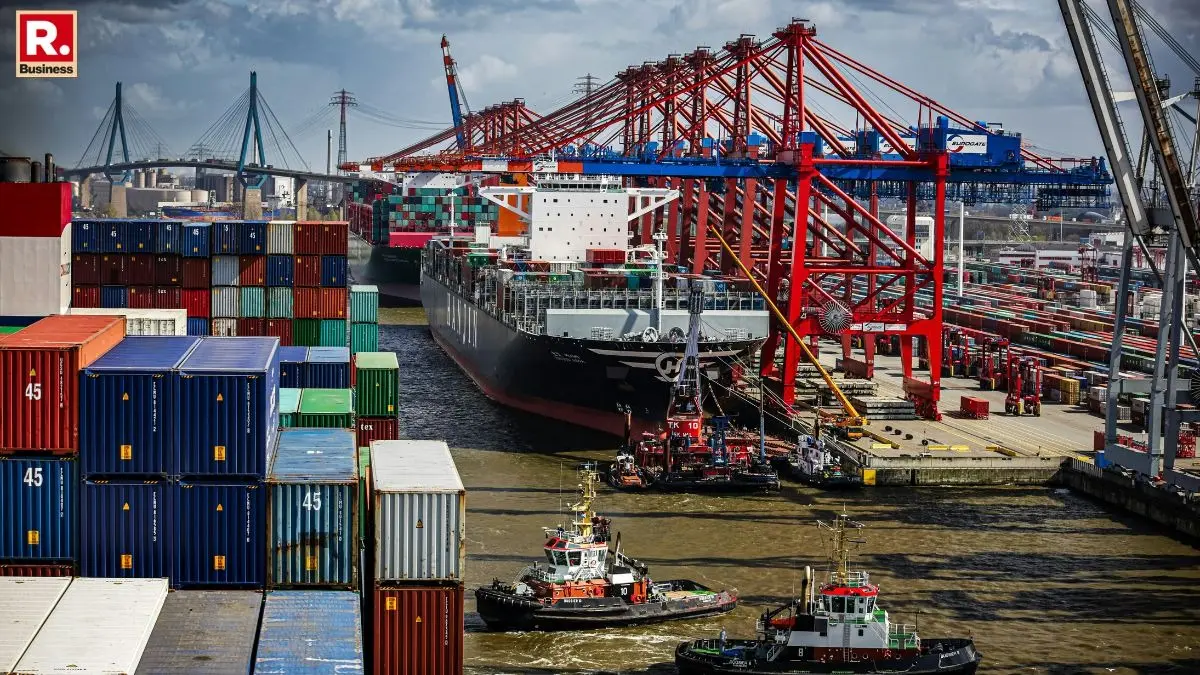
India has emerged with a lower tariff rate than several competing Asian export economies following the latest trade arrangement with the United States, improving its relative position in the American market.
Under the revised tariff framework, Indian goods entering the US will face an average tariff of 18%, placing India below a number of regional manufacturing and export peers.
By comparison:
- Indonesia faces a tariff of 19%
- Vietnam and Bangladesh are subject to 20%
- China continues to face a significantly higher tariff of 34%
The revised structure reflects a recalibration of US trade policy across Asia, with India now positioned more favourably than several large export-driven economies.
Advertisement
How India Compares with Regional Export Rivals?
The tariff gap, while measured in percentage points, can influence competitiveness across sectors such as textiles, apparel, engineering goods, electronics, and auto components, where pricing margins are tight.
Vietnam and Bangladesh, both major suppliers of garments and consumer goods to the US, remain subject to higher duties than India. Indonesia, another manufacturing hub, also faces a marginally higher tariff burden.
Advertisement
China stands apart, with tariffs more than double India’s rate, continuing a trend of elevated duties that reflect broader trade and strategic tensions rather than recent bilateral negotiations.
Position Relative to US Allies
While India’s tariff rate is lower than that of most emerging Asian export economies, it remains above that applied to several developed US partners.
Economies such as the European Union, Japan, South Korea, and Switzerland are generally subject to tariffs closer to 15%, while the United Kingdom benefits from even lower average duties.
This places India in a middle tier, competitive among emerging exporters, but not yet in the lowest tariff bracket reserved for long-standing US allies.
What Does the Tariff Reset Mean?
The new tariff structure reduces uncertainty for Indian exporters by replacing earlier, higher levies with a clearer and more predictable rate.
It also shows a shift in US trade engagement with India, aligning tariff treatment more closely with commercial considerations rather than punitive measures.
For India, the change improves relative pricing power in the US market at a time when global supply chains are being reassessed, and buyers are seeking alternatives to high-tariff jurisdictions.