
ATMA-PwC Report Projects Rs 1,300 Trillion Tyre Market in India by 2047
The Indian tyre industry could see revenues grow 12-fold to Rs 1,300 thousand crore by 2047, driven by rising OEM demand, exports, premiumisation, and sustainability measures, according to an ATMA-PwC report. A strategic “CHARGE” framework has been proposed to guide the sector’s growth
- Republic Business
- 2 min read

;'%3e%3cpath%20d='m8,15.99c4.41,0,7.99-3.58,7.99-7.99S12.41,0,8,0,0,3.59,0,8s3.58,7.99,7.99,7.99Z'%20style='stroke:%23fff;%20stroke-miterlimit:10;%20stroke-width:.02px;'/%3e%3cpath%20d='m3.08,3.37l3.82,5.11-3.84,4.15h.87l3.37-3.64,2.72,3.64h2.94l-4.04-5.39,3.58-3.87h-.86l-3.1,3.35-2.5-3.35h-2.94Zm1.27.64h1.35l5.97,7.99h-1.35l-5.97-7.99Z'%20style='fill:%23fff;'/%3e%3c/g%3e%3c/svg%3e)


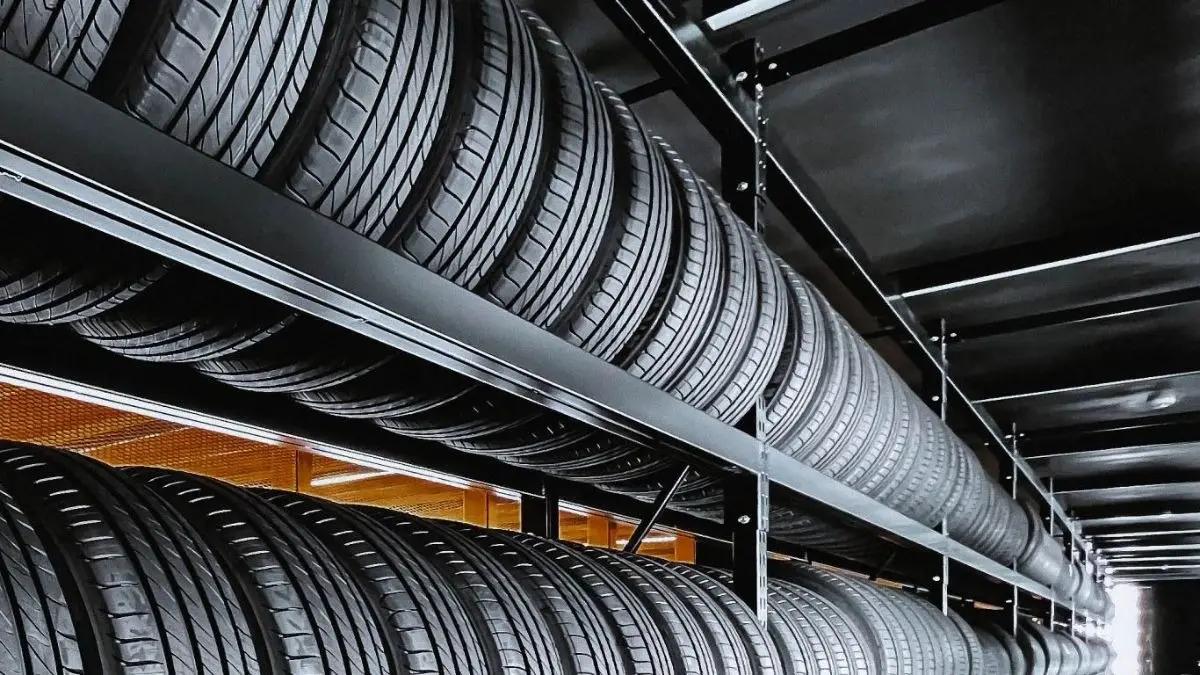
The Indian tyre industry is expected to undergo a major transformation over the next two decades, with revenues projected to increase twelve-fold by 2047, according to a report released jointly by the Automotive Tyre Manufacturers Association (ATMA) and PwC India.
The study, titled “Viksit Bharat 2047: Vision and Roadmap for the Indian Tyre Industry”, forecasts that production volumes could grow nearly four times during this period, while revenues may touch Rs 1,300 thousand crore. The growth will be driven by a combination of strong domestic demand, rising replacement needs, and the expansion of vehicle exports. A shift in the industry’s revenue mix, premiumisation of products, higher raw material costs, electrification of mobility, and export-led opportunities are expected to contribute significantly to the expansion.
Kavan Mukhtyar, Partner and Leader – Automotive at PwC India, said that India’s automotive growth presents an opportunity for tyre makers to expand exports, especially in passenger and commercial vehicle categories, to markets such as the US and the EU. He added that innovation in advanced material engineering, sustainability initiatives such as alternatives to natural rubber, and adoption of digital technologies will be key to enhancing competitiveness.
Arun Mammen, Chairman of ATMA, emphasised that the sector is at a turning point, shaped by economic growth and evolving mobility patterns. He noted that technology adoption, sustainability, and exports will be central to achieving the projected 12-fold revenue increase.
Advertisement
To guide this growth, PwC has proposed a strategic framework called “CHARGE,” which focuses on customer relevance, high-quality standards, adaptability, resilience, innovation, and partnerships. The framework highlights the importance of customer-centricity, operational efficiency, and alliances to maintain a competitive global position.
Advertisement
The report concludes that the industry’s ability to innovate, strengthen exports, and embed sustainability across operations will determine whether it can realise the long-term vision of contributing significantly to India’s automotive ambitions under Viksit Bharat 2047.