
Beyond The Paycheck: The CEO Who Handed 540 Employees A $240 Million ‘Thank You’
Fibrebond CEO Graham Walker secured $240 million for his 540 employees following a $1.7 billion sale to Eaton. Despite holding no equity, workers received average bonuses of $443,000. Walker made the payout a non-negotiable condition, rewarding decades of staff loyalty.
- Republic Business
- 4 min read

;'%3e%3cpath%20d='m8,15.99c4.41,0,7.99-3.58,7.99-7.99S12.41,0,8,0,0,3.59,0,8s3.58,7.99,7.99,7.99Z'%20style='stroke:%23fff;%20stroke-miterlimit:10;%20stroke-width:.02px;'/%3e%3cpath%20d='m3.08,3.37l3.82,5.11-3.84,4.15h.87l3.37-3.64,2.72,3.64h2.94l-4.04-5.39,3.58-3.87h-.86l-3.1,3.35-2.5-3.35h-2.94Zm1.27.64h1.35l5.97,7.99h-1.35l-5.97-7.99Z'%20style='fill:%23fff;'/%3e%3c/g%3e%3c/svg%3e)


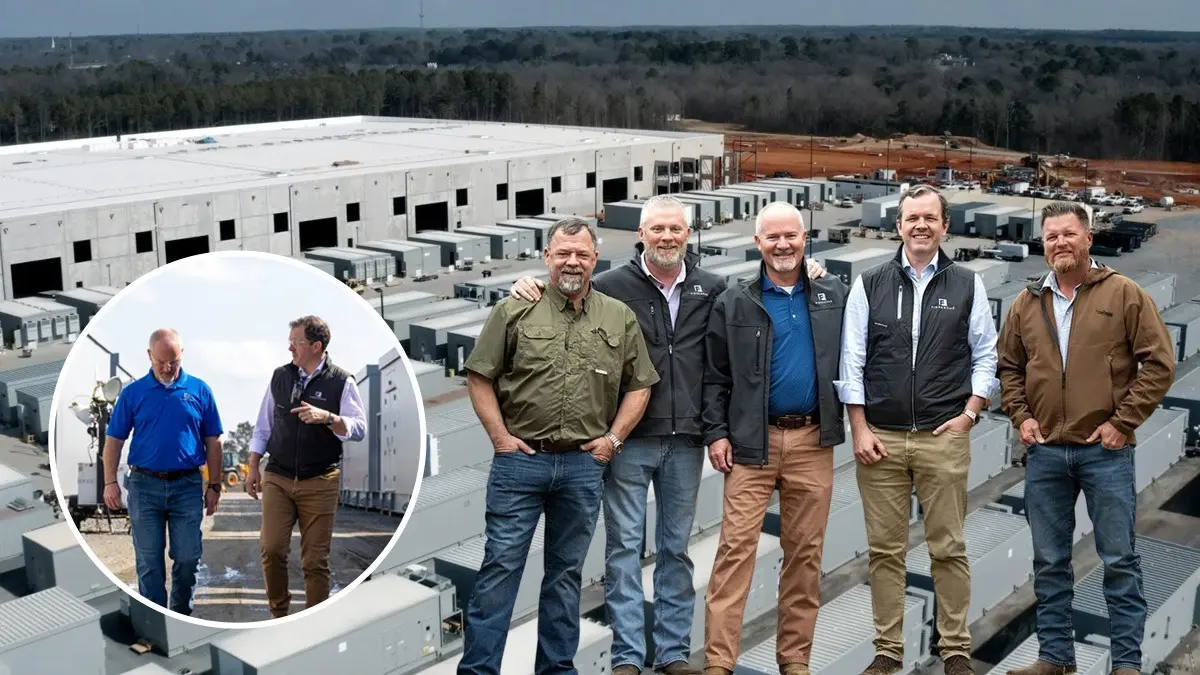
Graham Walker, the outgoing CEO of Fibrebond, a Louisiana-based manufacturer of electrical equipment enclosures, ensured that 540 full-time employees received a share of the proceeds from the company's $1.7 billion sale to Eaton earlier this year.
Walker made it a condition of the deal that 15% of the sale price, totaling around $240 million, go directly to workers, even though none held equity in the family-owned business, according to a report by The Wall Street Journal.
Bonuses began distributing in June, averaging $443,000 per employee and paid over five years, with higher amounts for longer-tenured staff.
Emotional Moments as Bonuses Are Revealed
Employees received their bonus letters in personal meetings with executives. Lesia Key, a 29-year veteran who started in 1995 earning $5.35 an hour, met Walker outdoors in March. After thanking her for her service, he presented a sealed envelope.
Advertisement
She opened it and broke down crying, as Walker struggled to compose himself.
“Before, we were going paycheck to paycheck,” Key says. “I can live now; I’m grateful,” as per the WSJ report.
Advertisement
Key paid off her home mortgage and opened a clothing boutique in a nearby town.
Many workers reacted with disbelief. Some thought it was a prank or asked about hidden cameras. “It was surreal, it was like telling people they won the lottery. There was absolute shock,” says Hector Moreno, a business-development executive who helped distribute the letters. “They said, ‘What’s the catch?’”
A Company History of Hardship and Loyalty
Fibrebond was founded in 1982 by Walker's father, Claud Walker, starting with a small team building structures for telecommunications and electrical equipment.
The company faced severe challenges, including a factory fire in 1998 that halted operations for months, during which the family continued paying salaries and the dot-com bust, which reduced customers to three and staff from about 900 to 320, as per the WSJ report.
Walker and his brother took over operations in the mid-2000s, focusing on debt reduction and new markets. By 2015, Graham Walker became CEO and shifted toward data center infrastructure, investing $150 million in expansion. Sales surged nearly 400% in the past five years, driven by demand for cloud computing, AI and energy exports.
Staff loyalty persisted through frozen salaries and limited local job options in Minden, a town of about 12,000. The company fostered a close-knit culture with perks like weekly snack gatherings and an employee assistance fund.
“We have a family vibe,” Key says. “Everybody cares about everybody.”
Why Walker Insisted on Sharing the Windfall
Walker told potential buyers the employee payout was non-negotiable. “It’s more than 10%,” he says of the 15% figure, adding no specific rationale beyond fairness.
He structured the bonuses through the buyer to optimise taxes and require most employees to stay five years for full payout, aiding the transition to Eaton ownership.
An Eaton spokeswoman says: “We came to an agreement with this second-generation, family-owned business that honors their commitments to their employees and the community.”
Walker, 46, steps down as CEO on December 31. “Close to a quarter-billion dollars in employees’ hands felt fair,” he says.
He hopes to hear long-term impacts: “I hope I’m 80 years old and get an email about how it’s impacted someone.”
Impact on Employees and the Community
Workers have used bonuses to clear debts, buy vehicles, fund education, plan retirements and take family vacations—one employee brought 25 relatives to Cancun.
In Minden, where Fibrebond is the largest employer, the influx has boosted local spending. According to the WSJ report, Mayor Nick Cox notes “a lot of buzz about the amount of money being spent” at retailers.
For retirees like Hong Blackwell, a 67-year-old logistics worker known as “TT,” the bonus enabled peaceful retirement after decades of service. “Now I don’t have to worry,” she says. “My retirement is nice and peaceful.”
This rare gesture stands out, as employee windfalls from sales typically go to shareholders, not rank-and-file staff without equity.