
From Skoda Auto To Ducati: What Does India's Auto Sector Expect From Budget 2026?
After ending 2025 with solid sales, automotive industry majors such as Skoda Auto Volkswagen India and Ducati India voice out key expectations from Union Budget 2026, which is set to be tabled on February 1, 2026.
- Republic Business
- 3 min read

;'%3e%3cpath%20d='m8,15.99c4.41,0,7.99-3.58,7.99-7.99S12.41,0,8,0,0,3.59,0,8s3.58,7.99,7.99,7.99Z'%20style='stroke:%23fff;%20stroke-miterlimit:10;%20stroke-width:.02px;'/%3e%3cpath%20d='m3.08,3.37l3.82,5.11-3.84,4.15h.87l3.37-3.64,2.72,3.64h2.94l-4.04-5.39,3.58-3.87h-.86l-3.1,3.35-2.5-3.35h-2.94Zm1.27.64h1.35l5.97,7.99h-1.35l-5.97-7.99Z'%20style='fill:%23fff;'/%3e%3c/g%3e%3c/svg%3e)


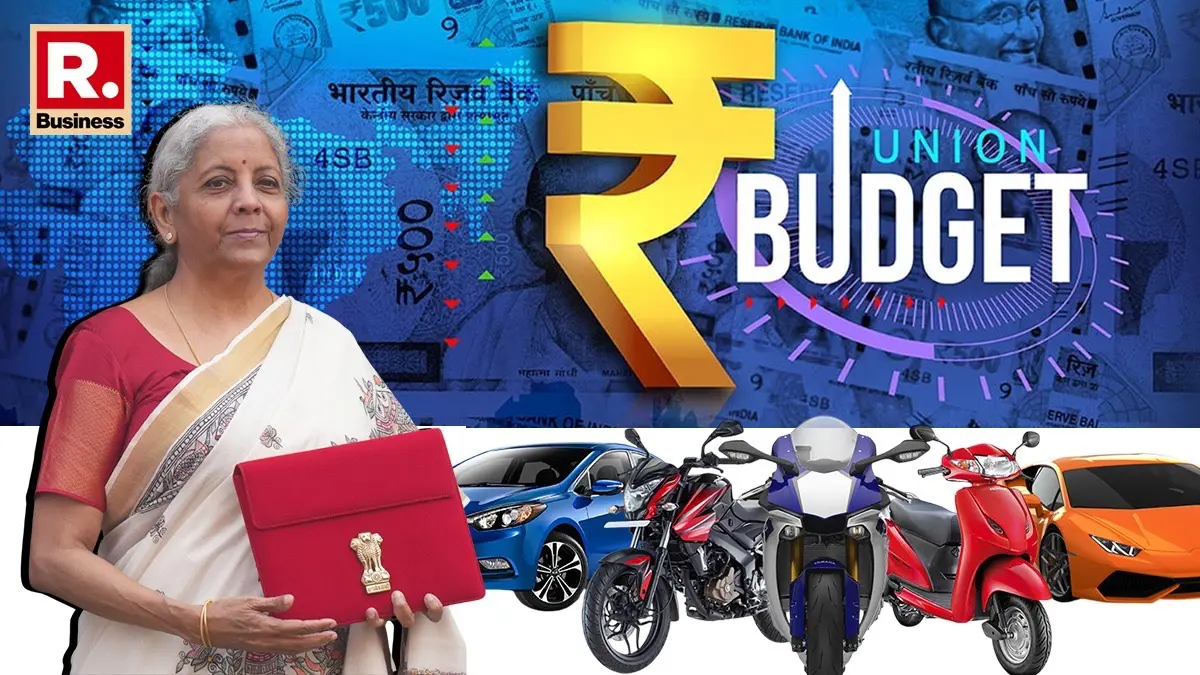
After ending 2025 with solid sales, automotive industry majors such as Skoda Auto Volkswagen India and Ducati India voice out key expectations from Union Budget 2026, which is set to be tabled on February 1, 2026.
India’s passenger vehicle sales stood at 4,04,231 units in December 2025, marking a 25.8% year-on-year (YoY) increase as against the same period last year. Coming to commercial vehicles, the south Asian nation sold 83,666 units, posting a 24.60% increase in YoY sales as compared to 67,145 units sold during the year-ago period.
What Does Skoda Auto Volkswagen India Expect From Budget 2026
Sharing his insights and anticipation from the upcoming Union Budget, Piyush Arora, MD & CEO of Skoda Auto Volkswagen India Pvt Ltd, said, “Sustained support for domestic manufacturing and increased allocation for road and transport infrastructure will be key priorities. Rationalising the inverted duty structure for EVs will strengthen domestic manufacturing and competitiveness, and will further accelerate India’s transition to sustainable mobility."
Advertisement
Commenting on expectations linked to electrical vehicles (EVs), he said, "Continued focus on building the EV ecosystem, alongside measures that support household disposable incomes, will be essential to sustain demand momentum and reinforce the sector’s role in India’s broader economic growth."
Ducati India's Expectations From Budget 2026
In December 2025, the two-wheeler vertical's domestic sales stood at 14,65,139 units, 38.72% higher as against 10,56,206 units sold in the same period in 2024.
Advertisement
Bipul Chandra, MD, Ducati India said, “As we look forward to the Union Budget 2026, our primary expectation is for a more inclusive tax framework that also considers the premium motorcycle segment."
"We hope the Budget introduces measures to harmonize GST rates for high-performance motorcycles, making global technology and advanced safety features more accessible to the growing community of Indian enthusiasts. A progressive policy that encourages premium mobility will not only strengthen the local ecosystem but also inspire international brands to deepen their long-term commitment to the Indian market," he said.
Key Expectations From India's Auto Component Sector
The Indian auto component industry recorded 6.8 per cent year-on-year growth in the first half of FY2026, with turnover at Rs 3.56 lakh crore, according to data released by the Automotive Component Manufacturers Association of India (ACMA).
Voicing sectoral expectations, Ravi Mehra, MD, Uno Minda, said, “Extending and deepening the PLI-Auto scheme to include EV subsystems such as sensors, semiconductors and advanced electronics will be critical to strengthening domestic value addition.”
"We also see strong merit in higher R&D incentives, a dedicated innovation fund for automotive electronics and clean mobility technologies, and faster tax dispute resolution mechanisms to unlock capital for growth," he said.