
India-UK Trade Deal: Why PM Narendra Modi's Visit To UK Is Crucial And What India Will Gain From It
India-UK Trade Deal: The UK and India are set to formally sign a free trade agreement on Thursday during Prime Minister Narendra Modi's UK visit, following three years of negotiations.
- Republic Business
- 4 min read

;'%3e%3cpath%20d='m8,15.99c4.41,0,7.99-3.58,7.99-7.99S12.41,0,8,0,0,3.59,0,8s3.58,7.99,7.99,7.99Z'%20style='stroke:%23fff;%20stroke-miterlimit:10;%20stroke-width:.02px;'/%3e%3cpath%20d='m3.08,3.37l3.82,5.11-3.84,4.15h.87l3.37-3.64,2.72,3.64h2.94l-4.04-5.39,3.58-3.87h-.86l-3.1,3.35-2.5-3.35h-2.94Zm1.27.64h1.35l5.97,7.99h-1.35l-5.97-7.99Z'%20style='fill:%23fff;'/%3e%3c/g%3e%3c/svg%3e)


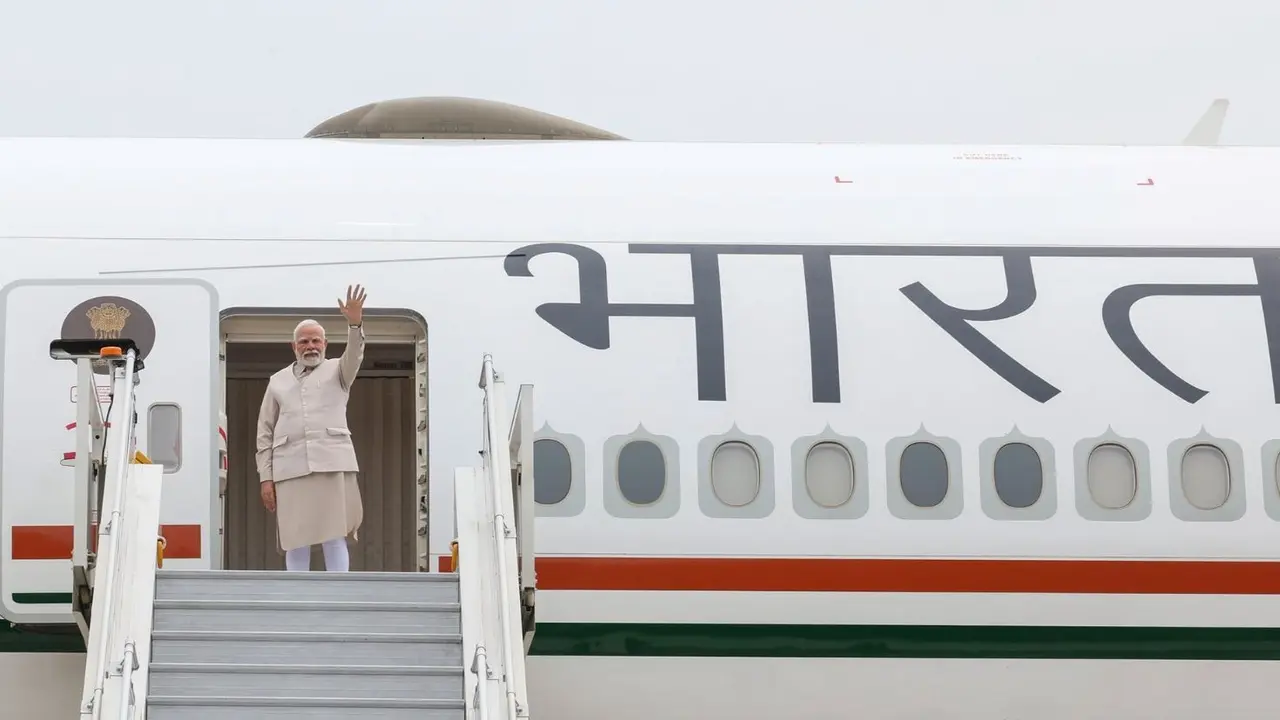
Prime Minister Narendra Modi left on Wednesday, July 23, 2025, for a four-day official visit to the United Kingdom and the Maldives. His trip to the UK is particularly important as it marks a major step forward in India-UK relations with the signing of a much-awaited Free Trade Agreement (FTA).
In his departure statement, PM Modi said, “India and the United Kingdom share a comprehensive strategic partnership that has witnessed significant progress in recent years.”
He added that the two countries collaborate across many areas, including trade, investment, innovation, education, defence, and health. “During my meeting with Prime Minister Rt Hon Sir Keir Starmer, we will have the opportunity to further enhance our economic partnership, aimed at fostering prosperity, growth, and job creation in both countries.”
The UK and India are set to formally sign a free trade agreement on Thursday during Prime Minister Narendra Modi's UK visit, following three years of negotiations.
Advertisement
What Is the India-UK Free Trade Agreement (FTA)?
The India-UK Free Trade Agreement, officially called the Comprehensive Economic and Trade Agreement (CEPA), was finalised in May 2025 after nearly three years of negotiations. It is expected to be formally signed on Thursday, July 24, in the presence of PM Modi and UK Prime Minister Keir Starmer. Union Commerce and Industry Minister Piyush Goyal will also be present during the signing ceremony.
According to India’s Foreign Secretary Vikram Misri, “This is a significant agreement,” adding that the legal review is nearly complete. The Union Cabinet has already approved the deal ahead of the Prime Minister’s departure.
Advertisement
Once signed and ratified by both countries, the trade pact will help remove trade barriers, lower tariffs, and make it easier for goods and services to flow between India and the UK.
What India Will Gain from the Deal
The India-UK trade agreement offers major benefits to Indian exporters. According to India’s Commerce Ministry, 99% of Indian exports to the UK will see zero duties under the new deal.
This includes key sectors such as textiles and garments, leather and footwear, toys and sports goods, marine products, gems and jewellery, engineering goods, auto parts, and organic chemicals.
Ajay Sahai, Director General of the Federation of Indian Export Organisations, said, “The UK is an important market for Indian exporters,” adding that the agreement will open doors for sectors like textiles, footwear, engineering, and marine products.
The FTA is expected to boost bilateral trade, which already reached $55 billion in 2023–24. The two countries aim to increase this number to $120 billion by 2030.
Tariff Reductions and Key Highlights
Under the new agreement:
- Tariffs on Scotch whisky, which currently stand at 150%, will drop to 75% immediately and fall further to 40% over the next 10 years.
- Tariffs on British cars, currently above 100%, will be reduced to 10% under a quota system.
- In return, Indian electric and hybrid vehicle manufacturers will gain greater access to the UK market, also under quotas.
- Nearly 90% of UK tariff lines will see cuts, benefiting British exporters.
On services, the deal covers areas like IT/ITES, financial and professional services, education, and architecture. The FTA will also simplify the mobility of Indian professionals and grant a three-year exemption from UK social security contributions for temporary Indian workers and their employers.
This means that Indian workers posted in the UK will no longer have to pay into the British social security system, reducing their financial burden.
Concerns and Challenges
While the FTA brings many benefits, some experts have raised concerns. For example, the drastic tariff reduction on imported cars could challenge the ‘Make in India’ initiative, especially for domestic automobile manufacturers. Tariff cuts could make imported British luxury cars more affordable, affecting Indian auto companies.
Additionally, certain issues like carbon border taxes and specific auto quotas are still under discussion and will be handled separately.
India’s Strong Investment Ties with the UK
India and the United Kingdom have a strong and growing economic relationship. The UK is currently India’s 6th largest investor, having invested a total of $36 billion so far. At the same time, around 1,000 Indian companies operate in the UK, providing jobs to over 100,000 people.
These Indian businesses have also made significant contributions to the British economy, investing nearly $20 billion. This shows the deep business ties between the two countries.
What Happens Next?
The FTA will come into force after it is ratified by both the British Parliament and India’s federal cabinet, which is expected to happen within a year. Once implemented, it is likely to become a landmark agreement that sets the tone for future India-EU or India-US trade talks.
Following the UK visit, Prime Minister Modi will travel to the Maldives for the second leg of his tour.