
Federal Reserve Set for Strategic Pause as $100 Oil and Geopolitical Tensions Reignite Inflation Risk
The Federal Reserve is widely expected to maintain interest rates at 3.50%–3.75% this week. Amid a sharp rally in crude oil and escalating Middle East tensions, the central bank faces a "higher for longer" reality, forcing a drastic repricing of global rate-cut expectations for 2026.
- Republic Business
- 3 min read

;'%3e%3cpath%20d='m8,15.99c4.41,0,7.99-3.58,7.99-7.99S12.41,0,8,0,0,3.59,0,8s3.58,7.99,7.99,7.99Z'%20style='stroke:%23fff;%20stroke-miterlimit:10;%20stroke-width:.02px;'/%3e%3cpath%20d='m3.08,3.37l3.82,5.11-3.84,4.15h.87l3.37-3.64,2.72,3.64h2.94l-4.04-5.39,3.58-3.87h-.86l-3.1,3.35-2.5-3.35h-2.94Zm1.27.64h1.35l5.97,7.99h-1.35l-5.97-7.99Z'%20style='fill:%23fff;'/%3e%3c/g%3e%3c/svg%3e)


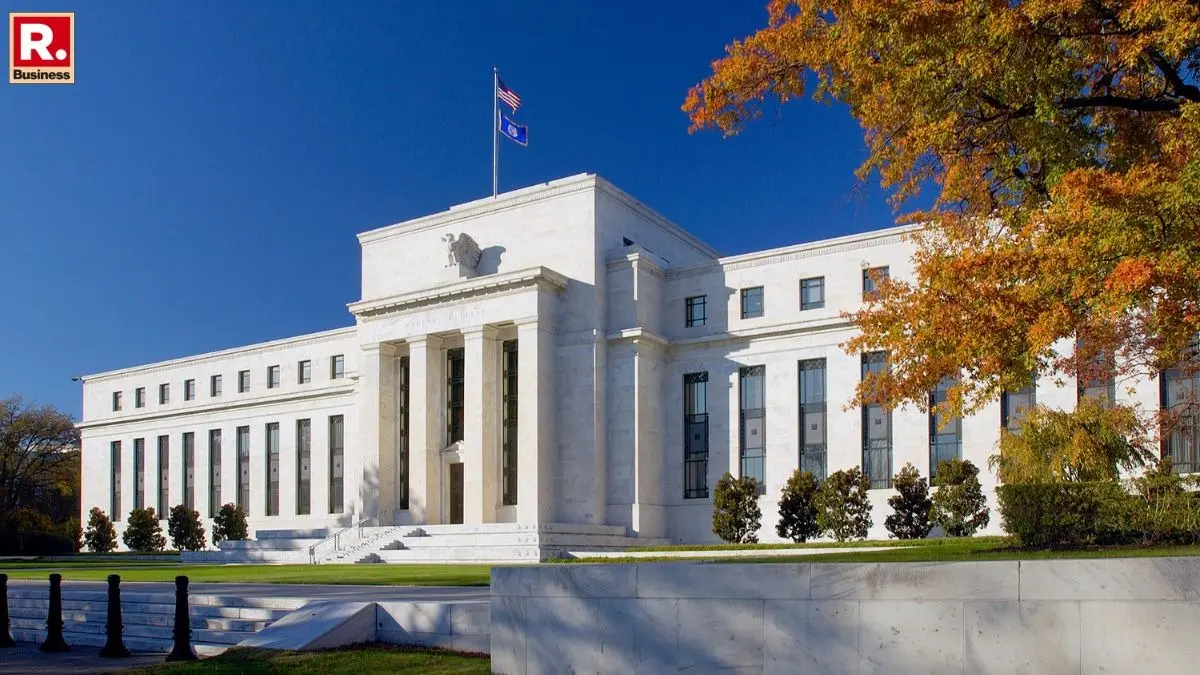
The U.S. Federal Reserve is expected to keep interest rates steady this week, pivoting from a cycle of easing to a wait-and-see stance as a surge in global oil prices and persistent core inflation are complicating the path toward further cuts.
Market experts and major investment banks have rapidly recalibrated their forecasts. Goldman Sachs and Morgan Stanley don't think interest rates will drop until late 2026. Because of this, everyone is now looking forward to the Fed's hints about the future and their official "dot plot" map of where they think rates are going.
The primary catalyst for this change is the energy market, which has stayed highly volatile since the West Asia conflict began. Brent crude, which hovered near $80 just weeks ago, has spiked toward the $100 mark as the conflict in the Strait of Hormuz is disrupting 20% of global oil trade.
“The upcoming Federal Reserve meeting is expected to result in a pause. The policy rate will likely stay in the 3.50% to 3.75% range. However, the main focus will be on forward guidance instead of the decision itself,” said Harsha Vardhana, Founder & Group CEO of Atom Privé Financial Services.
Advertisement
Vardhana noted that market expectations have changed from anticipating several cuts in 2026 to barely one. “This shift is mainly due to the renewed inflation risks caused by rising crude oil prices, which are approaching the $90 to $100 per barrel range amid geopolitical tensions,” he added.
‘Higher for Longer’ Returns
Wall Street giants are in agreement with this caution. JPMorgan Global Research recently warned that sticky inflation remains a prevailing theme for 2026, with a transition among central banks to hold rates at levels significantly higher than pre-pandemic norms. Similarly, Goldman Sachs raised its year-end PCE inflation forecast to 2.9%. It cited that the drag will come from higher energy costs and tighter financial conditions.
Advertisement
The yield on the U.S. 2-year Treasury, a bellwether for short-term rate expectations, has risen toward 4.7%. This hints that the bond market has already priced in a "higher for longer" regime.
Impact on Emerging Markets
For emerging economies like India, a hawkish Fed creates a double-edged sword: high domestic fuel inflation and potential capital outflows.
“The Fed is in a tricky spot. While overall inflation has decreased to about 2.4% to 2.5%, core inflation remains high and sensitive to energy-driven shocks,” Vardhana observed. “For global markets, including India, this meeting will influence liquidity conditions in the coming quarters. A delayed rate-cut cycle could make capital flows unstable and put pressure on emerging markets.”
As the Federal Open Market Committee (FOMC) concludes its two-day meeting on Wednesday, the key takeaway for investors remains one of resilience over exuberance. Tighter financial conditions are expected to persist well into the third quarter, leaving little room for a quick directional change by the world's most powerful central bank.