
From Ally to Adversary? Trump’s Moves Put US-India Relations on Edge
Evan A. Feigenbaum warns that Donald Trump’s tariffs, sanctions, and pro-Pakistan moves risk undoing two decades of U.S.-India progress. Rising mistrust and politicisation in both countries could erode bipartisan trust, the foundation of the strategic partnership.
- Republic Business
- 2 min read

;'%3e%3cpath%20d='m8,15.99c4.41,0,7.99-3.58,7.99-7.99S12.41,0,8,0,0,3.59,0,8s3.58,7.99,7.99,7.99Z'%20style='stroke:%23fff;%20stroke-miterlimit:10;%20stroke-width:.02px;'/%3e%3cpath%20d='m3.08,3.37l3.82,5.11-3.84,4.15h.87l3.37-3.64,2.72,3.64h2.94l-4.04-5.39,3.58-3.87h-.86l-3.1,3.35-2.5-3.35h-2.94Zm1.27.64h1.35l5.97,7.99h-1.35l-5.97-7.99Z'%20style='fill:%23fff;'/%3e%3c/g%3e%3c/svg%3e)


Evan A. Feigenbaum, former US deputy assistant secretary of state and vice president for studies at the Carnegie Endowment for International Peace, has cautioned that recent moves by US President Donald Trump risk undoing over twenty years of bipartisan progress in US-India relations.
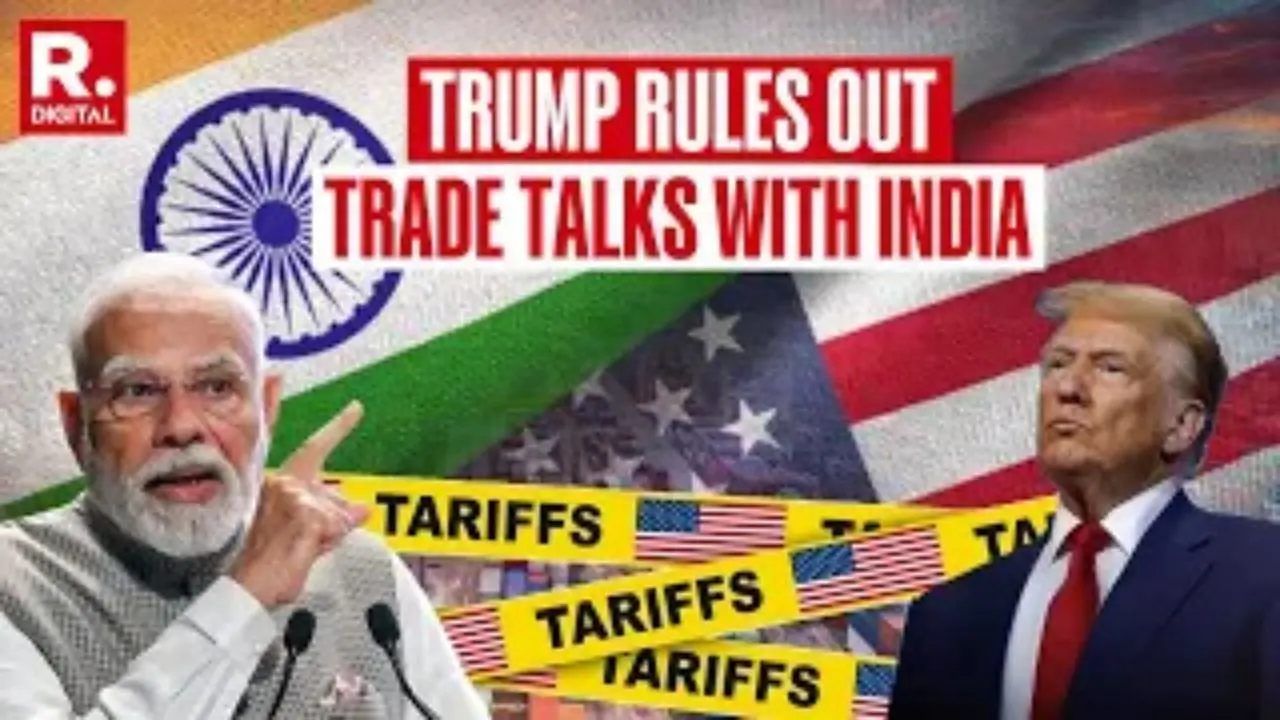
In his column “Donald Trump Risks Twenty-Five Years of U.S.-India Relations”, Feigenbaum argues that the Trump administration’s actions — including halting trade talks, imposing and threatening steep tariffs, sanctioning India’s oil imports from Russia, criticizing “Make in India” manufacturing, and engaging closely with Pakistan’s military leadership — have reignited “mistrust” in New Delhi.
He notes that these measures are seen by Indian policymakers as coercive, intrusive, and politically provocative, especially in the wake of the April 22 terrorist attack in Pahalgam that killed 26 civilians.
Feigenbaum points out that, for the first time in decades, relations with Washington have become a volatile domestic political issue in India, with opposition parties and the public pressing the Narendra Modi government not to appear weak in response to Trump’s rhetoric.
Drawing on his own experience during the 2008 civil nuclear deal negotiations, he warns that once domestic politics dominates the bilateral agenda, even the most promising strategic partnerships can falter.
Also read: Indian Envoy’s High-Stakes Talks With US Senator Amid Tariff Threat and Russian Oil Row | Republic World
He highlights five key risks: Washington’s unwillingness to take political risks for India; a diminished sensitivity to India’s concerns over Pakistan; escalating disputes over third-party ties such as India’s energy trade with Russia; an abandonment of measured diplomatic tone; and the erosion of bipartisan support in both capitals.
Feigenbaum likens the situation to US-China ties, where decades of deep economic integration unravelled quickly once domestic politics shifted. He fears US.-India relations may follow a similar path, with trust proving difficult to rebuild.
Advertisement
Calling the repoliticisation of the relationship a “slow-motion catastrophe,” Feigenbaum stresses that bipartisan trust has been the bedrock of the partnership since the early 2000s — and that losing it could derail strategic cooperation for years to come.