
From Iran War To External Sector Volatility: What Triggered Rupee's Depreciation In May?
Reserve Bank of India is expected to keep policy rates unchanged in the upcoming monetary policy meeting, according to a top wealth and asset management firm.
- Republic Business
- 3 min read

;'%3e%3cpath%20d='m8,15.99c4.41,0,7.99-3.58,7.99-7.99S12.41,0,8,0,0,3.59,0,8s3.58,7.99,7.99,7.99Z'%20style='stroke:%23fff;%20stroke-miterlimit:10;%20stroke-width:.02px;'/%3e%3cpath%20d='m3.08,3.37l3.82,5.11-3.84,4.15h.87l3.37-3.64,2.72,3.64h2.94l-4.04-5.39,3.58-3.87h-.86l-3.1,3.35-2.5-3.35h-2.94Zm1.27.64h1.35l5.97,7.99h-1.35l-5.97-7.99Z'%20style='fill:%23fff;'/%3e%3c/g%3e%3c/svg%3e)


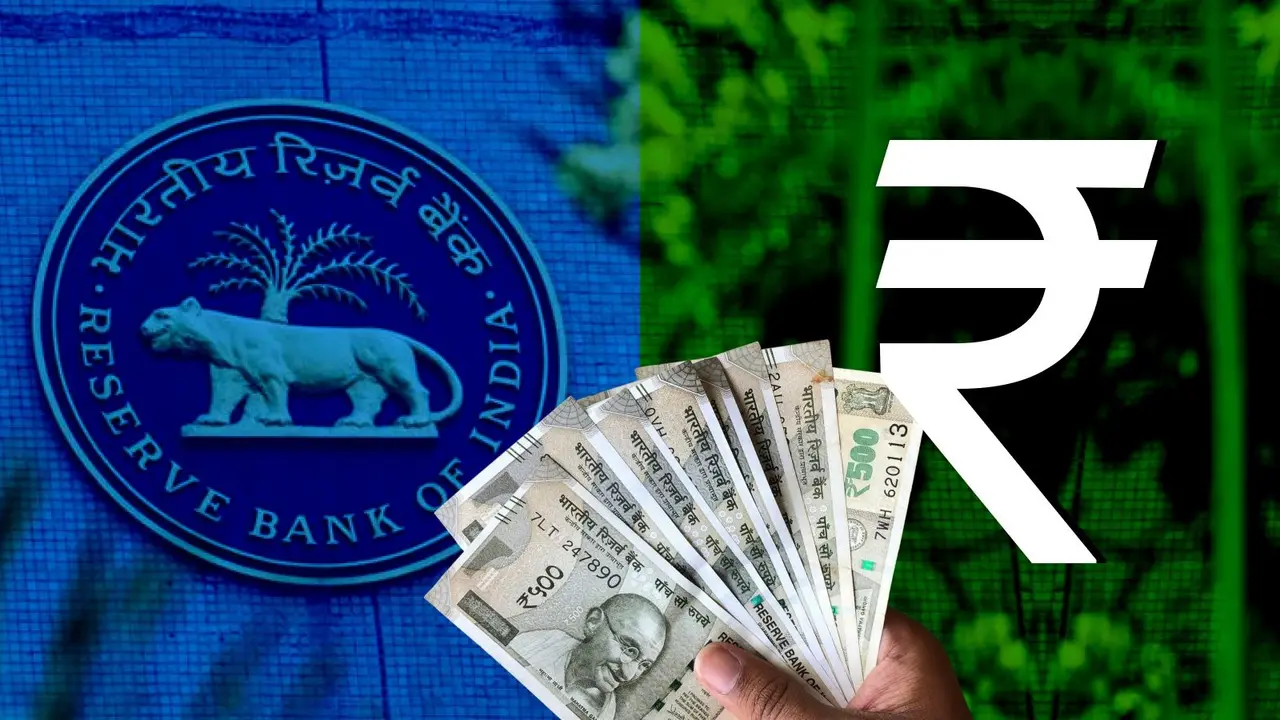
The rupee has weakened significantly since the sharp depreciation in CY25, tracking external sector turbulence and developments linked to the West Asia conflict.
Why Rupee Depreciates Faster Than Other Currencies?
Continued FPI selling, weak Net FDI and negative capital flows has resulted in rupee's depreciation by 6.1% against the US dollar, 6.0% against the GBP, 5.0% versus the Euro, and 4.6% against the JPY in 2026 thus far.
Meanwhile, the Reserve Bank of India (RBI) has intervened in the forex (FX) market to manage volatility, selling a net USD 53.0 billion during FY2026.
However, it has also allowed the rupee to adjust lower, partly to support export competitiveness at a time when Indian exporters are disproportionately affected by external turbulence.
Advertisement
As a result of the recent depreciation, the REER is now about 13.7% below its long-term average, indicating that the rupee is more competitive in real terms than in previous years.
The pressure however, continues to prevail over the rupee as a result of the West Asia conflict, which makes India dependent on St of Hormuz for energy needs.
Advertisement
"Overall, we expect a mild depreciation of the INR, broadly limited to the inflation and interest rate differential of 1.5%–2.5%. INR could see a short term appreciation once the West Asia conflict ends decisively," according to a top wealth and asset management firm's report.
June MPC: Will RBI Keep Policy Rate Unchanged?
Amid the the ongoing geopolitical uncertainties, the "Reserve Bank of India is expected to keep policy rates unchanged in the upcoming monetary policy meeting, with inflation still within the tolerance band and demand-side price pressures remaining contained," according to to Capital 36 One.
The RBI is also likely to "continue supporting the banking system through liquidity measures."
However, elevated inflationary pressures and the risk of a wider fiscal deficit could keep domestic bond yields under upward pressure.
"A prolonged conflict would further increase the risk of a shift toward a tighter monetary policy stance, including the possibility of policy rate hikes in the second half of CY2026," it added.
India's Growth Momentum After 3 Months Of Iran-US War
India’s growth momentum has remained resilient despite heightened global uncertainty, supported by robust domestic consumption and sustained public investment.
However, the conflict in West Asia poses risks through higher inflation, slower growth, and potential pressure on remittances from Gulf economies. These risks are amplified by possible disruptions to the supply of crude oil, natural gas, and LPG, a significant portion of which transits through the Strait of Hormuz.
India sources nearly 50% of its LPG and around 30% of its natural gas requirements through this route.
While the net petroleum import bill has declined from 5.5% of GDP in FY14 to around 3.0% in FY25, the economy remains exposed to a prolonged disruption in energy supplies.
The duration of the conflict will be critical, as the impact on key macroeconomic variables could become increasingly severe and non-linear if disruptions persist.