
From World Wonders to Nature-Positive Cities: What Global Investors Are Looking for Next
How integrated urban ecosystems are redefining the next generation of global landmarks, as investors prioritize resilience, sustainability and long-term value.
- Republic Business
- 3 min read

;'%3e%3cpath%20d='m8,15.99c4.41,0,7.99-3.58,7.99-7.99S12.41,0,8,0,0,3.59,0,8s3.58,7.99,7.99,7.99Z'%20style='stroke:%23fff;%20stroke-miterlimit:10;%20stroke-width:.02px;'/%3e%3cpath%20d='m3.08,3.37l3.82,5.11-3.84,4.15h.87l3.37-3.64,2.72,3.64h2.94l-4.04-5.39,3.58-3.87h-.86l-3.1,3.35-2.5-3.35h-2.94Zm1.27.64h1.35l5.97,7.99h-1.35l-5.97-7.99Z'%20style='fill:%23fff;'/%3e%3c/g%3e%3c/svg%3e)


For more than two millennia, humanity has celebrated its greatest achievements through the idea of "wonders".
The Seven Wonders of the Ancient World honored extraordinary feats of engineering. The New7Wonders campaign later recognized iconic monuments and, eventually, nature itself, from the Great Wall of China to the Amazon Rainforest and Vietnam's Ha Long Bay.
Today, another type of landmark is beginning to emerge. Rather than separating cities from nature, a new generation of urban developments seeks to integrate ecological restoration, resilient infrastructure and long-term economic value. Increasingly, these projects are attracting attention not only from architects and planners, but also from institutional investors.
That shift reflects broader changes in global real estate investment. According to the Urban Land Institute (ULI) and PwC's Emerging Trends in Real Estate Global Outlook 2026, improving market fundamentals and returning liquidity are restoring investor confidence, but capital allocation has become far more selective. Rather than asking whether to invest, investors are increasingly asking where, how and in what form capital can generate resilient long-term value.
Advertisement
The same theme appears across the industry. JLL notes that global real estate markets entered 2026 with resilient fundamentals, supported by healthy capital markets and growing direct investment activity despite macroeconomic uncertainty. Investors continue to deploy capital, but increasingly favor projects backed by strong execution, quality assets and sustainable long-term demand.
Against this backdrop, large-scale urban developers are increasingly evaluated not only by the projects they envision, but by their ability to consistently deliver integrated communities that remain economically, socially and environmentally resilient over decades.
Advertisement
This evolving investment thesis helps explain why developers such as Vinhomes are drawing growing attention.
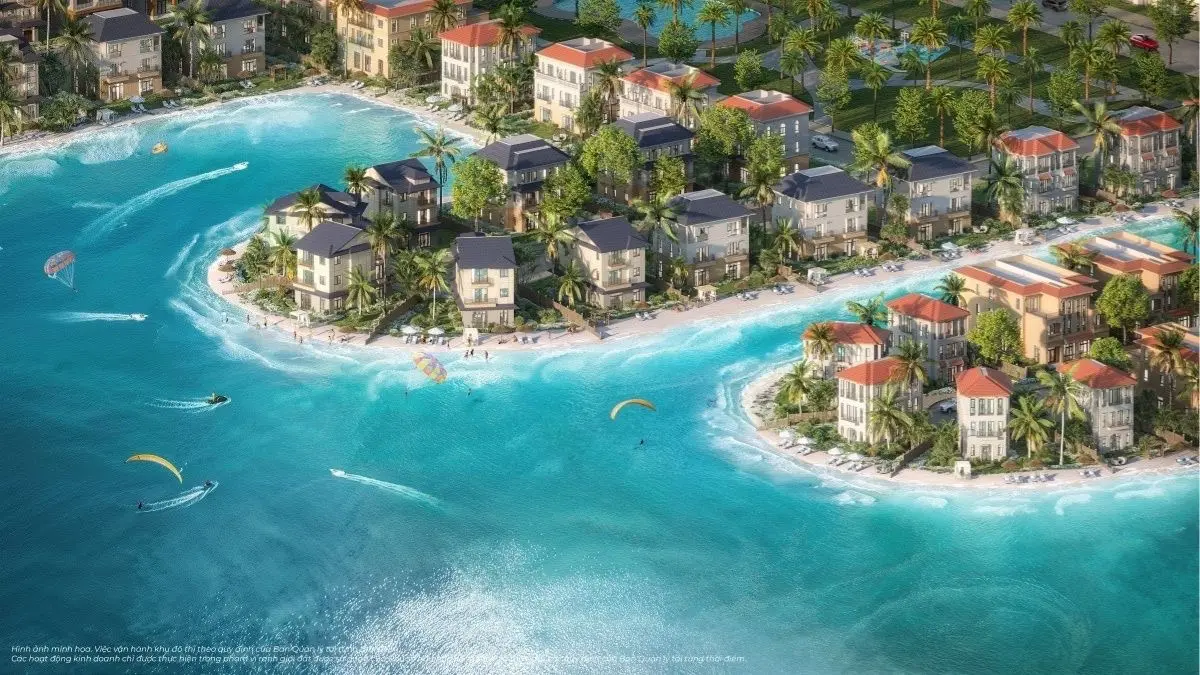
Rather than approaching individual projects as standalone real estate developments, the company has focused on creating integrated urban ecosystems. Projects such as Vinhomes Green Paradise in Can Gio combine coastal restoration, low-density planning, renewable energy ambitions and large-scale public infrastructure, while Vinhomes Global Gate Ha Long is designed to complement the surrounding UNESCO World Heritage landscape through integrated urban planning.
Execution has become another differentiator. By the end of 2025, Vinhomes had delivered more than 34,000 residential units, generated VND183.1 trillion in equivalent revenue and achieved VND43.3 trillion in net profit. Contracted sales reached VND205.3 trillion, while approximately 650,000 residents now live across Vinhomes developments nationwide, demonstrating an ability to build and operate large-scale urban communities over time.
In many ways, this reflects an evolution in how great places are defined. If the world's historic wonders celebrated engineering excellence or nature's grandeur, the next generation of landmarks may be judged by a different standard: their ability to restore ecosystems, sustain thriving communities and create long-term value. Through projects such as Vinhomes Green Paradise and Vinhomes Global Gate Ha Long, Vinhomes is positioning itself within this emerging conversation. Notably, Vinhomes Green Paradise became the first Official Participant in New7Wonders' global campaign to identify the 7 Wonders of Future Cities.
Internationally, this approach reflects a broader evolution in urban development. While each responds to different local contexts, they share a common objective, creating cities that generate enduring value beyond conventional property development. Whether these developments become the "next generation of world wonders" will ultimately be judged over decades rather than years. Yet one trend is already clear. As global real estate capital becomes more selective, investors increasingly favor developers capable of combining resilient planning, operational execution and long-term sustainability. Increasingly, success is measured not simply by what cities build, but by how well they create places where people, economies and nature can thrive together.