
Oil Retreats From $100 Peak: Markets Weigh Potential Peace Talks Against Hormuz Blockade
Global oil benchmarks retreated on Tuesday morning as investors weighed the reality of a U.S. naval blockade of Iranian ports against emerging signs of renewed diplomatic dialogue between Washington and Tehran. After surging past $100 on Monday following the collapse of peace talks in Islamabad, Brent and WTI futures saw a correction as market participants reacted to comments suggesting a "carrot" of a potential deal remains on the table.
- Republic Business
- 2 min read

;'%3e%3cpath%20d='m8,15.99c4.41,0,7.99-3.58,7.99-7.99S12.41,0,8,0,0,3.59,0,8s3.58,7.99,7.99,7.99Z'%20style='stroke:%23fff;%20stroke-miterlimit:10;%20stroke-width:.02px;'/%3e%3cpath%20d='m3.08,3.37l3.82,5.11-3.84,4.15h.87l3.37-3.64,2.72,3.64h2.94l-4.04-5.39,3.58-3.87h-.86l-3.1,3.35-2.5-3.35h-2.94Zm1.27.64h1.35l5.97,7.99h-1.35l-5.97-7.99Z'%20style='fill:%23fff;'/%3e%3c/g%3e%3c/svg%3e)


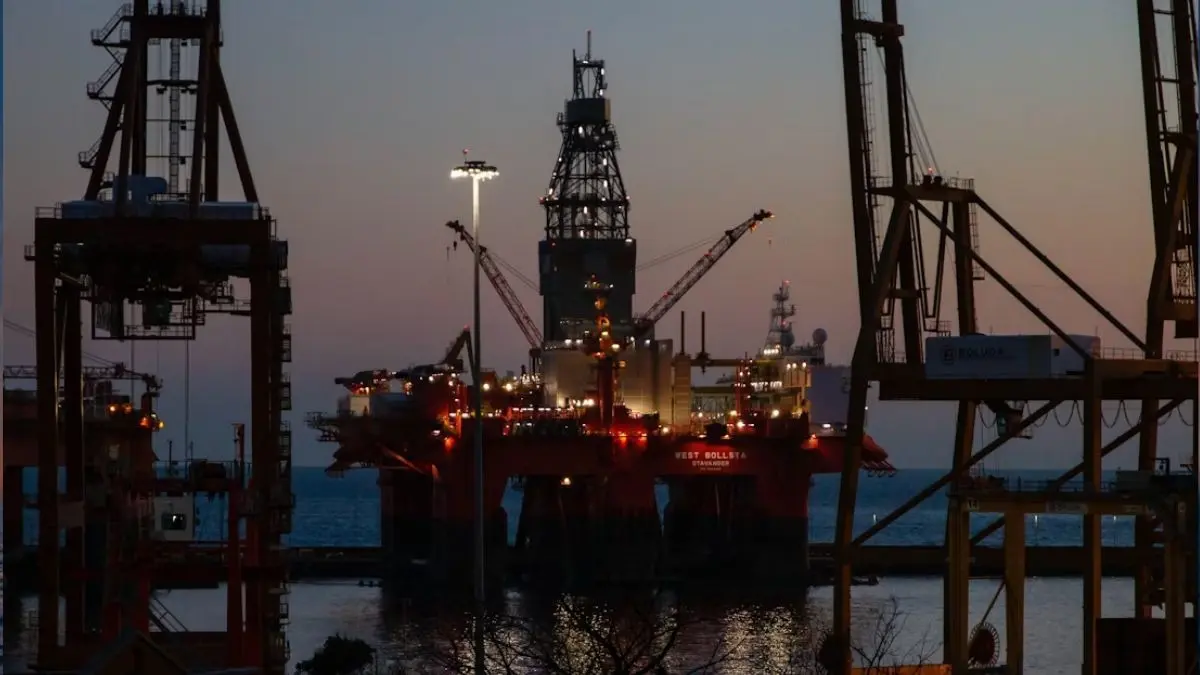
Oil prices fell in early Asian trade on Tuesday as signs of potential U.S.-Iran dialogue to end their conflict reduced immediate concerns about severe supply disruptions, even as U.S. naval blockade of the Strait of Hormuz remained in effect. By 10:25 AM IST, Brent crude futures dropped $1.55, or 1.56%, to $97.82 a barrel. U.S. West Texas Intermediate (WTI) crude fell $1.98, or 2.00%, to $97.10. The retreat follows a volatile Monday session where prices spiked nearly 8% after the U.S. military began interdicting vessels at Iranian ports.
Despite the breakdown of high-level talks in Pakistan over the weekend, U.S. officials indicated on Monday that Iran "wants to make a deal," suggesting the diplomatic channel is not entirely closed. The oil market no longer needs a worst-case escalation to justify higher prices, and the prospect of renewed talks is effectively capping the aggressive moves seen in the previous session.
However, the reality on the water remains tight. The U.S. blockade of the Strait of Hormuz has forced several tankers to alter course, according to ship-tracking data. While prices are cooling due to speculative shifts, nearly 10 million barrels per day (bpd) of supply remains under pressure from the ongoing naval standoff.
Impact on Domestic Markets
For India, the world’s third-largest oil consumer, the price volatility remains a critical concern for fiscal stability. While domestic retail fuel prices in major metros like Delhi and Mumbai remained stable on Tuesday morning, a sustained period of crude trading above $95 will likely necessitate a revision in petrol and diesel rates by state-run retailers within the next 7 to 10 days.
Advertisement
If diplomatic efforts fail to materialize into a formal meeting or ceasefire, Brent could quickly test the $105–$110 range, citing intensifying supply squeezes as the global economy grapples with restricted Iranian exports.