
GST 2.0 Explained: Expert Decodes What New Tax Slabs Mean for Your Clothes & Shoes
The GST Council’s fitment committee is considering a major overhaul of India’s tax structure, moving from four rates to two. While the Centre proposes abolishing 12% and 28% slabs, tax expert Ved Jain warns that differential pricing for garments and footwear could create disputes, encourage evasion, and undermine GST 2.0’s goal of simplification.
- Republic Business
- 3 min read

;'%3e%3cpath%20d='m8,15.99c4.41,0,7.99-3.58,7.99-7.99S12.41,0,8,0,0,3.59,0,8s3.58,7.99,7.99,7.99Z'%20style='stroke:%23fff;%20stroke-miterlimit:10;%20stroke-width:.02px;'/%3e%3cpath%20d='m3.08,3.37l3.82,5.11-3.84,4.15h.87l3.37-3.64,2.72,3.64h2.94l-4.04-5.39,3.58-3.87h-.86l-3.1,3.35-2.5-3.35h-2.94Zm1.27.64h1.35l5.97,7.99h-1.35l-5.97-7.99Z'%20style='fill:%23fff;'/%3e%3c/g%3e%3c/svg%3e)


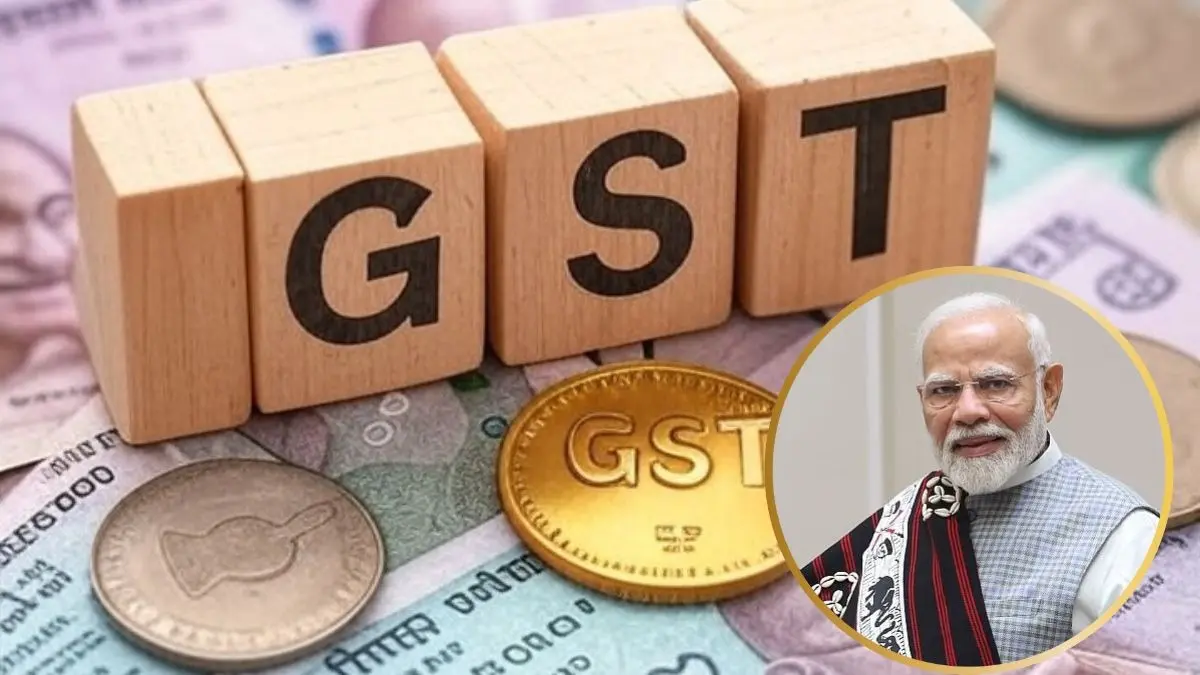
The Goods and Services Tax (GST) Council’s fitment committee is set to meet today to finalise the Centre’s recommendations on restructuring the tax regime. The government has proposed reducing the existing four-rate system to a simplified two-rate framework under GST 2.0.
Centre’s Proposal: From Four Rates to Two
According to the recommendation, the 12% GST slab will be scrapped, with most items currently under this rate moving to the 5% bracket, while a smaller share will be shifted to 18%. Similarly, the 28% slab will be abolished, with many products migrating to 18%, while “sin” and luxury goods will attract a much higher rate of 40%.
This restructuring is being pitched as part of the government’s broader agenda to simplify India’s indirect tax system, which has faced criticism for complexity and compliance burdens since its rollout in 2017.
Apparel and Footwear: The Flashpoint
The biggest point of contention arises in the garment and footwear segment. Currently, apparel and footwear priced below Rs 1,000 attract 5% GST, while items above that threshold are taxed at 12%.
As per emerging reports, the proposal suggests that items costing below ₹2,500 will be taxed at 5%, while those priced above ₹2,500 will fall under the 18% slab.
“One Item, Two Rates Defeats GST 2.0”: Ved Jain
Tax expert Ved Jain has raised red flags over the proposal, arguing that it undermines the very spirit of GST reforms.
“In my opinion this will again create a multiple level of taxation of the same item and the disputes and the transparency which we are hoping in the GST 2.0 reforms may not be achieved,” Jain said.
He warned that differential taxation of the same product based on selling price would create confusion, encourage tax evasion, and complicate enforcement.
Example of Complexity
Jain illustrated the challenge with a practical example. If a trader purchases a garment at Rs 2,400 and pays 5% GST (Rs 120), but later sells it at Rs 2,600 after adding a Rs 200 profit margin, the higher bracket kicks in. The trader must then collect 18% GST (₹468), creating an additional GST liability of Rs 348 on a modest profit.
“Just imagine, on a profit margin of Rs 200, the additional GST liability will be Rs 348. This will encourage tax evasion and also lead to complications in enforcement,” Jain explained.
Call for Simplicity
Jain emphasised that the objective of GST 2.0 should be “one nation, one tax—at least for the same item.” He suggested that garments and footwear should be taxed uniformly, either at 5% or 18%, instead of introducing thresholds that create multiple rates for identical goods.
“Having two rates for the same item doesn’t gel well with this objective. If the same nature of item is taxed differently based on selling price, it will again lead to complication, lack of transparency, and pose challenges in achieving the simplified GST regime,” he cautioned.
The GST Council is expected to deliberate on these recommendations in its upcoming sessions. While the government aims to simplify the tax regime and enhance compliance under GST 2.0, experts believe that differential taxation could dilute the reform’s intent. A clear decision on uniform rates will be crucial in determining whether GST 2.0 truly delivers on its promise of a “simpler, transparent, and one-nation-one-tax” system.