
GST 2.0: What to Expect from the Landmark Tax Reform Agenda at the September 3–4 GST Council Meeting
The GST Council meets on Sept 3–4 to discuss GST 2.0, a major reform plan proposing tax cuts on 175 items, a simplified three-slab structure, and rate reductions on essentials and durables. While markets cheer, states warn of revenue losses and seek compensation from the Centre.
- Republic Business
- 2 min read

;'%3e%3cpath%20d='m8,15.99c4.41,0,7.99-3.58,7.99-7.99S12.41,0,8,0,0,3.59,0,8s3.58,7.99,7.99,7.99Z'%20style='stroke:%23fff;%20stroke-miterlimit:10;%20stroke-width:.02px;'/%3e%3cpath%20d='m3.08,3.37l3.82,5.11-3.84,4.15h.87l3.37-3.64,2.72,3.64h2.94l-4.04-5.39,3.58-3.87h-.86l-3.1,3.35-2.5-3.35h-2.94Zm1.27.64h1.35l5.97,7.99h-1.35l-5.97-7.99Z'%20style='fill:%23fff;'/%3e%3c/g%3e%3c/svg%3e)


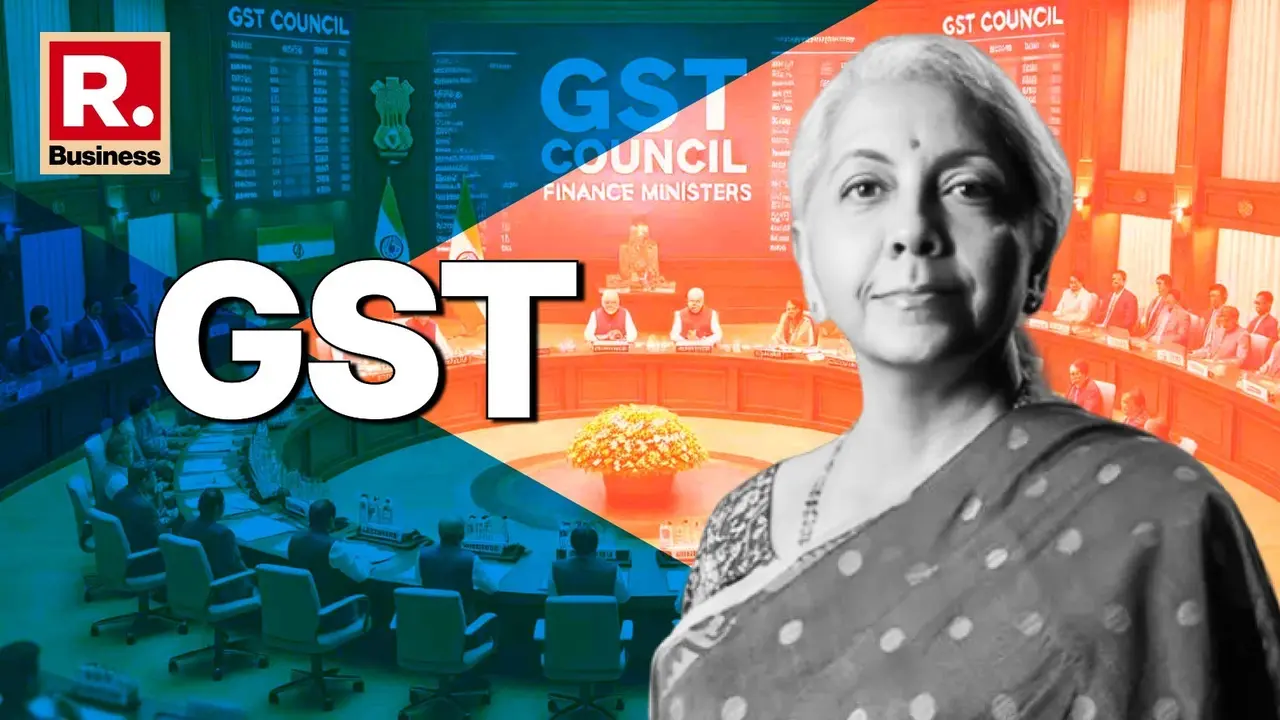
This week’s highly anticipated 56th GST Council meeting, taking place on September 3 and 4 in New Delhi, is shaping up to be a watershed moment for India’s indirect tax regime. At the heart of discussions is the bold proposal to launch “GST 2.0,” which aims to simplify the tax structure while delivering consumer relief and supporting economic sentiment ahead of the festive season.
PM Modi outlines sweeping GST Reforms
Prime Minister Narendra Modi, in his August 15 Independence Day speech, outlined sweeping reforms to the GST system. Central to the proposals are significant rate reductions across approximately 175 items—including everyday essentials such as talcum powder, toothpaste, and shampoo—as well as consumer durables and compact cars.
Specifically, the government is considering slashing GST by at least 10 percentage points—from 18% to 5% for personal care goods, and from 28% to 18% for electronics like TVs and air conditioners.
GST Council agenda and timelines
The GST Council meeting begins at 11 a.m. both days, following a preparatory officers' meeting on September 2. If consensus is reached, these reforms could be unveiled in time to catalyze demand during Diwali, marking the dawn of a simpler, more growth-aligned GST era.
Advertisement
Also Read: GST 2.0 Explained: Expert Decodes What New Tax Slabs Mean for Your Clothes & Shoes | Republic World
Reshaping the GST structure
A pivotal component of GST 2.0 is the proposed overhaul of the current four-slab structure into a streamlined model: a 5% rate for essentials, an 18% standard rate, and a higher 40% slab reserved for luxury and sin goods . These revisions are expected to ease compliance, reduce classification disputes, and empower smaller businesses.
Advertisement
States raise revenue shortfall concerns
Yet not all stakeholders share the enthusiasm. Opposition-led states warn that such sweeping rate cuts could result in revenue shortfalls totaling up to Rs 2 lakh crore annually. Many of these states are demanding a robust compensation mechanism to guard against fiscal strain and ensure funds for welfare and infrastructure.
Market sentiment turns positive
Markets have responded positively to the reform buzz—with India’s benchmark indices rallying, auto and consumer-focused stocks leading gains ahead of the meeting.