
GST Cuts Deliver Bigger Economic Boost Than Income Tax Reductions: Report
A report by Ambit Capital says GST cuts have a stronger economic impact than income tax reductions, with a 1.08x multiplier effect. Rationalising GST rates could boost GDP by up to 50 bps, spur consumption in autos and durables, and expand the tax base despite revenue risks for states.
- Republic Business
- 3 min read

;'%3e%3cpath%20d='m8,15.99c4.41,0,7.99-3.58,7.99-7.99S12.41,0,8,0,0,3.59,0,8s3.58,7.99,7.99,7.99Z'%20style='stroke:%23fff;%20stroke-miterlimit:10;%20stroke-width:.02px;'/%3e%3cpath%20d='m3.08,3.37l3.82,5.11-3.84,4.15h.87l3.37-3.64,2.72,3.64h2.94l-4.04-5.39,3.58-3.87h-.86l-3.1,3.35-2.5-3.35h-2.94Zm1.27.64h1.35l5.97,7.99h-1.35l-5.97-7.99Z'%20style='fill:%23fff;'/%3e%3c/g%3e%3c/svg%3e)


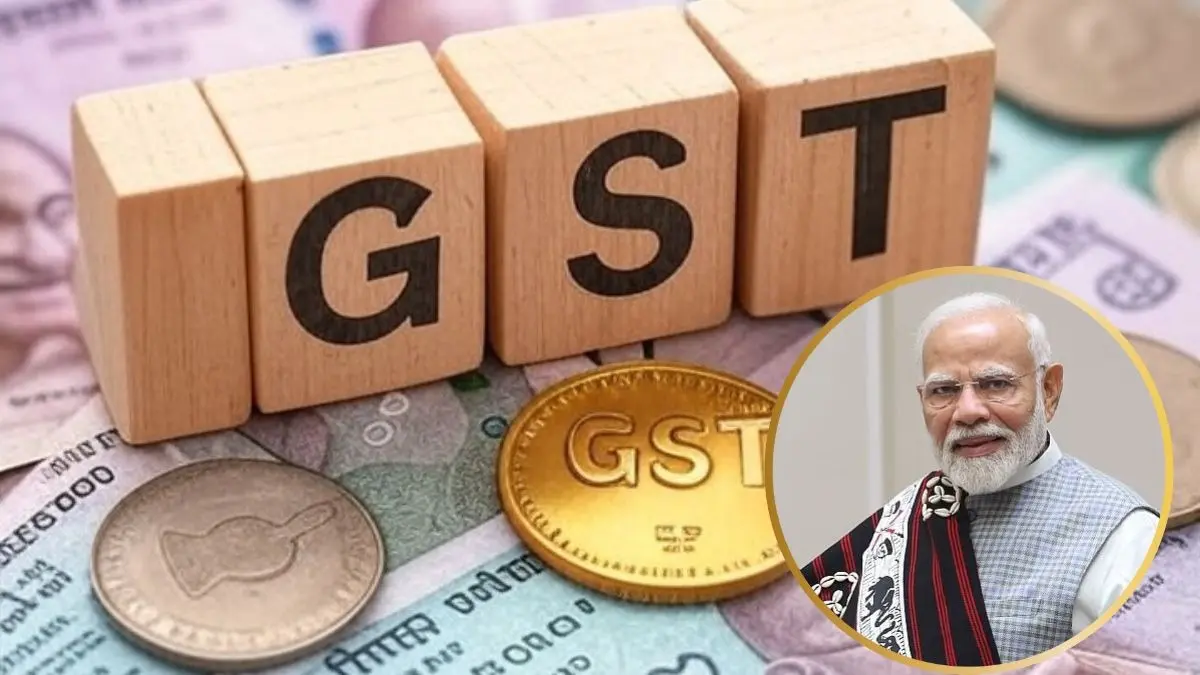
A reduction in Goods and Services Tax (GST) rates could give the economy a stronger push than a cut in income tax, according to a fresh analysis by Ambit Capital. The report, cited by ANI, estimates that lowering GST has a multiplier effect of 1.08 times—higher than the impact of trimming direct taxes—making it a more powerful tool for stimulating growth.
Additional GDP boost
If businesses pass on the benefit of lower GST rates to consumers, Ambit believes India’s GDP could get an additional boost of 20 to 50 basis points. While income tax cuts do lift household consumption by leaving more disposable income in people’s hands, GST reductions have a broader reach as the levy is charged at the point of sale and impacts virtually every consumer.
Second major fiscal stimulus
The upcoming rationalization of GST slabs is expected to become the government’s second major fiscal stimulus in FY26, after the personal income tax reliefs announced in the Union Budget earlier this year. Currently, GST has multiple rates—nil, 3%, 5%, 12%, 18%, and 28%—along with special levies such as 1.5% on polished diamonds and 0.25% on rough stones. Certain items also attract additional cess, making the structure highly complex.
Also Read: Industry Voices Demand Clearer GST Framework to Drive Auto Sector Growth | Republic World
Advertisement
GST Slab issues
Ambit’s report flagged that having so many slabs creates unnecessary complications. For instance, products within the same industry, such as toys, can end up being taxed at different rates because of minor differences in design. This not only raises compliance costs but also leads to frequent disputes and potential revenue leakage from goods being slotted into lower tax categories.
Revenue loss estimates
The research firm estimates that simplifying GST rates could result in an annual revenue loss of Rs 70,000 crore to Rs 1.8 trillion, with states likely to bear the larger hit. To balance this, it suggested imposing higher GST rates—up to 40%—on luxury and sin goods.
Advertisement
Impact across industries
From a consumption perspective, Ambit expects discretionary categories like automobiles and consumer durables to gain the most from lower GST rates, especially during festive months. Essential items such as FMCG products and cement, however, may witness only limited benefits given their inelastic demand.
Formalisation and GST compliance for MSMEs
The report further underlined that rate rationalisation could encourage more small businesses to join the formal economy. Many micro, small and medium enterprises (MSMEs) currently avoid GST registration to sidestep compliance hurdles, but a simpler structure could persuade them that the long-term advantages outweigh the costs. This, in turn, would help widen the GST base and strengthen compliance over time.