
How Much Does Indian Railways Pay For Your Journey? Ashwini Vaishnaw Answers In Lok Sabha
Indian Railways continues to heavily subsidize passenger travel, keeping train journeys affordable for millions of Indians. The minimal hike ensures financial sustainability while protecting the interests of low- and middle-income travelers.
- Republic Business
- 3 min read

;'%3e%3cpath%20d='m8,15.99c4.41,0,7.99-3.58,7.99-7.99S12.41,0,8,0,0,3.59,0,8s3.58,7.99,7.99,7.99Z'%20style='stroke:%23fff;%20stroke-miterlimit:10;%20stroke-width:.02px;'/%3e%3cpath%20d='m3.08,3.37l3.82,5.11-3.84,4.15h.87l3.37-3.64,2.72,3.64h2.94l-4.04-5.39,3.58-3.87h-.86l-3.1,3.35-2.5-3.35h-2.94Zm1.27.64h1.35l5.97,7.99h-1.35l-5.97-7.99Z'%20style='fill:%23fff;'/%3e%3c/g%3e%3c/svg%3e)


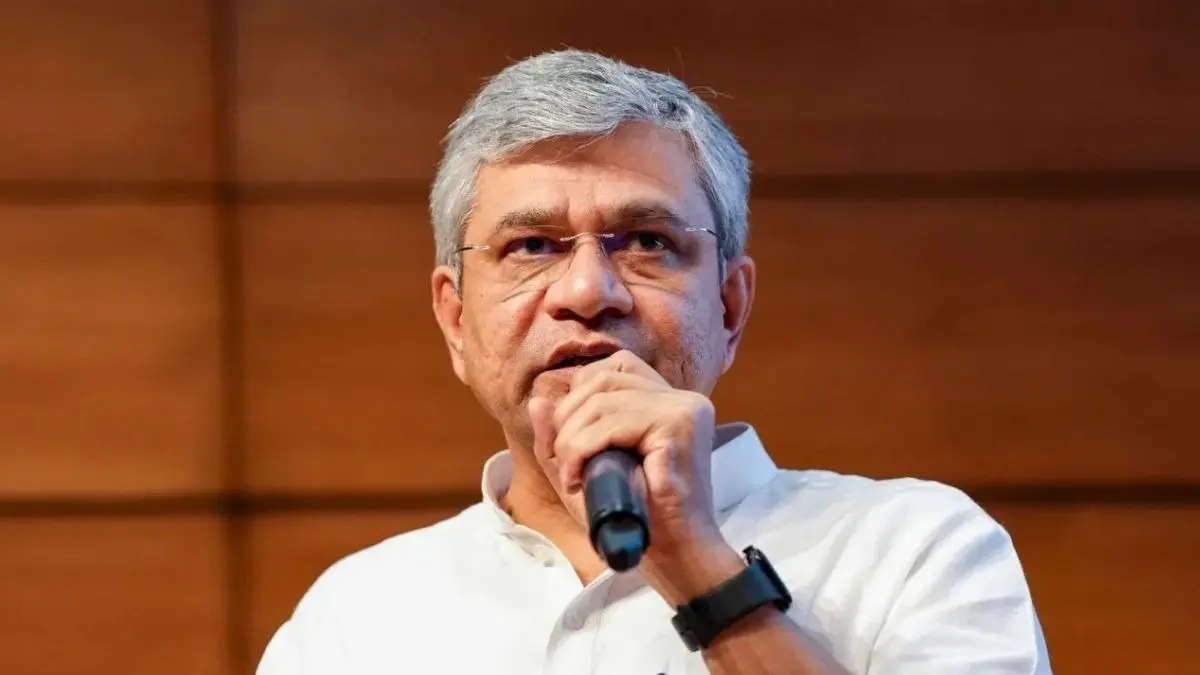
In a recent session of the Lok Sabha, Railway Minister Ashwini Vaishnaw revealed that Indian Railways spent a massive Rs 60,466 crore in passenger travel subsidies during the financial year 2023-24.
This means that the Railways covered 45% of the total cost of each passenger's journey, making it one of the most affordable travel options in the world.
Responding to questions from several MPs about the recent railway fare hike, Vaishnaw clarified that the changes were minimal and aimed at maintaining the affordability of rail travel, especially for the common man.
“The total amount of subsidy given in FY 2023-24 on passenger travel is provisionally estimated at Rs 60,466 crore. This amounts to a 45% subsidy on the cost of passenger travel,” Vaishnaw said in a written reply.
Advertisement
He also explained that Indian Railways serves over 720 crore passengers annually, and its fares remain among the lowest globally, even compared to neighbouring countries.
Minimal Fare Hike After Five Years
Rail fares in India were slightly increased from July 1, marking the first hike in over five years. However, the increase is very small. There is no fare hike for Second Class Ordinary travel for journeys up to 500 km.
Advertisement
For Sleeper Class, Ordinary, and First Class Ordinary, the fare has gone up by just half a paisa per kilometre. For non-AC classes in Mail and Express trains, the increase is one paisa per kilometre. Reserved AC classes have seen a slight hike of two paise per kilometre.
“It is estimated that less than half the trips will have a marginal increase in fare,” said the minister. “For example, for a low-income traveller in a general coach, there is no fare increase for 500 km of travel,” he added.
This fare revision also applies to premium trains, including Rajdhani, Shatabdi, Duronto, Vande Bharat, Tejas, Humsafar, Amrit Bharat, Mahamana, Gatimaan, Antyodaya, Jan Shatabdi, and Yuva Express, as well as AC Vistadome and Anubhuti coaches.
Importantly, fares for Monthly Season Tickets (MSTs) and suburban travel—used mostly by daily commuters—have not been revised.
“To maintain affordability for low- and middle-income families, the fares for MST and suburban travel have not been revised,” Vaishnaw said.
Investment in Infrastructure
The Railway Minister also highlighted that Indian Railways is actively working on network expansion, track upgrades, and improving safety and infrastructure, particularly for suburban train services.
“Further, an increase in the frequency of train services, including suburban train services, is an ongoing process subject to operational feasibility, traffic justification, and availability of resources,” he stated.