
India Likely To Halt US Trade Deal: New Delhi Defies Trump’s Section 301 Probe into Manufacturing Excess
India is likely to pause negotiations for a landmark trade deal with the United States, citing fresh friction from a Trump administration investigation into structural excess capacity, sources say.
- Republic Business
- 4 min read

;'%3e%3cpath%20d='m8,15.99c4.41,0,7.99-3.58,7.99-7.99S12.41,0,8,0,0,3.59,0,8s3.58,7.99,7.99,7.99Z'%20style='stroke:%23fff;%20stroke-miterlimit:10;%20stroke-width:.02px;'/%3e%3cpath%20d='m3.08,3.37l3.82,5.11-3.84,4.15h.87l3.37-3.64,2.72,3.64h2.94l-4.04-5.39,3.58-3.87h-.86l-3.1,3.35-2.5-3.35h-2.94Zm1.27.64h1.35l5.97,7.99h-1.35l-5.97-7.99Z'%20style='fill:%23fff;'/%3e%3c/g%3e%3c/svg%3e)


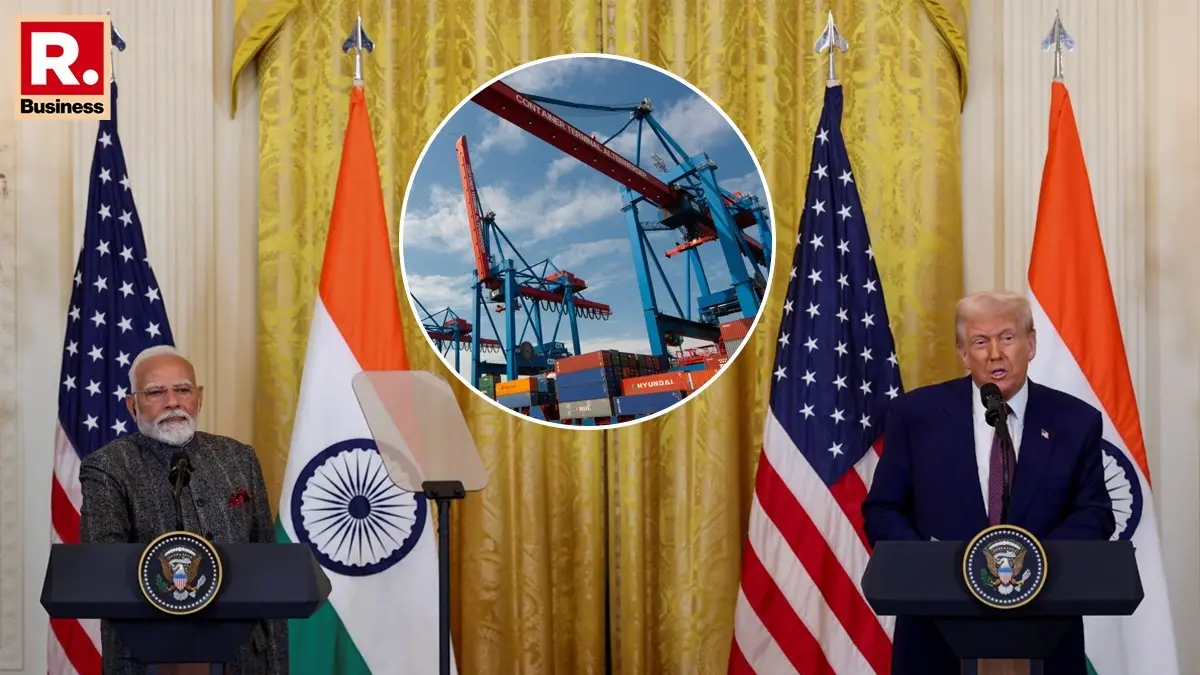
India will hold off on signing a trade deal with the United States for several months, four Indian sources said, as fresh investigations by President Donald Trump’s administration into what it calls excess industrial capacity among trading partners add new friction after an early understanding last month.
New Delhi had initially expected to sign an interim deal in March, followed by a full deal later, after Trump agreed in early February to cut punishing U.S. tariffs on Indian imports in return for commitments including halting Russian oil imports, lowering duties on U.S. goods and pledging to buy $500 billion worth of American products.
That timeline could now slip by several months, the sources said, although U.S. officials say they expect India to honour its commitments. The Indian sources, all government officials with direct knowledge of the matter or briefed on it, declined to be named because they were not authorised to speak to media.
India’s trade and foreign ministries did not respond to requests for comment.
Advertisement
A White House official said the U.S. was continuing to work with India on finalising a deal.
Negotiations lost momentum after the U.S. Supreme Court in late February struck down Trump’s tariffs, the sources said, adding that there have been no substantive talks since, particularly as Washington has been preoccupied with the war on Iran. India never halted Russian oil purchases, only slowed them, and U.S. officials are now urging New Delhi to increase buying to help ease a global energy crunch triggered by the conflict.
Advertisement
Complicating matters is a new U.S. investigation into what it calls “structural excess capacity and production in manufacturing sectors” in 16 trading partners, including India.
"We are not in a hurry to sign any deal," said one of the sources. "The new investigation is a pressure tactic to force countries into signing deals after the court order. It's a spanner in the works."
India would instead largely take a “wait and watch” approach as U.S. tariff policy evolves, the source said, noting that Trump dropped a 25% punitive tariff on India after saying New Delhi had agreed to curb Russian crude imports, while India only said it would diversify its supply base. The overall tariff on India was 50% earlier, among the highest in the world.
The latest probe has been launched under Section 301 of the U.S. Trade Act of 1974. India plans to present its case to the Office of the United States Trade Representative if permitted, or await a ruling before considering options such as approaching the World Trade Organization, the source said.
US EXPECTS INDIA TO HONOUR COMMITMENTS
The U.S. ambassador to New Delhi, Sergio Gor, said Trump had multiple other tools to impose tariffs, including through 301.
"So we fully expect the nations that we've made deals with to honour those deals," he told a conclave organised by the India Today media group on Friday.
"I think India will do that because ... it's not just about honouring it - it's a win-win situation."
Following the Supreme Court ruling, Trump imposed a 10% tariff on imports from all countries through July 24.
Under the early understanding, which a New Delhi-Washington joint statement called a "framework for an interim agreement", India's U.S. exports were expected to face duties of 18%.
New Delhi is now seeking clarity on whether Washington would revert to that rate or apply a different level, one source said.
"It makes sense for India to slow down on trade talks," said Priyanka Kishore of Singapore consultancy Asia Decoded. "If you are at 10% tariff and these investigations are going through, it is better to hold out and see what they come up with, rather than proactively sign an agreement."