
India Labour Codes Live 2025: 3.5 Cr Jobs, 64% Social Security Milestone
All 4 Labour Codes rolled out Nov 2025, replacing 29 laws with uniform rules, women night shifts, gig worker security. PMVBRY ₹99K cr scheme targets 3.5cr jobs; 2.35L firms registered. Social security hits 64% (ISSA Award); e-Shram at 31cr unorganised workers; EPFO auto-claims to ₹5L.
- Republic Business
- 3 min read

;'%3e%3cpath%20d='m8,15.99c4.41,0,7.99-3.58,7.99-7.99S12.41,0,8,0,0,3.59,0,8s3.58,7.99,7.99,7.99Z'%20style='stroke:%23fff;%20stroke-miterlimit:10;%20stroke-width:.02px;'/%3e%3cpath%20d='m3.08,3.37l3.82,5.11-3.84,4.15h.87l3.37-3.64,2.72,3.64h2.94l-4.04-5.39,3.58-3.87h-.86l-3.1,3.35-2.5-3.35h-2.94Zm1.27.64h1.35l5.97,7.99h-1.35l-5.97-7.99Z'%20style='fill:%23fff;'/%3e%3c/g%3e%3c/svg%3e)


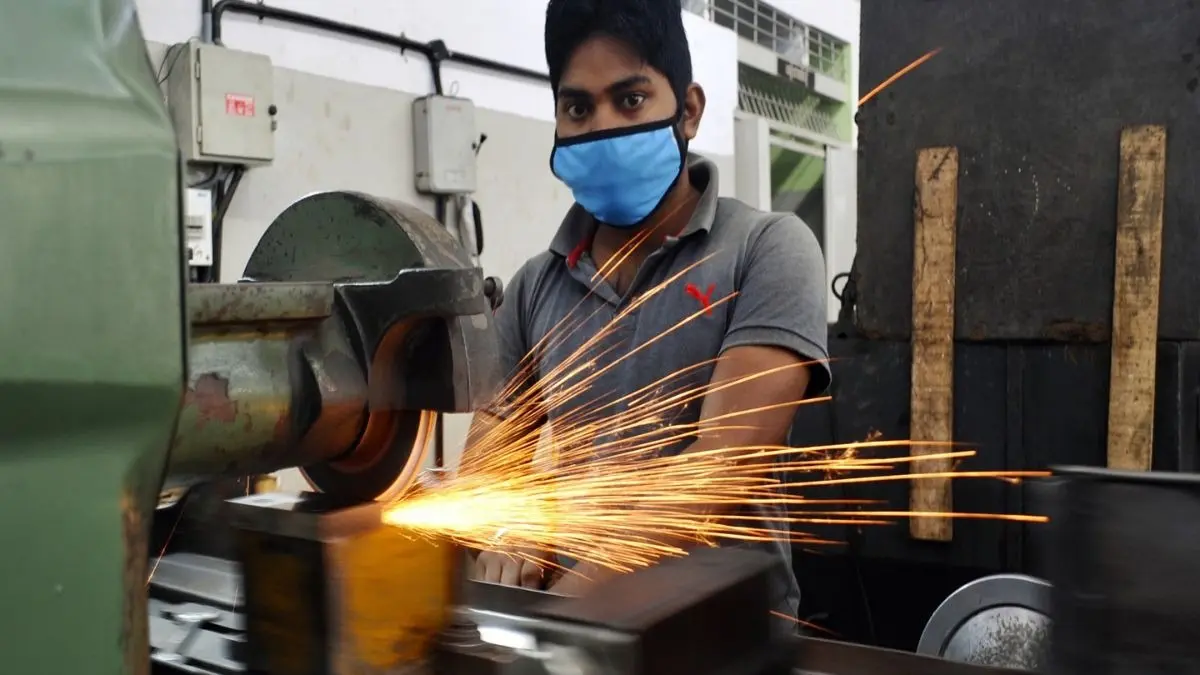
The year 2025 emerged as a landmark period for India's labour and employment sector, as the Ministry of Labour and Employment rolled out far-reaching reforms aimed at strengthening worker welfare, expanding social security, and boosting job creation. The year-end review by the Ministry highlights a clear push towards modernisation, inclusivity, and ease of doing business.
A major milestone was achieved with the implementation of all four Labour Codes--Code on Wages, Industrial Relations Code, Code on Social Security, and the Occupational Safety, Health and Working Conditions Code--from 21 November 2025. These codes replace 29 existing labour laws, streamlining compliance while ensuring stronger protection for workers across organised and unorganised sectors.
The new framework introduces uniform definitions, web-based inspections, simplified registrations, and decriminalisation of minor offences. It also promotes gender equality by allowing women to work across all sectors, including night shifts with safeguards, and ensures non-discrimination, including for transgender persons.
Job creation received a major boost with the launch of the Pradhan Mantri Viksit Bharat Rozgar Yojana (PMVBRY). Announced in the Union Budget 2024-25 and launched in August 2025, the scheme carries an outlay of ₹99,446 crore and aims to generate more than 3.5 crore jobs over two years.
Advertisement
Under the scheme, first-time employees are eligible for wage support, while employers receive incentives for generating additional employment. Manufacturing units are entitled to extended benefits. Early response has been robust, with over 2.35 lakh establishments registered and more than 20 lakh first-time employees estimated to benefit.
India also made significant gains in social security coverage during the year. Coverage increased from 19 per cent in 2015 to 64.3 per cent in 2025, placing India second globally after China. This achievement earned the country the International Social Security Association (ISSA) Award 2025, recognising its outstanding progress in social protection.
Advertisement
Digital transformation was a defining theme in 2025. The Employees' Provident Fund Organisation (EPFO) introduced auto-settlement of claims up to ₹5 lakh, simplified transfer procedures, and rolled out a Centralised Pension Payment System enabling pensioners to access benefits from any bank across India.
Further reforms included face authentication-based UAN activation through the UMANG app, liberalised withdrawal norms, graded penalty-based dispute resolution under the Vishwas Scheme, and an employee enrolment campaign to expand formal social security coverage.
The Employees' State Insurance Corporation (ESIC) expanded its coverage to 713 districts and significantly enhanced healthcare infrastructure. Hospital bed capacity rose to over 87,700, while new ESIC medical colleges and hospitals were made operational across several states.
For unorganised workers, the e-Shram portal crossed a major milestone by registering over 31.42 crore workers. The portal was integrated with multiple government platforms, expanded to 22 languages, and strengthened to support gig and platform workers, with major aggregators onboarded to extend social security benefits.
Employment facilitation through the National Career Service (NCS) portal also gained momentum. Nearly 9,800 job fairs were organised in 2025, leading to over 1.58 lakh provisional job selections. Strategic partnerships with private job portals, gig platforms, and global technology firms further expanded employment access.
Overall, the Ministry's Year End Review underscores 2025 as a transformative year for India's labour ecosystem--marked by bold legislative reform, digital innovation, and an inclusive approach to workforce development, aimed at preparing India for the future of work.