
India-Oman CEPA Economic Pact Takes Effect Today To Boost Energy And Export Sectors
India-Oman Comprehensive Economic Partnership Agreement (CEPA) officially entered into force today. The major trade pact eliminates tariffs on over 98% of Indian export lines and guarantees critical alternative energy supply routes for New Delhi amid volatile West Asian geopolitics.
- Republic Business
- 3 min read

;'%3e%3cpath%20d='m8,15.99c4.41,0,7.99-3.58,7.99-7.99S12.41,0,8,0,0,3.59,0,8s3.58,7.99,7.99,7.99Z'%20style='stroke:%23fff;%20stroke-miterlimit:10;%20stroke-width:.02px;'/%3e%3cpath%20d='m3.08,3.37l3.82,5.11-3.84,4.15h.87l3.37-3.64,2.72,3.64h2.94l-4.04-5.39,3.58-3.87h-.86l-3.1,3.35-2.5-3.35h-2.94Zm1.27.64h1.35l5.97,7.99h-1.35l-5.97-7.99Z'%20style='fill:%23fff;'/%3e%3c/g%3e%3c/svg%3e)


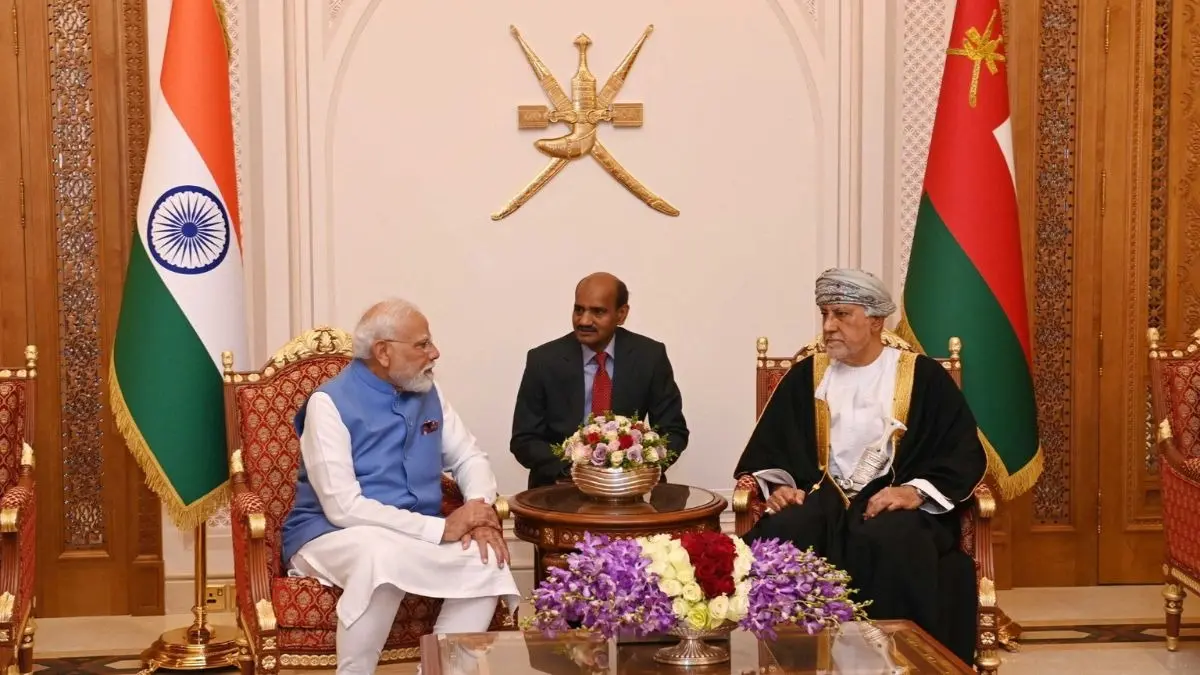
The free trade pact between India and Oman officially came into effect today, marking a major milestone in New Delhi’s strategic push to deepen economic integration across the Gulf region.
The Comprehensive Economic Partnership Agreement, or CEPA, opens up immediate duty-free market access for Indian exporters across more than 98% of Oman's tariff lines. The implementation makes Oman the fifth major trading partner to secure a finalized trade pact with the government since 2014.
Union Minister of Commerce and Industry Piyush Goyal officially announced the activation of the trade pact to reporters in New Delhi. "The India-Oman Comprehensive Economic Partnership Agreement is entering into force from today," Goyal stated. Prime Minister Narendra Modi later amplified the milestone, sharing an article written by Goyal detailing how the bilateral framework will actively diversify markets, accelerate domestic job creation, and protect agricultural interests.
Tariffs
The finalized agreement alters the tariff landscape between the two nations. Indian goods that previously faced a standard 5% import duty in the Omani market will now enjoy immediate zero-duty access.
Advertisement
Top domestic sectors poised for rapid growth under the new regulations include engineering goods, pharmaceuticals, textiles, and electronics. For the domestic textile and apparel industry, the elimination of the 5% entry tariff is expected to restore strong competitive momentum.
In the agricultural space, India already stands as Oman's second-largest supplier. The activation of CEPA removes duties on essential items like rice, boneless meat, dairy products, honey, and marine exports, giving Indian farmers direct access to high-value West Asian consumer bases.
Advertisement
Energy Gateway
The deal also carries energy security implications for New Delhi. Recent shipping disruptions around the highly volatile Strait of Hormuz have forced India to seek more resilient supply-chain pathways.
Oman has rapidly emerged as a foundational anchor for India's evolving energy architecture. During recent supply disruptions earlier this year, Muscat served as India's single largest supplier of liquefied natural gas, accounting for roughly 31% of total domestic LNG imports.
The CEPA framework directly aligns with long-term energy connectivity infrastructure. This includes advanced discussions surrounding the proposed Middle East-India Deepwater Pipeline, a 2,000-kilometer subsea corridor designed to pump gas directly from Oman to the coast of Gujarat, completely bypassing regional maritime chokepoints.
Mobility For Investment
The legal text of the trade agreement also contains expansive provisions for the services sector and corporate mobility.
Muscat has agreed to grant 100% foreign direct investment access for Indian firms looking to enter core Omani service sectors. Furthermore, the pact liberalizes visa and entry rules for Indian professionals, ensuring structured temporary stay provisions for software engineers, accountants, healthcare workers, and legal consultants.
In a first for any modern trade agreement, Oman has also included specific regulatory commitments recognizing traditional Indian medicine systems. Additionally, the deal establishes an expedited fast-track approval system for pharmaceutical products that already hold clearances from major global watchdogs, including the USFDA and the UK's MHRA.
Bilateral trade between India and Oman reached 11.2 billion dollars in the last fiscal year, outperforming growth rates seen with several other regional neighbors. Officials from both ministries project that the operationalized CEPA will push overall trade volumes past historical benchmarks well before the end of the decade.