
India-US Trade Deal Will Not Compromise Farmers' Interests, Will Give India Strong Comparative Advantage: Piyush Goyal
“US free trade deal, once details are out, the people of India will celebrate that not a single sensitive interest of our farmers or any stakeholder has been compromised. On the contrary, India will stand at a very strong comparative advantage,” Piyush Goyal said.
- Republic Business
- 2 min read


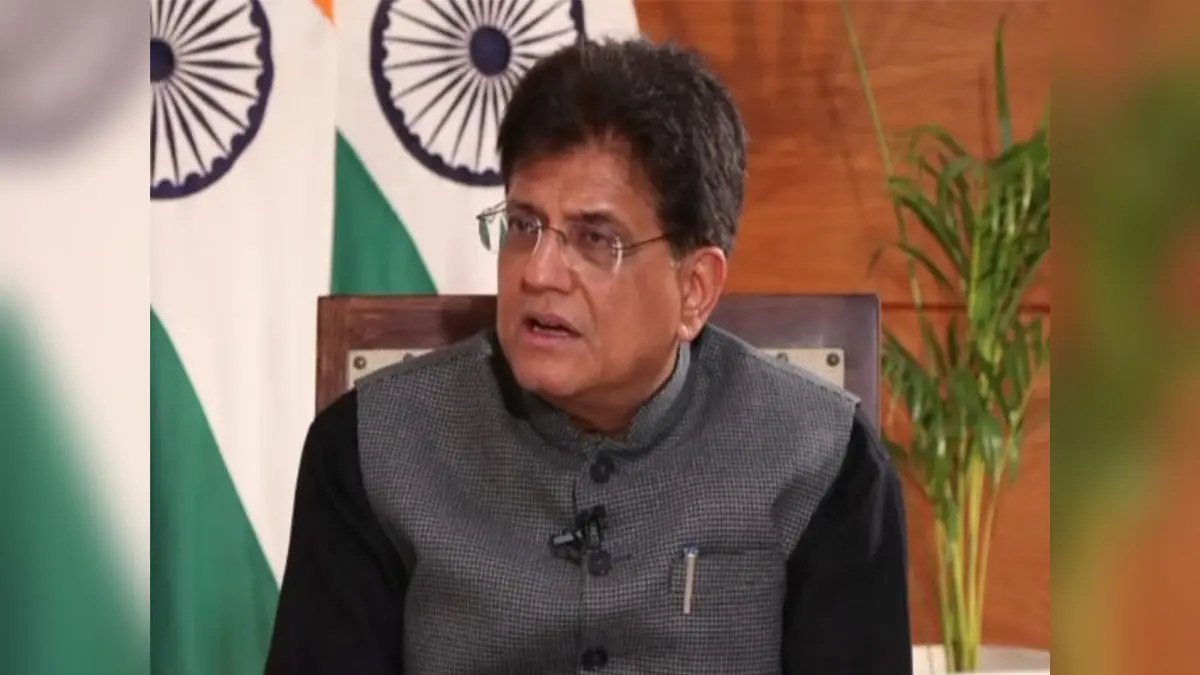
New Delhi: The India-US free trade agreement would not compromise the sensitive interests of Indian farmers or any other stakeholders and would place India at a “very strong comparative advantage” once its details are made public, said Union Commerce and Industry Minister Piyush Goyal.
Addressing the ISID-IDRA Fourth National Conference, Goyal asserted that none of the free trade agreements (FTAs) signed so far had faced any substantive criticism or had any identified flaws.
“US free trade deal, once details are out, the people of India will celebrate that not a single sensitive interest of our farmers or any stakeholder has been compromised. On the contrary, India will stand at a very strong comparative advantage,” he said.
Goyal further added that most developed countries have traditionally maintained high tariffs on labour-intensive products as a negotiating tool, creating barriers for Indian exports. However, India has managed to overcome these barriers through trade agreements covering 38 developed countries.
Advertisement
“Every one of the agreement, the nine free trade deals and bilateral trade deals that we have entered into, cover 38 developed, relatively much more prosperous countries than us, and therefore they are not in competition with us...we complement each other,” he said.
Goyal further highlighted that India has secured preferential market access to economies representing a combined GDP of USD 60 trillion through nine trade agreements, compared with USD 10 trillion covered by agreements signed before 2014.
Advertisement
“We have unlocked market opportunity at preferential rates in economies aggregating USD 60 trillion; out of these nine agreements...all the agreements prior to 2014 only covered USD 10 trillion because they were largely with countries who are in competition with us,” he added.
Further referring to the Regional Comprehensive Economic Partnership (RCEP), Goyal said the trade bloc comprises 15 countries, including China, Japan, South Korea, Australia, New Zealand and the 10 ASEAN member nations.
However, “India was not in the picture at all when RCEP was launched.”
“We were at an active stage of negotiation with Australia and could have finished it easily. It was not a difficult agreement. We had hardly any business at that time with New Zealand. Our total bilateral trade, bilateral, was USD 350 million with New Zealand. Only China was left,” he said.