
India’s Strong Fundamentals To Shield FDI From US Tariff Storm: BoB Economist
Badhan said that trade tensions widening between India and the US could affect export focused verticals, however, overall investor sentiment is expected to be stable. Here's Why.
- Republic Business
- 2 min read

;'%3e%3cpath%20d='m8,15.99c4.41,0,7.99-3.58,7.99-7.99S12.41,0,8,0,0,3.59,0,8s3.58,7.99,7.99,7.99Z'%20style='stroke:%23fff;%20stroke-miterlimit:10;%20stroke-width:.02px;'/%3e%3cpath%20d='m3.08,3.37l3.82,5.11-3.84,4.15h.87l3.37-3.64,2.72,3.64h2.94l-4.04-5.39,3.58-3.87h-.86l-3.1,3.35-2.5-3.35h-2.94Zm1.27.64h1.35l5.97,7.99h-1.35l-5.97-7.99Z'%20style='fill:%23fff;'/%3e%3c/g%3e%3c/svg%3e)


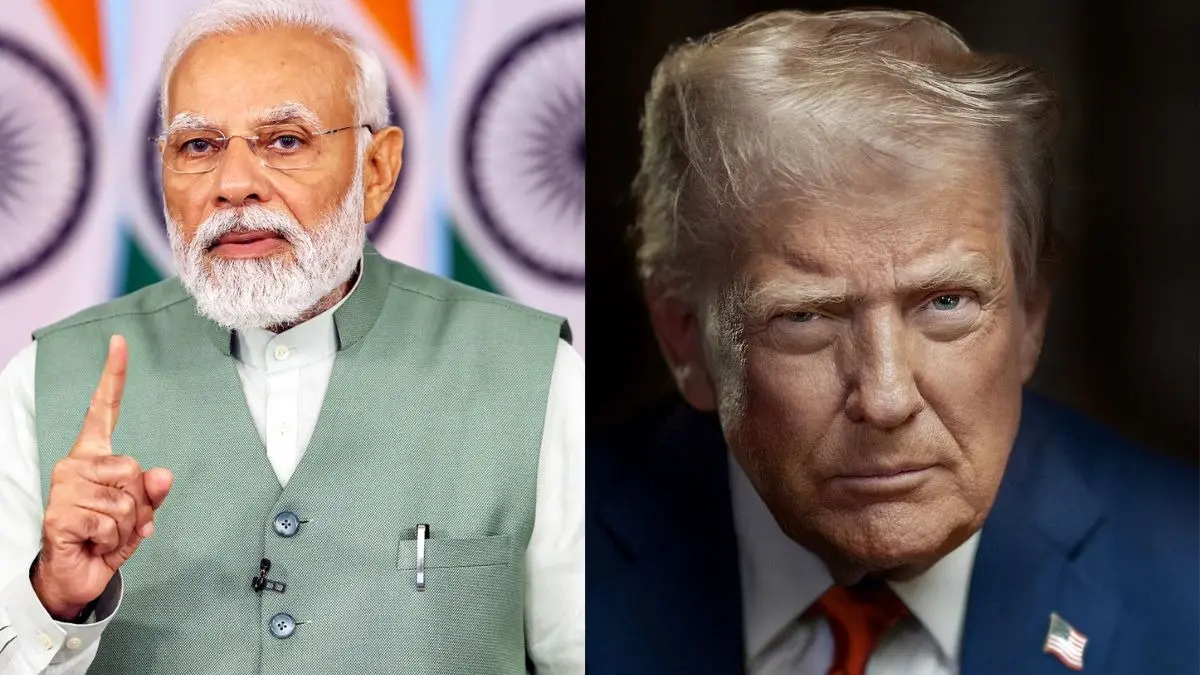
While the first tranche of Trump's tariff imposition on India comes into effect Thursday, India's solid domestic fundamentals are expected to support (Foreign Direct Investments) FDI in the nation, as per Economics Specialist at Bank of Baroda, Sonal Badhan.
Badhan said that trade tensions widening between India and the US could affect export focused verticals, however, overall investor sentiment, especially foreign portfolio invetments (FPI) and FDI are expected to be stable as a result of solid domestic consumption trends. citing an ANI report.
"We expect limited impact on FPI and FDI inflows. This will be mainly limited to export-oriented companies/sectors. Since domestic fundamentals remain strong so far, domestic consumption-oriented sectors will be better off," she said.
On the medium-term risk that tariff poses to India's macroeconomic measures like current account deficit or fiscal deficit, the BoB economist said the south Asian nation's services exports, that remain outside the scope of tariffs, will help cushion the current account deficit (CAD).
Advertisement
"Impact on current account deficit will be cushioned by our services exports, which remain beyond the reach of tariffs so far. International oil prices are also low, which will further help CAD to remain range bound," she said.
Advertisement
Coming to the fiscal end, she mentioned that if the centre decides to introduce stimulus measures that bolster domestic consumption in retaliation to burgeoning trade tensions, there could be an impact on the fiscal deficit ratio.
"This is likely to kick in case US and India fail to reach a trade deal. The probability of which is slim for now," she added.
On the monetary policy, Badhan said that while the Reserve Bank of India (RBI) has currently paused rate cuts, any further escalation in trade tensions, especially if significant tariffs are imposed on pharma or semiconductor imports by the US, may lead to a downward revision of RBI's growth projections.
"Depending upon the evolving situation and more evidence on its impact on economy, RBI may opt for another 25bps policy rate cut in Oct/Dec'25," she said.
On the potential impact on GDP growth for FY26, Badhan said the bank had initially estimated a 0.2 per cent impact.
However, depending on the final tariff rates imposed by the U.S., the impact could range between 0.2 per cent to 0.4 per cent.