
Life & Health Insurance May Get GST Exemption: What It Means For Your Premiums
A panel of state finance ministers has backed the Centre’s proposal to exempt individual life and health insurance from GST. While this could lower premiums for millions of policyholders, experts warn that the loss of input tax credit may partly offset the benefit. Here’s what consumers need to know.
- Republic Business
- 4 min read

;'%3e%3cpath%20d='m8,15.99c4.41,0,7.99-3.58,7.99-7.99S12.41,0,8,0,0,3.59,0,8s3.58,7.99,7.99,7.99Z'%20style='stroke:%23fff;%20stroke-miterlimit:10;%20stroke-width:.02px;'/%3e%3cpath%20d='m3.08,3.37l3.82,5.11-3.84,4.15h.87l3.37-3.64,2.72,3.64h2.94l-4.04-5.39,3.58-3.87h-.86l-3.1,3.35-2.5-3.35h-2.94Zm1.27.64h1.35l5.97,7.99h-1.35l-5.97-7.99Z'%20style='fill:%23fff;'/%3e%3c/g%3e%3c/svg%3e)


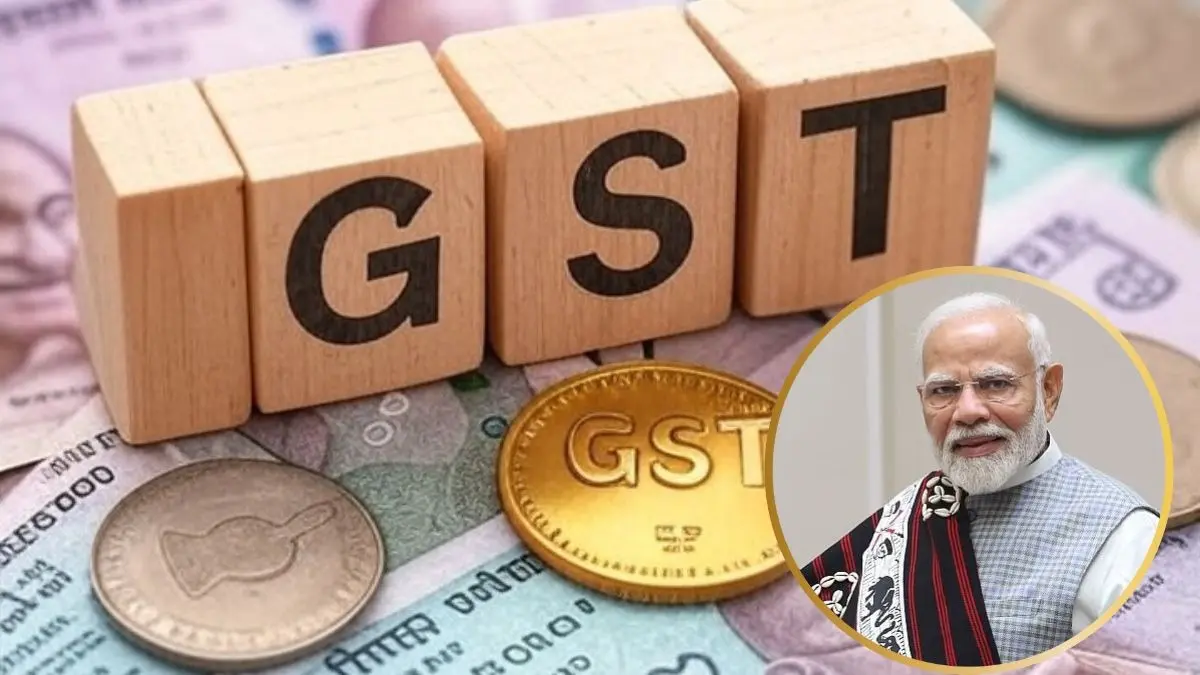
The debate around taxation of insurance has taken a decisive turn. On Wednesday, Bihar Deputy Chief Minister Samrat Choudhary, who also serves as the Convenor of the Empowered Group of Ministers (GoM) on GST, announced that the panel has recommended a complete exemption from GST on individual life and health insurance policies.
Currently, these products attract 18% GST, a rate long criticised by consumer groups and industry bodies for making essential protection products less affordable. By exempting them, the Centre and states aim to boost insurance penetration in India, where coverage remains among the lowest globally.
“The GoM has decided to back the Centre’s recommendation to exempt life and health insurance purchased by individuals from GST,” Choudhary said.
What Does This Mean for Policyholders?
At a consumer level, the move will likely reduce the upfront premium costs for both life and health insurance buyers. According to an Emkay Global report, any reduction in GST is expected to translate into lower out-of-pocket expenses for policyholders, particularly in term life and retail health products.
The timing is critical. The Covid-19 pandemic highlighted the importance of insurance coverage, and yet affordability has remained a barrier. A GST cut is being positioned as a protection-focused reform aimed at improving affordability for families.
Scope of Exemption Still Unclear
Despite the announcement, several questions remain unanswered. As Emkay notes, there is ambiguity over which products will be exempted.
Will the exemption cover the entire basket of individual life insurance products—including savings, annuities, and endowment—or be limited to pure term life policies?
Will group policies purchased by individuals (such as credit life and bancassurance health covers) qualify for GST exemption?
Until the government issues a detailed notification, the breadth of coverage under this exemption remains unclear.
The ITC Trade-Off: How It Could Affect Pricing
While consumers are set to benefit, insurers may face new cost pressures. At present, insurers use Input Tax Credit (ITC) to offset GST paid on expenses like commissions and services. With exemption, ITC will no longer be available.
For example, if an insurer collects a premium of Rs 100 and pays Rs 35 in expenses, it can currently claim Rs 6.3 as ITC (18% on expenses). With GST exemption, this adjustment disappears. To recover costs, insurers may need to raise the base premium, from Rs 100 to around Rs 106.3 in this example.
This means that while prices for consumers will certainly fall compared to today’s 18% GST burden, the actual reduction may not be as steep as expected.
Impact on Commissions and Cost Controls
The removal of ITC could reshape the business dynamics of the insurance industry. As Emkay explains, without ITC, GST on input services like agent commissions and operational costs will directly hit insurers’ profit and loss accounts.
This may prompt companies to renegotiate commission structures with agents and brokers and cut down on other non-salary operational expenses. Insurers with leaner cost structures, such as SBI Life, may be better placed to absorb the shift.
For Consumers: Relief Is Coming, but Moderated
For policyholders, the bottom line is simple: insurance premiums will fall, but the extent will depend on how the government structures the exemption and how insurers adjust for ITC loss.
The government is expected to closely monitor insurers to ensure that benefits are passed on to customers, preventing companies from using the relief to widen margins.
Why This Matters Now
India remains one of the most under-insured markets in the world, with millions of households still lacking adequate life and health coverage. By reducing GST, policymakers hope to make protection products more affordable and expand insurance penetration.
Advertisement
As Emkay concludes: “Improving affordability of life and health products provides growth tailwinds to the sector.”
For consumers, this could be a turning point, making essential financial protection easier to access at a time when household budgets remain stretched.
Read More - India's Infrastructure Output Grew 2% YoY - Key Details