
Narendra Modi Now India’s 2nd-Longest Serving Prime Minister: Top 5 List
Prime Minister Narendra Modi has become the second-longest serving Prime Minister in India’s history, overtaking Dr. Manmohan Singh in terms of total days in office. Modi, who first assumed office on May 26, 2014, crossed the milestone earlier this week—marking over 10 years and 60 days at the country’s helm.
- Republic Business
- 3 min read

;'%3e%3cpath%20d='m8,15.99c4.41,0,7.99-3.58,7.99-7.99S12.41,0,8,0,0,3.59,0,8s3.58,7.99,7.99,7.99Z'%20style='stroke:%23fff;%20stroke-miterlimit:10;%20stroke-width:.02px;'/%3e%3cpath%20d='m3.08,3.37l3.82,5.11-3.84,4.15h.87l3.37-3.64,2.72,3.64h2.94l-4.04-5.39,3.58-3.87h-.86l-3.1,3.35-2.5-3.35h-2.94Zm1.27.64h1.35l5.97,7.99h-1.35l-5.97-7.99Z'%20style='fill:%23fff;'/%3e%3c/g%3e%3c/svg%3e)


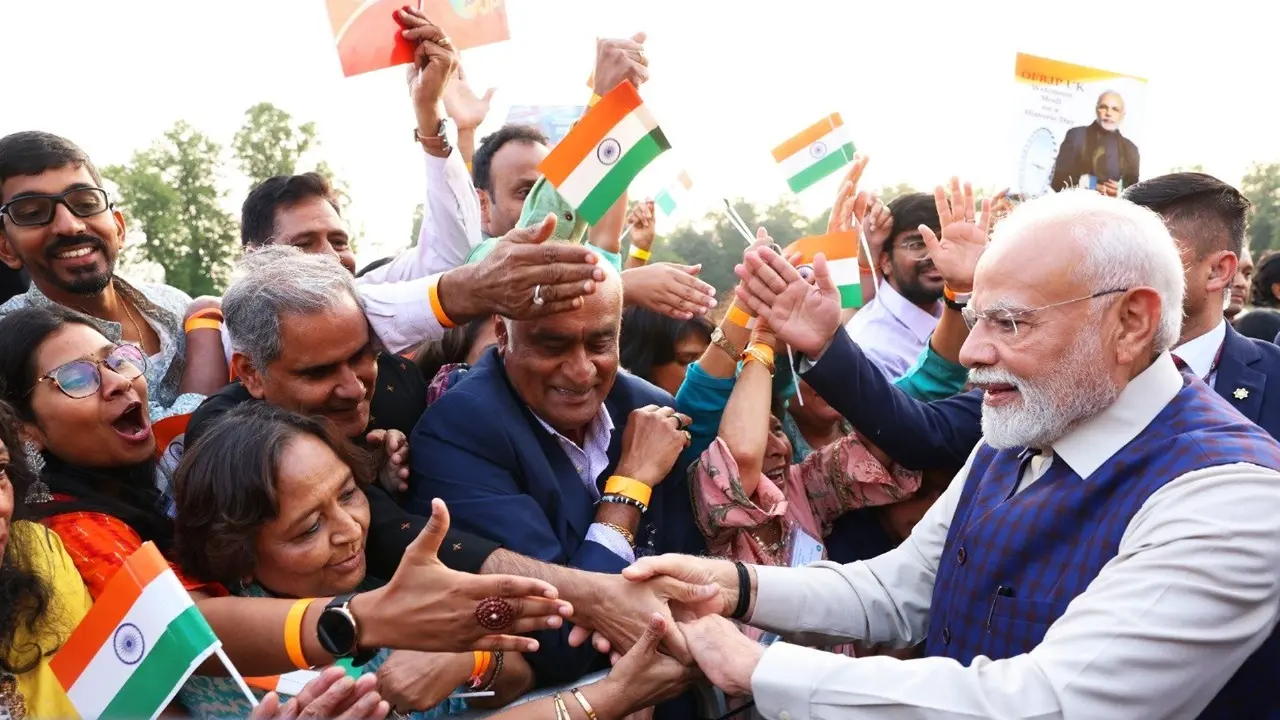
Prime Minister Narendra Modi has become the second-longest serving Prime Minister in India’s history, overtaking Dr. Manmohan Singh in terms of total days in office. Modi, who first assumed office on May 26, 2014, crossed the milestone earlier this week—marking over 10 years and 60 days at the country’s helm.
The only leader to have served longer is Jawaharlal Nehru, India’s first Prime Minister, who held office continuously from August 15, 1947, until his death in May 1964—a tenure of nearly 17 years and 9 months.
With his third consecutive term underway following the 2024 Lok Sabha elections, Modi continues to reshape Indian politics with a firm grip on power, a focus on infrastructure-led development, and an assertive foreign policy agenda.
His rise from Chief Minister of Gujarat to becoming one of India's most recognisable global leaders is widely seen as a defining political journey of the 21st century.
India’s Top 5 Longest-Serving Prime Ministers:
1. Jawaharlal Nehru – 17 years, 286 days (1947–1964)
2. Narendra Modi – 10 years, 60+ days (2014–present)
3. Manmohan Singh – 10 years, 4 days (2004–2014)
4. Indira Gandhi – Served two non-consecutive terms totaling over 15 years
5. Atal Bihari Vajpayee – Around 6 years and 80 days across two terms
It is pertinent to note that though Indira Gandhi served for more total years than Modi, her tenure was split between two terms. Modi, on the other hand, has held uninterrupted office since 2014, making his rise to second place in the rankings a continuous one.
If he completes his third term, Modi could become the longest-serving Prime Minister in India’s post-independence era—surpassing even Nehru's iconic record.
Narendra Modi’s tenures have been defined by sweeping reforms and bold policy shifts. Among the most notable was the introduction of the GST in 2017, simplifying India’s complex tax structure into a unified system, alongside the 2016 demonetization effort aimed at combating black money and encouraging digital payments—both moves sparking widespread debate. Politically, the revocation of Jammu and Kashmir’s special status in 2019 marked a turning point, drawing both strong support and criticism for its unilateral nature.
Advertisement
On the domestic front, initiatives like Ayushman Bharat, the world’s largest health insurance scheme, and the JAM Trinity dramatically broadened access to welfare and financial services. The government also pushed for rapid growth in digital infrastructure and connectivity with ambitious schemes like Digital India and Bharatmala.
Advertisement
Despite falling short of a full majority in 2024, Modi’s return at the helm with allied support reasserted his central role in governing India’s ongoing transformation.