
No Concessions on Farm, Dairy Sectors in India–US Trade Deal: Sources
India has excluded agricultural and dairy products from the India–US trade deal, with government sources confirming that there will be no compromise on these sectors.
- Republic Business
- 2 min read

;'%3e%3cpath%20d='m8,15.99c4.41,0,7.99-3.58,7.99-7.99S12.41,0,8,0,0,3.59,0,8s3.58,7.99,7.99,7.99Z'%20style='stroke:%23fff;%20stroke-miterlimit:10;%20stroke-width:.02px;'/%3e%3cpath%20d='m3.08,3.37l3.82,5.11-3.84,4.15h.87l3.37-3.64,2.72,3.64h2.94l-4.04-5.39,3.58-3.87h-.86l-3.1,3.35-2.5-3.35h-2.94Zm1.27.64h1.35l5.97,7.99h-1.35l-5.97-7.99Z'%20style='fill:%23fff;'/%3e%3c/g%3e%3c/svg%3e)


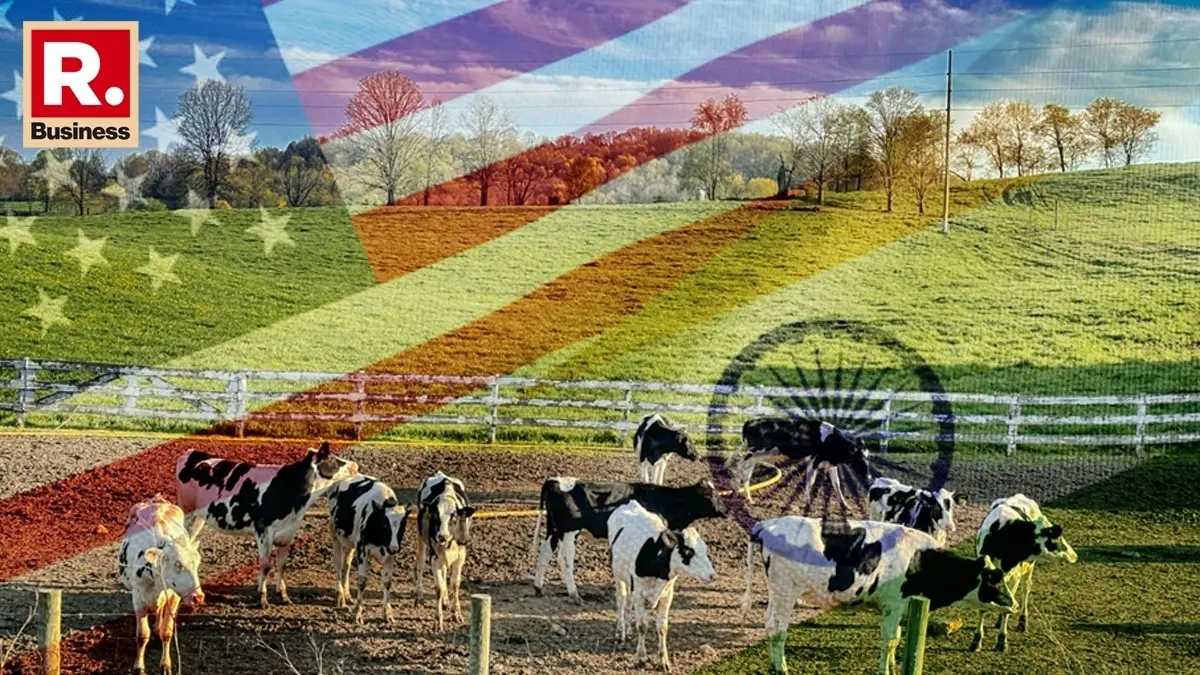
India has excluded agricultural and dairy products from the India–US trade deal, with the government taking a firm position that these sectors will not be opened up under the agreement, sources told Republic.
According to the inputs, there will be no agreement on agricultural products as part of the trade pact, reflecting India’s long-standing policy approach to protecting sensitive farm sectors.
Why Agriculture and Dairy Are Sensitive for India?
Agriculture continues to be a critical pillar of India’s economy, employing nearly 45% of the country’s workforce, according to government estimates. The sector contributes around 15–16% to India’s GDP, but supports livelihoods for over half the population when allied activities are included.
India is also the world’s largest producer of milk, accounting for nearly 24% of global milk production, making dairy a politically and economically sensitive sector dominated by small and marginal farmers rather than large corporations.
Advertisement
Any opening of agriculture or dairy to large-scale imports has historically raised concerns over:
- income stability for farmers
- price volatility
- food security
- rural employment
Protection of Farmer Interests
Sources said the government remains firm that the interests of farmers will not be compromised under any trade agreement.
Advertisement
This position aligns with India’s repeated stance at multilateral forums such as the World Trade Organization (WTO), where the country has consistently argued for special safeguards and policy flexibility for developing economies with large agrarian populations.
India has earlier resisted pressure to reduce agricultural tariffs or limit domestic support mechanisms, citing structural differences between Indian farming and large-scale industrial agriculture in developed economies.
Trade Deal Focused on Non-Agricultural Sectors
With agriculture and dairy kept out, the India–US trade deal is expected to focus on non-agricultural sectors, including industrial goods, select manufacturing segments, and other trade facilitation measures.
Officials have indicated that India’s broader trade strategy prioritises:
- selective market access
- protection of vulnerable sectors
- balanced trade growth
This approach reflects India’s recent trade negotiations, where sensitive sectors were deliberately excluded to maintain domestic economic stability.
The government has maintained that trade liberalisation must not come at the cost of farmer livelihoods, especially in sectors characterised by fragmented landholdings and small-scale production.