
NSE Cuts Fin Nifty Quantity Freeze Limit To 1,200 - How Will This Impact Your F&O Trades?
NSE has reduced the Fin Nifty quantity freeze limit from 1,800 to 1,200 contracts, effective December 1, 2025, to prevent fat-finger errors and ensure market stability. Traders must now split larger orders, while limits for Nifty, Bank Nifty, and other indices remain unchanged.
- Republic Business
- 2 min read

;'%3e%3cpath%20d='m8,15.99c4.41,0,7.99-3.58,7.99-7.99S12.41,0,8,0,0,3.59,0,8s3.58,7.99,7.99,7.99Z'%20style='stroke:%23fff;%20stroke-miterlimit:10;%20stroke-width:.02px;'/%3e%3cpath%20d='m3.08,3.37l3.82,5.11-3.84,4.15h.87l3.37-3.64,2.72,3.64h2.94l-4.04-5.39,3.58-3.87h-.86l-3.1,3.35-2.5-3.35h-2.94Zm1.27.64h1.35l5.97,7.99h-1.35l-5.97-7.99Z'%20style='fill:%23fff;'/%3e%3c/g%3e%3c/svg%3e)


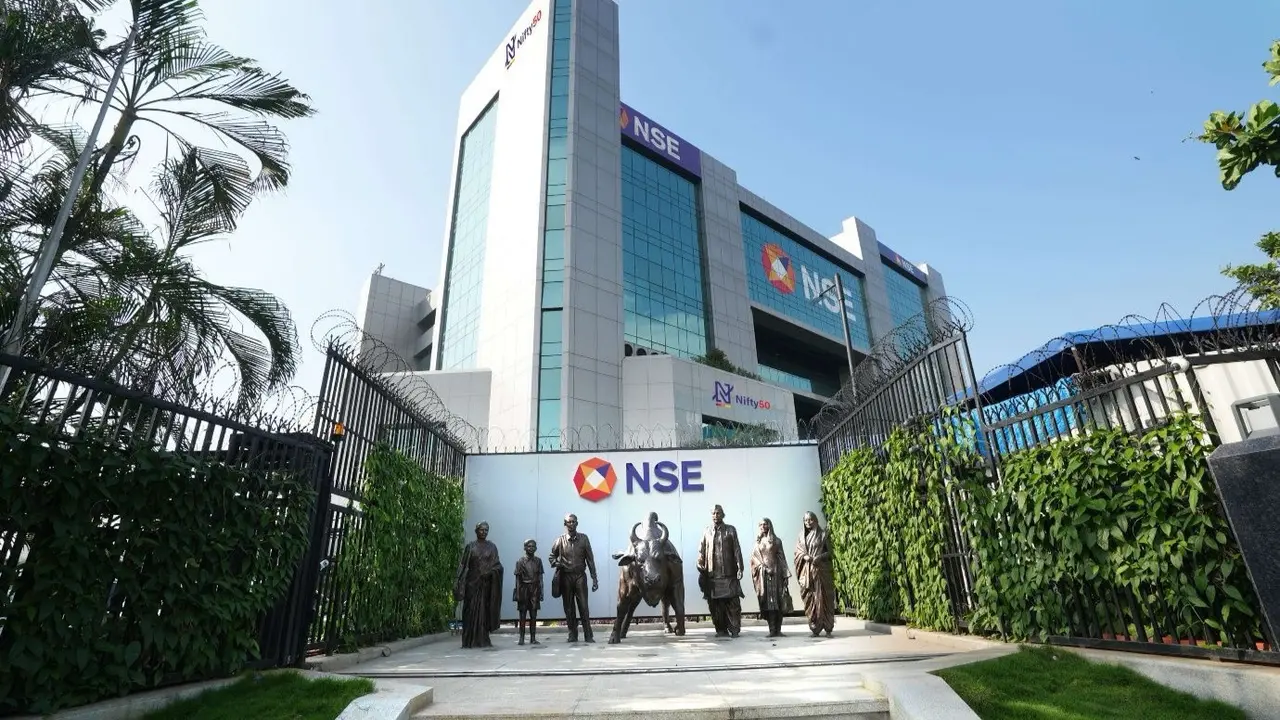
The National Stock Exchange (NSE) has announced a significant downward revision in the quantity freeze limit for Fin Nifty index futures and options contracts.
In a circular issued on Friday, the change will be effective from December 1, 2025. The maximum permissible quantity in a single order for Fin Nifty derivatives will stand at 1,200 contracts, down from the previous ceiling of 1,800 contracts.
The quantity freeze limit is a vital market safeguard that caps the maximum size of any single order. Orders exceeding this limit are automatically rejected.
Updated Quantity Freeze Limits Across Major NSE Indices
With Fin Nifty seeing a notable reduction to 1,200 contracts from the earlier 1,800. The revised caps for the other key indices remain unchanged: 1,800 for Nifty 50, 600 for Bank Nifty, 2,800 for Midcap Nifty and 600 for Nifty Next 50.
Advertisement
These limits were arrived at using the methodology detailed in NSE’s consolidated F&O circular dated April 30, 2025 and reflect the exchange’s periodic review of order-size caps.
Why the Change Matters and Its Trading Implications
Quantity freeze limits are revised periodically by exchanges. The tightening of the Fin Nifty quantity freeze reinforces NSE’s ongoing efforts to curb the risk of large erroneous orders, commonly known as “fat-finger” trades, that can trigger sudden price volatility in the derivatives segment.
Advertisement
By capping the size of any single transaction, Price Continuity is promoted, meaning the limit ensures that one massive order cannot abruptly trigger a steep, unwarranted shift (either upward or downward) in the price of a security or index. This helps maintain a smooth and orderly trading environment.
The capping also facilitates market liquidity and contributes more equitable market where trading is orderly and less susceptible to manipulation or sudden shocks.