
Oil at $79+, Rupee Slides Past 91: Hormuz Disruption Triggers Energy Stress Test for India
India is facing a significant energy shock as oil prices surge amid the escalating Middle East conflict. Brent crude is trading near $79.44 per barrel, while MCX crude in India has jumped over 7%. Nearly half of India’s crude imports pass through the Strait of Hormuz, making the country particularly vulnerable to prolonged disruptions.
- Republic Business
- 4 min read

;'%3e%3cpath%20d='m8,15.99c4.41,0,7.99-3.58,7.99-7.99S12.41,0,8,0,0,3.59,0,8s3.58,7.99,7.99,7.99Z'%20style='stroke:%23fff;%20stroke-miterlimit:10;%20stroke-width:.02px;'/%3e%3cpath%20d='m3.08,3.37l3.82,5.11-3.84,4.15h.87l3.37-3.64,2.72,3.64h2.94l-4.04-5.39,3.58-3.87h-.86l-3.1,3.35-2.5-3.35h-2.94Zm1.27.64h1.35l5.97,7.99h-1.35l-5.97-7.99Z'%20style='fill:%23fff;'/%3e%3c/g%3e%3c/svg%3e)


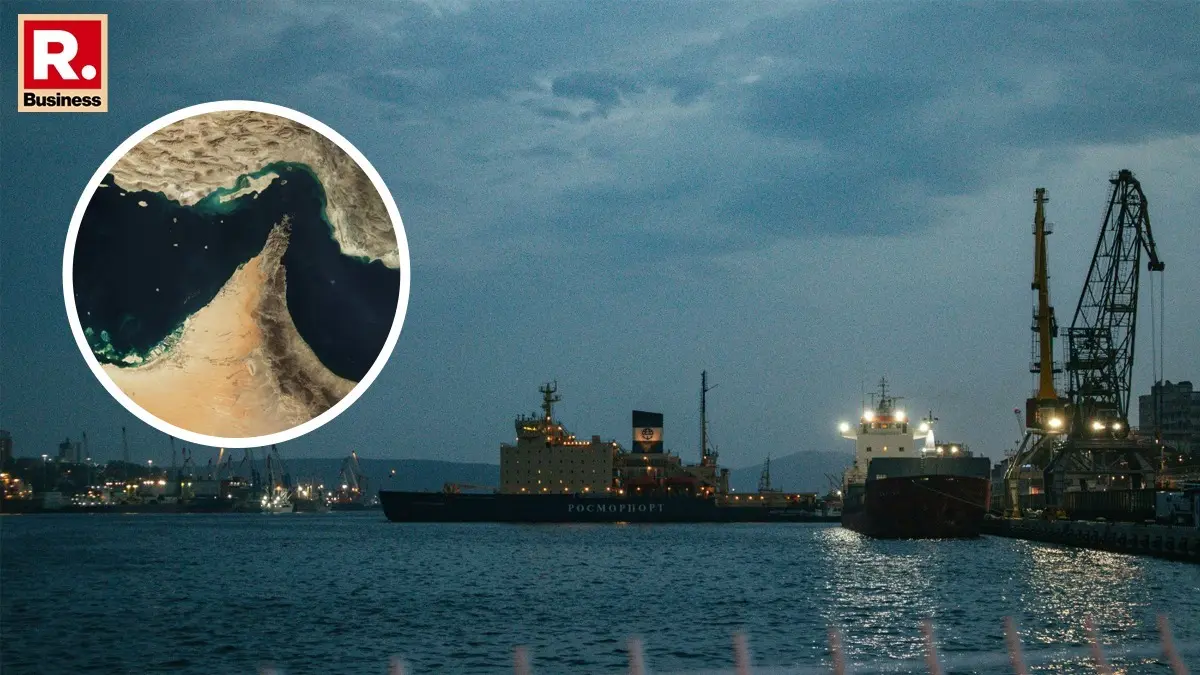
The Indian economy is facing a critical “stress test” as global oil benchmarks continue their sharp ascent following the weekend’s military escalation in the Middle East and the subsequent closure of the Strait of Hormuz. With Brent Crude breaching key psychological levels, India—the world’s third-largest oil consumer, remains highly exposed to the unfolding energy shock.
At 11:28 AM IST, energy markets were reflecting a pronounced “war premium” amid heightened geopolitical tensions. Brent crude was trading at $79.44 per barrel, up 2.2% over the past 24 hours. West Texas Intermediate was at $72.40 per barrel, rising 1.6%. In domestic markets, crude futures on the MCX of India surged sharply, with MCX crude at ₹6,519 per barrel, a 7.01% jump. Currency markets also showed stress, with the Indian Rupee weakening to ₹91.62 per US dollar, a 0.42% decline, amplifying India’s import bill.
India’s exposure to the crisis is particularly acute because the country imports roughly 90% of its crude oil requirements. A significant portion of those imports passes through the Strait of Hormuz. Approximately 2.5 to 2.7 million barrels per day (bpd) of India’s crude imports transit through this route. This includes vital supplies from Iraq, Saudi Arabia, the UAE, and Kuwait. Any prolonged disruption in tanker traffic through the region, therefore, poses a direct threat to India’s energy security.
The government officially states that India maintains a 74-day oil reserve. Combined commercial inventories and Strategic Petroleum Reserves (SPR) could realistically provide 20–25 days of buffer before refineries begin feeling supply strain if shipping routes remain disrupted.
Advertisement
Compounding the challenge is the currency impact. The rupee’s slide beyond the ₹91.60 mark against the US dollar means India is facing a double shock, paying higher global prices for crude while purchasing it in a weakening currency.
Impact on the Indian Middle Class
Despite the surge in global prices, retail fuel prices in India have not yet been adjusted. The government has effectively frozen petrol and diesel prices to prevent immediate consumer panic. However, this move is placing growing financial pressure on state-run oil marketing companies.
Advertisement
Major public-sector refiners and fuel retailers, including Indian Oil Corporation, Bharat Petroleum, and Hindustan Petroleum, are currently absorbing the cost of higher crude imports.
Energy economists estimate that every $1 increase in crude oil prices translates to a ₹0.50–₹0.60 rise in petrol prices per litre in India under normal market conditions. If Brent remains above $80 per barrel, a ₹7–₹9 per litre increase in retail petrol and diesel prices could eventually become unavoidable once the government’s temporary cushion runs out.
Cooking gas prices could also rise. Since LPG prices are closely linked to global crude oil prices, a prolonged conflict could push domestic cylinder prices by ₹50 to ₹150, directly affecting household budgets across the country.
Higher fuel costs also affect food prices. Around 40% of India’s goods transportation depends on diesel-powered trucks. This means a surge in fuel costs typically feeds into broader inflation. Economists expect that vegetable, milk, and grain prices could begin reflecting higher transport costs within 7–10 days if crude remains elevated.
A Global Energy Crisis
The broader global outlook remains uncertain as markets closely monitor the ongoing US-Iran military confrontation. Analysts warn that the current $80 crude level may only be the starting point if the conflict escalates further.
One of the most immediate risks is supply disruption. Roughly 20 million barrels per day of crude and petroleum products normally pass through the Strait of Hormuz. This accounts for about 20% of global oil consumption. Any sustained disruption effectively removes a major portion of global supply from the market.
Shipping logistics are also becoming increasingly complicated. Maritime insurance premiums for vessels operating in the Persian Gulf have reportedly surged 50% since Sunday. This has forced several shipping companies to consider rerouting tankers around the Cape of Good Hope. The detour could add more than 15 days to delivery timelines.
Major energy consultancies, including S&P Global and Wood Mackenzie, now warn that oil prices could exceed $100 per barrel if the Strait of Hormuz remains contested for more than two weeks.