
Oil Rises $2 As Iran Announces Closure of Strait of Hormuz Following US Strikes
Oil prices surged over $2 a barrel after Iran announced the closure of the Strait of Hormuz, following U.S. strikes against Iran. Brent futures rose $2.30 to $95.40, and WTI climbed $2.60 to $92.63. Despite Iran's threats, the U.S. military reported ongoing commercial traffic in the strait.
- Republic Business
- 3 min read

;'%3e%3cpath%20d='m8,15.99c4.41,0,7.99-3.58,7.99-7.99S12.41,0,8,0,0,3.59,0,8s3.58,7.99,7.99,7.99Z'%20style='stroke:%23fff;%20stroke-miterlimit:10;%20stroke-width:.02px;'/%3e%3cpath%20d='m3.08,3.37l3.82,5.11-3.84,4.15h.87l3.37-3.64,2.72,3.64h2.94l-4.04-5.39,3.58-3.87h-.86l-3.1,3.35-2.5-3.35h-2.94Zm1.27.64h1.35l5.97,7.99h-1.35l-5.97-7.99Z'%20style='fill:%23fff;'/%3e%3c/g%3e%3c/svg%3e)


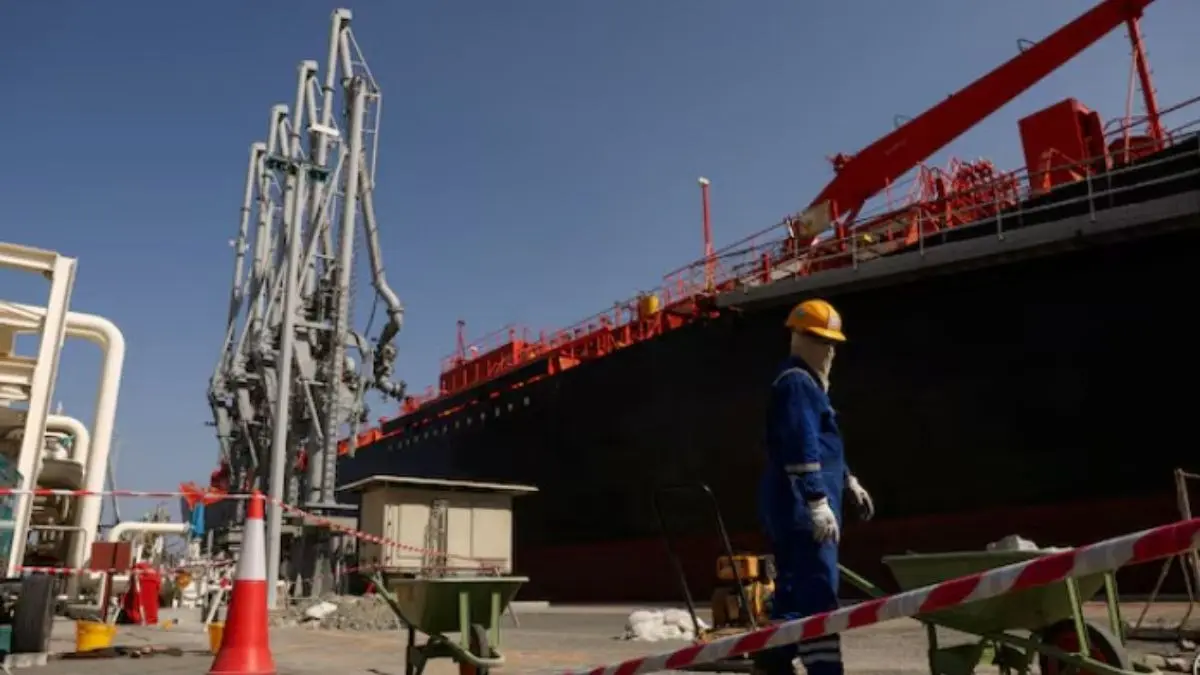
New Delhi: Oil prices climbed more than $2 a barrel Thursday as Iran declared the critical energy chokepoint, the Strait of Hormuz, closed after the U.S. launched additional strikes against Iran.
Brent futures rose $2.30, or 2.47%, to $95.40 a barrel, while U.S. West Texas Intermediate (WTI) crude climbed $2.60, or 2.89%, to $92.63. U.S. crude futures gained more than $3 earlier in the session.
Iran's top joint military command announced the closure of the Strait of Hormuz on Thursday, including oil tankers and commercial ships, saying any vessel that will attempt passage will be shot at.
However, the U.S. military said on X on Wednesday that commercial ships continue to transit in and out of the strait.
Advertisement
It also said no U.S. warships have been struck in the strait, after Iran's state media reported U.S. ships near the waterway were targeted by missiles and drones.
U.S. forces began launching additional strikes against multiple targets in Iran at 5:15 p.m. EDT (21:15 GMT), the latest in an escalating exchange of attacks that threaten to reignite a full-scale war, which was paused in early April when the two sides agreed to a fragile ceasefire.
Advertisement
Iran's months-long blockade of the strait, which normally carries a fifth of the global oil and gas shipments, have kept oil prices elevated.
Meanwhile, U.S. crude inventories fell by 7.2 million barrels to 426.5 million barrels in the week ended June 5, the EIA said on Wednesday, compared with analysts' expectations in a Reuters poll for a 4 million-barrel draw.
U.S. crude inventories, including those from strategic reserves, have fallen by 79 million barrels since the Iran war began on February 28, as the world's largest producer stepped into fill supply gaps left by the effective closure of the strait.
Asian stocks fell on Thursday, weighed down by a Wall Street selloff after a hotter-than-expected U.S. inflation reading, while renewed U.S. strikes on Iran fuelled a rise in oil prices.
MSCI's broadest index of Asia-Pacific shares outside Japan, opens new tab was down 0.9%, led by a 3% drop in South Korea's KOSPI, opens new tab. S&P 500 e-mini futures were 0.3% lower.
Strategists believe that Asian stocks that had rallied hardest during the past two months are likely to extend recent losses, as markets question whether the sky-high expectations for earnings growth that had driven the gains can be maintained.
"Given already stretched valuations, these extreme bullish expectations set a vulnerable backdrop for momentum in Korea, Taiwan and the Asia tech sector," said Rupal Agarwal, Asia quant strategist at Bernstein in Singapore, in a note to clients.
Trimming positions in these stocks would be "most prudent," she added, noting that "the re-escalation on the war front could further accelerate this unwind."