
Opening Bell: BSE Sensex, Nifty50 Sink As Trump’s 25% Tariff Shocker Sends Markets Into Tailspin
Indian markets opened sharply lower on July 31 after US President Donald Trump announced 25% punitive tariffs on Indian imports, triggering investor panic. Nifty slipped below 24,700, while Sensex dropped over 500 points. Analysts warn of sectoral shocks, export risk, and a potential 1991-style economic moment for India.
- Republic Business
- 5 min read

;'%3e%3cpath%20d='m8,15.99c4.41,0,7.99-3.58,7.99-7.99S12.41,0,8,0,0,3.59,0,8s3.58,7.99,7.99,7.99Z'%20style='stroke:%23fff;%20stroke-miterlimit:10;%20stroke-width:.02px;'/%3e%3cpath%20d='m3.08,3.37l3.82,5.11-3.84,4.15h.87l3.37-3.64,2.72,3.64h2.94l-4.04-5.39,3.58-3.87h-.86l-3.1,3.35-2.5-3.35h-2.94Zm1.27.64h1.35l5.97,7.99h-1.35l-5.97-7.99Z'%20style='fill:%23fff;'/%3e%3c/g%3e%3c/svg%3e)


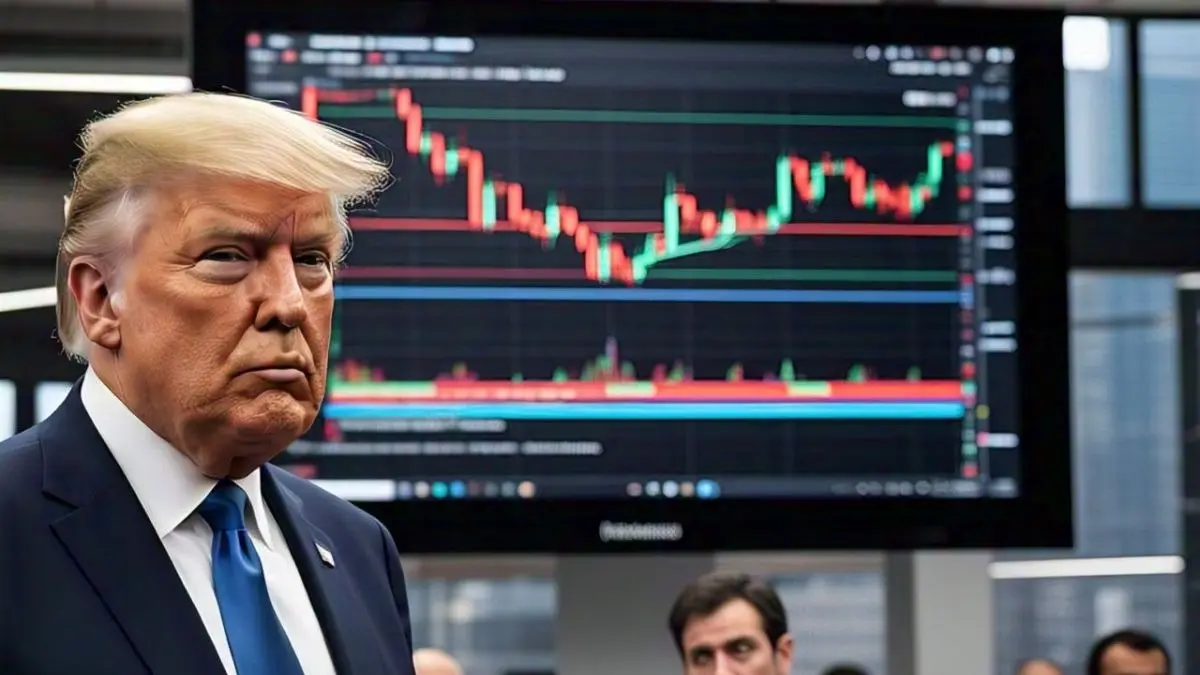
Indian stock markets opened in the red on Wednesday, reacting sharply to a surprise 25% tariff announcement by US President Donald Trump on Indian imports.
The Sensex fell 538.07 points, or 0.66%, to 80,943.79, while the Nifty slipped 167.45 points, or 0.67%, to 24,687.60 at open.
Stock Market Today - Opening bell
Out of total active stocks, only 35 advanced while 129 declined, and 13 remained unchanged, reflecting broad-based bearish sentiment.
Tariff Shock Hits at a Critical Time
The market drop comes just hours after Trump posted on Truth Social that Indian goods would face steep tariffs and additional penalties starting August 1. The move blindsided investors, especially after recent positive developments in India’s trade talks with the European Union and Japan.
“Remember, while India is our friend, we have, over the years, done relatively little business with them because their tariffs are far too high, among the highest in the world, and they have the most strenuous and obnoxious non-monetary trade barriers of any country,” Trump wrote.
The timing compounds market pressure already building due to global interest rate uncertainty, earnings season volatility, and rising oil prices.
Early Market Movers: Export-Facing Stocks Drag
Major Nifty losers included Reliance Industries, Tata Motors, Dr. Reddy’s Labs, Titan Company, Bajaj Finance, Mahindra & Mahindra, Bharti Airtel, and Bharat Electronics Ltd (BEL). On the gainers' list were Jio Financial Services, SBI Life Insurance, and Tata Steel, which showed relative resilience in early trade.
Analyst Take: Fragile Sentiment, Sectoral Divergence
Sugandha Sachdeva, Founder of SS WealthStreet, said Indian equities would likely trade with a “cautious bias” amid tariff-led fears.
“The imposition of steep tariffs poses a significant risk to sectors heavily reliant on US demand. While the end cost will be borne by the American consumer, Indian goods will lose price competitiveness, potentially leading to a slowdown in export volumes,” she explained.
She identified high-risk sectors like textiles, pharma, IT services, processed foods, auto components, and gems & jewellery—industries that are not only export-heavy but also labor-intensive.
Ajay Bagga: A Wake-Up Call for India’s Trade Strategy
Market expert Ajay Bagga flagged deeper structural risks and warned of wider macroeconomic implications.
“The 25% punitive tariffs on India with the threat of secondary tariffs due to buying Russian oil will have a short-term impact on Indian markets. India exports $87 billion of goods to the US while importing $45 billion. Sectors like electronics, smartphones, textiles, gems and jewellery, leather goods, engineering goods, seafood, and chemicals will all get impacted,” Bagga said.
Still, he added that history suggests there may be a strategic negotiation path. “Hopes are high that this is yet another maximalist posturing by Trump. Like with the EU, Japan, and Korea, the final tariffs may be nearer to 15%,” Bagga noted, referencing Korea’s success in negotiating initial 25% tariff threats down to 15% under an existing FTA.
However, India’s reluctance to open its agriculture and dairy sectors—especially to genetically modified US imports—may limit its negotiating room.
Bagga further noted that 18% of India’s total goods exports are now exposed to these new tariffs. He called for bold reforms:
“The urgent need is to massively deregulate, boost domestic consumption via GST cuts and stimulus, and protect Indian exporters and their supply chains as they seek other markets or recalibrate to serve the domestic market,” he added.
Read More - Why Trump’s Baseless Oil Trade Remark With Pak a Reckless Provocation
He also warned that India’s Balance of Trade and Current Account Deficit could worsen if global oil prices rise further due to disrupted Russian supply.
Advertisement
Technical Outlook: Crucial Support Levels in Play
According to Sudeep Shah, VP and Head of Technical & Derivative Research at SBI Securities:
Nifty Levels
Support: 24,600–24,550 (100-day EMA), below which 24,400 becomes critical
Resistance: 24,830–24,860
Bank Nifty Levels
Support: 55,700–55,600; further downside at 55,000
Resistance: 56,100–56,200
Advertisement
“Bank Nifty has underperformed the frontline indices for the second consecutive trading session. The narrow daily range suggests consolidation, but risks of downside pressure remain high,” Shah warned.
Sensex Levels
Resistance: 81,400–81,500
Support: 80,600–80,500
He also expects sector rotation in the near term, with potential outperformance in healthcare, pharma, and automobiles, and relative underperformance in Oil & Gas, Defence, FMCG, Realty, Media, Tourism, CPSE, and IT.
Global Backdrop Adds to Pressure
US Markets: S&P 500 fell 0.12%, Dow Jones lost 171 points, while the Nasdaq edged up 0.15%. The US Fed kept rates unchanged but offered no hints of a rate cut, adding to investor anxiety.
Asia-Pacific: Mixed trades, with focus on Japan’s rate decision and ongoing tariff issues with South Korea.
Crude Oil: Brent continues to rise; resistance at $74–$77.
Dollar Index (DXY): Extended gains for the fifth session, nearing 100.
What’s at Stake for India?
In 2024, India exported goods worth $79.4 billion to the US. The imposition of tariffs risks:
Lower export revenues
Job slowdown in sectors like IT, textiles, and auto ancillaries
Inflationary risks if US goods get costlier
Strained India-US ties, especially on the Russia oil and defence fronts
Stay Selective
Experts suggest avoiding stocks with high US export exposure in the short term. Domestic demand-led sectors offer safer bets.
Disclaimer
The views expressed in this article are purely informational and Republic Media Network does not vouch for, promote or endorse any opinions stated by any third party. Stock market and Mutual Fund investments are subject to market risks and readers are advised to seek expert advice before investing in stocks, derivatives and Mutual Funds