
India’s 500 GW Goal Faces Hurdle as 60 GW Solar Projects in Rajasthan Stalled by Grid Delays
India’s renewable energy ambitions have hit a logistical bottleneck in Rajasthan, where nearly 60 GW of clean energy projects are stalled due to a lack of transmission infrastructure. A regulatory filing reveals that while the state has received 130 GW in connectivity applications, planners can only support 73 GW, threatening the national goal of 500 GW by 2030.
- Republic Business
- 2 min read

;'%3e%3cpath%20d='m8,15.99c4.41,0,7.99-3.58,7.99-7.99S12.41,0,8,0,0,3.59,0,8s3.58,7.99,7.99,7.99Z'%20style='stroke:%23fff;%20stroke-miterlimit:10;%20stroke-width:.02px;'/%3e%3cpath%20d='m3.08,3.37l3.82,5.11-3.84,4.15h.87l3.37-3.64,2.72,3.64h2.94l-4.04-5.39,3.58-3.87h-.86l-3.1,3.35-2.5-3.35h-2.94Zm1.27.64h1.35l5.97,7.99h-1.35l-5.97-7.99Z'%20style='fill:%23fff;'/%3e%3c/g%3e%3c/svg%3e)


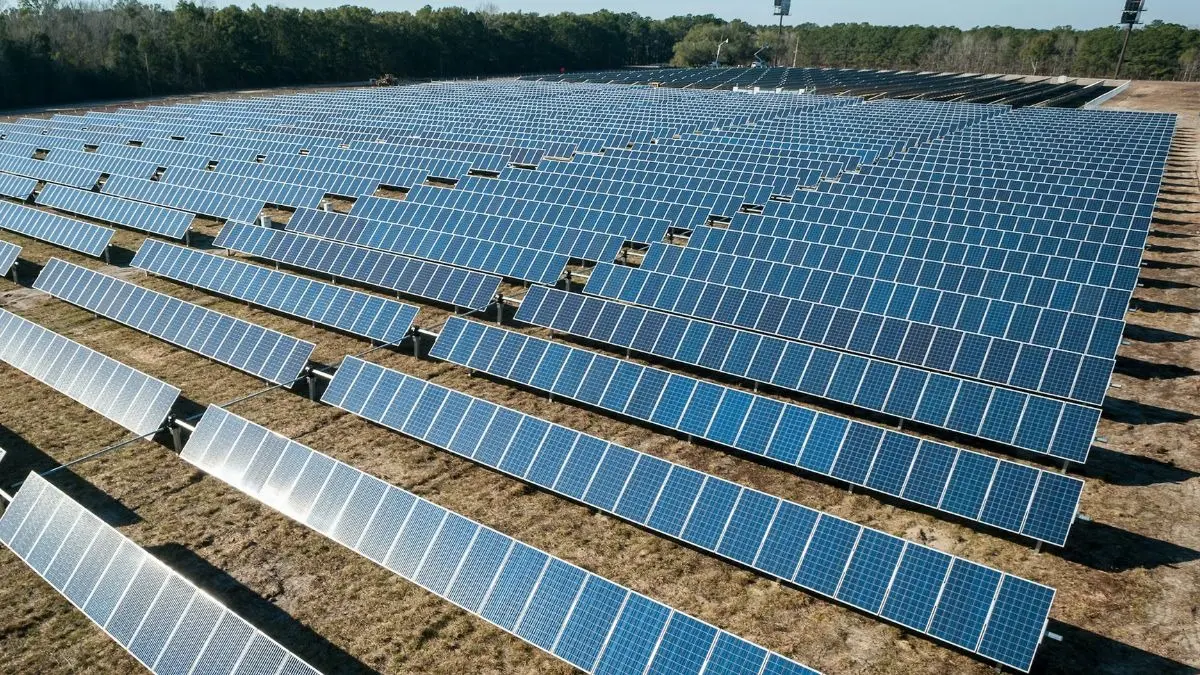
India's top solar energy-generating state of Rajasthan has clean energy projects of capacity amounting to about 60 gigawatt (GW) awaiting transmission links as planners struggle to keep pace with a rapid build-out, a regulatory filing showed.
The problem underscores a critical challenge for India in its effort to nearly double its non-fossil based power generation to 500 GW by 2030 as the systems carry electricity to other states from renewable‑rich regions such as Rajasthan.
Planner the Central Transmission Utility of India Ltd (CTUIL), told the national power regulator it had been unable to provide a transmission system for about 60 GW of projects.
The western desert state has 179 GW of renewable energy potential, with more than 85% of projects clustered in its four districts of Barmer, Bikaner, Jaisalmer and Jodhpur, the April 10 filing showed.
Advertisement
Applications for grid connectivity totalling about 130 GW have been received in Rajasthan, while transmission systems for only about 73 GW have been planned or are being set up, it added.
"CTUIL is facing challenges and difficulties in identification of corresponding transmission system for 60 GW applications," the planner said.
Advertisement
The issue was highlighted after electricity regulators told Saurya Urja Company of Rajasthan Ltd, which is developing a 400-megawatt solar park in Bikaner, it could withdraw its connectivity application and recover bank guarantees if needed.
The ruling by the Central Electricity Regulatory Commission (CERC) came in response to challenges in planning transmission the company faced.
The regulator also asked the transmission planner to advise project applicants about the transmission delays, allowing them to withdraw connectivity applications.