
‘Rs 5 Crore And A Big Idea’: Vedanta’s Anil Agarwal Sees Exploration Startups as the Next Growth Engine
Vedanta Chairman Anil Agarwal proposes encouraging startups to explore India's mineral and energy reserves with investments as low as Rs 5 crore. He wants entrepreneurs to discover resources and sell findings to established companies, boosting domestic exploration and resource security.
- Republic Business
- 6 min read


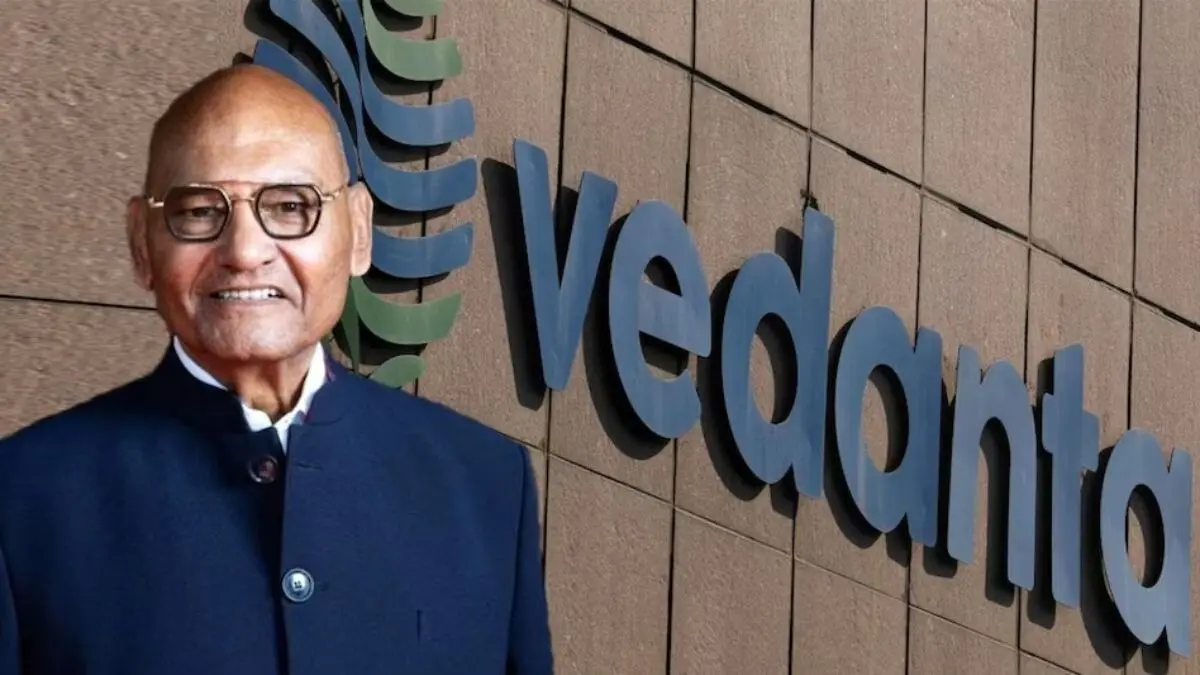
New Delhi: Vedanta Group Chairman Anil Agarwal has called for a wider role for entrepreneurs and startups in India's mineral and energy exploration sector, arguing that an investment of just Rs 5 crore could enable hundreds or thousands of new ventures. Reacting to the Prime Minister's address at the FICCI centenary event, he urged industry, government and citizens to build a national movement around exploration.
At the heart of Anil Agarwal's proposal is the idea to separate resource discovery from the capital-intensive business of mining and processing. Young entrepreneurs and smaller companies could explore for mineral deposits or hydrocarbon reserves and sell their discoveries to established companies with the resources to develop them. An exploration startup discovering oil, for instance, could sell its findings to ONGC, while one identifying a mineral deposit could approach a company such as Hindustan Zinc. This would create a new ecosystem of exploration businesses while allowing larger companies to focus on extraction and processing.
The proposal builds on policy reforms that have, over the years, widened private participation in India's mining sector. The 2015 amendment to the Mines and Minerals (Development and Regulation) Act introduced auction-based allocation of mineral concessions. In 2021, the government allowed captive mine operators to sell up to 50 per cent of their annual production after meeting the requirements of their linked plants.
The MMDR Amendment Act, 2023, introduced exploration licences for 29 specified deep-seated minerals, including lithium, cobalt, nickel, copper and gold. It also empowered the Centre to auction mining leases and composite licences for 24 critical and strategic minerals. Exploration licence holders can undertake reconnaissance and prospecting activities and receive a share of revenue once mining begins in the explored blocks. The government also enabled notified private exploration agencies to undertake projects and introduced schemes offering eligible licence holders reimbursement of up to 50 per cent of exploration expenditure, subject to conditions.
Advertisement
Not just that, institutional support has followed these reforms. The National Critical Mineral Mission, approved in January 2025 with an outlay of Rs 16,300 crore, aims to strengthen the critical mineral value chain, from exploration to processing and recycling. Its targets include 1,200 exploration projects and the auction of more than 100 critical mineral blocks by 2030-31.
Infrastructure, electric mobility, renewable energy, defence and advanced manufacturing are driving demand for metals and minerals, while domestic availability remains on the lower side. India is entirely import-dependent for lithium, cobalt and nickel. Copper import dependence stands at around 57 per cent overall, rising to 96 per cent for copper ore and concentrates. Meanwhile, imports of metals and ores have nearly doubled, from $32.2 billion in 2015 to $60.5 billion in 2025.
Advertisement
A stronger exploration ecosystem could help bridge this gap. By allowing smaller players to monetise discoveries, Anil Agarwal's proposal could attract entrepreneurial talent, specialist expertise and private capital into a sector traditionally dominated by large companies. It would also create a pipeline of domestic discoveries for established miners, strengthening India's resource security.