
Rupee Hits Record Low of 92.37; RBI Intervenes as Oil Surge and Dollar Strength Pressure Currency
The Indian rupee plunged to a fresh lifetime low of 92.37 per US dollar on Thursday as surging crude oil prices, persistent foreign investor outflows, and a strengthening US dollar weighed on emerging market currencies. The Reserve Bank of India stepped in through state-run banks to sell dollars and stabilise the currency, as rising oil prices and geopolitical tensions threaten to widen India’s current account deficit and fuel inflation.
- Republic Business
- 4 min read

;'%3e%3cpath%20d='m8,15.99c4.41,0,7.99-3.58,7.99-7.99S12.41,0,8,0,0,3.59,0,8s3.58,7.99,7.99,7.99Z'%20style='stroke:%23fff;%20stroke-miterlimit:10;%20stroke-width:.02px;'/%3e%3cpath%20d='m3.08,3.37l3.82,5.11-3.84,4.15h.87l3.37-3.64,2.72,3.64h2.94l-4.04-5.39,3.58-3.87h-.86l-3.1,3.35-2.5-3.35h-2.94Zm1.27.64h1.35l5.97,7.99h-1.35l-5.97-7.99Z'%20style='fill:%23fff;'/%3e%3c/g%3e%3c/svg%3e)


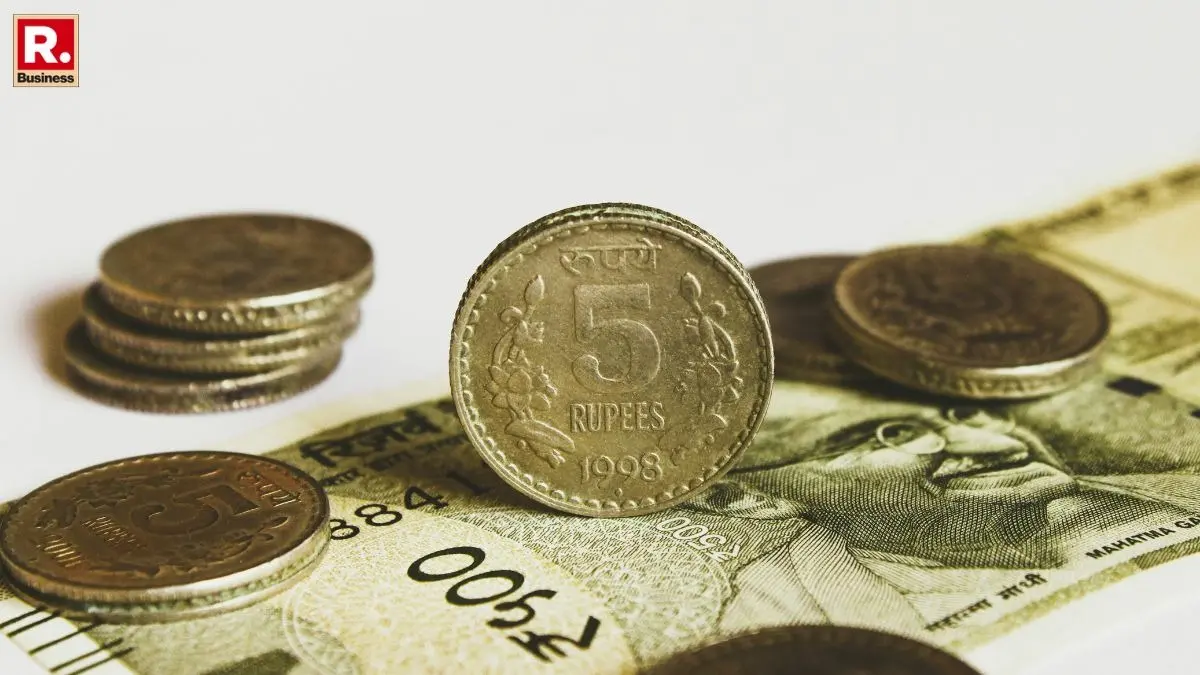
The Indian currency weakened sharply in early trade on Thursday, hitting a fresh lifetime low against the US dollar amid a surge in global crude oil prices and heightened geopolitical tensions. The rupee slipped to 92.37 per US dollar during morning trade, compared with its previous close of 92.01, marking its weakest level on record.
Reportedly, the Reserve Bank of India intervened in the foreign exchange market through state-run banks, selling dollars aggressively to prevent the currency from sliding further toward the 92.50 level, a key psychological threshold for traders. The decline shows mounting pressure on emerging-market currencies as investors shift toward safer assets amid global uncertainty.
Oil Surge Adds Pressure on Currency
One of the primary triggers for the rupee’s decline has been the rally in global crude prices. Brent crude climbed to $100.50 per barrel, driven by escalating geopolitical tensions in West Asia and fears of disruptions to global energy shipments. For India, the world’s third-largest oil consumer, rising crude prices significantly increase import costs. Every increase in crude prices adds pressure on the country’s current account deficit and widens demand for dollars from oil importers.
India imports roughly 85% of its crude oil requirements, making the economy highly sensitive to fluctuations in global energy prices.
Advertisement
Dollar Strength
The global rally in the US dollar has also contributed to the rupee’s weakness. The US Dollar Index climbed to around 99.50, its highest level in 2026, as investors sought safe-haven assets amid escalating conflict involving Iran and the United States.
Stronger global dollar demand typically exerts downward pressure on emerging-market currencies, including the rupee.
Advertisement
FII Outflows Add to Currency Stress
Foreign institutional investors have continued to pull capital out of Indian markets amid global risk aversion. Market data shows that FIIs have sold equities worth around ₹39,000 crore so far this month, increasing dollar demand in the domestic currency market.
Such outflows often amplify currency volatility as investors convert rupee assets back into dollars. Despite the pressure, India’s central bank holds substantial foreign exchange reserves of about $723 billion, providing authorities with the firepower to intervene when necessary.
Hormuz Disruptions Raise Inflation Concerns
The situation has been further aggravated by concerns around disruptions to the Strait of Hormuz, through which around 20% of global oil supplies are transported. Any disruption to this route could push energy prices even higher and trigger imported inflation in countries heavily dependent on oil imports.
Brokerages warn that sustained oil prices near or above $100 per barrel could raise fuel costs, increase inflationary pressure, and complicate monetary policy decisions.
Sectoral Impact on Indian Stocks
The weakening rupee and rising crude prices are also influencing sectoral performance in the equity markets.
- IT exporters such as Tata Consultancy Services and Infosys typically benefit from a weaker rupee as their dollar revenues rise in rupee terms. However, gains remain limited due to broader global recession concerns.
- Oil marketing companies like Bharat Petroleum Corporation Limited and Hindustan Petroleum Corporation Limited have come under pressure as the cost of crude imports increases in rupee terms.
Sectors dependent on petrochemical inputs, including paints and specialty chemicals, are also facing margin concerns as raw material costs rise.
Pavan Kavad, Managing Director of Prithvi Exchange said, “The rupee weakening to around 92.37 against the US dollar amid rising crude prices and geopolitical tensions has significant implications for forex-linked sectors.” He added, "While the depreciation reflects external pressures, it also impacts remittances, travel, and overseas education spending for Indian consumers. A weaker rupee can benefit recipients in India, as funds sent by overseas Indians convert into higher rupee values, potentially encouraging an increase in inward remittances, particularly from the Gulf Cooperation Council region. However, the downside is for outbound segments, international travel and overseas education become costlier as more rupees are required to purchase foreign currency for tuition, living expenses, or travel. In such situations, stabilising interventions by the Reserve Bank of India help curb excessive volatility in the forex market, while the rupee’s trajectory will continue to depend on crude prices, capital flows, and geopolitical developments.
While Dr. VP Singh, PGPM Director, Economics, Great Lakes Gurgaon, added, “Oil price has nearly doubled since the Iran war broke out and that has significantly jolted India’s current account deficit. Rupee has fallen to Rs 92.35/$ despite RBI selling around $10 bn in the last 4-5 days. However, the forex reserves continue to be robust at $686 bn. Wars render some countries weak and nourish some to strength. This war will probably make India stronger.”