
Snubbed by China, Pakistan Rushes To Asian Development Bank For CPEC Project Loan
Pakistan has turned to the Asian Development Bank for a $2 billion loan to upgrade the Karachi-Rohri section of the ML-1 railway, the biggest CPEC project, after China pulled back citing payment delays and security risks. The move marks a shift in how Pakistan’s flagship infrastructure is funded.
- Republic Business
- 3 min read

;'%3e%3cpath%20d='m8,15.99c4.41,0,7.99-3.58,7.99-7.99S12.41,0,8,0,0,3.59,0,8s3.58,7.99,7.99,7.99Z'%20style='stroke:%23fff;%20stroke-miterlimit:10;%20stroke-width:.02px;'/%3e%3cpath%20d='m3.08,3.37l3.82,5.11-3.84,4.15h.87l3.37-3.64,2.72,3.64h2.94l-4.04-5.39,3.58-3.87h-.86l-3.1,3.35-2.5-3.35h-2.94Zm1.27.64h1.35l5.97,7.99h-1.35l-5.97-7.99Z'%20style='fill:%23fff;'/%3e%3c/g%3e%3c/svg%3e)


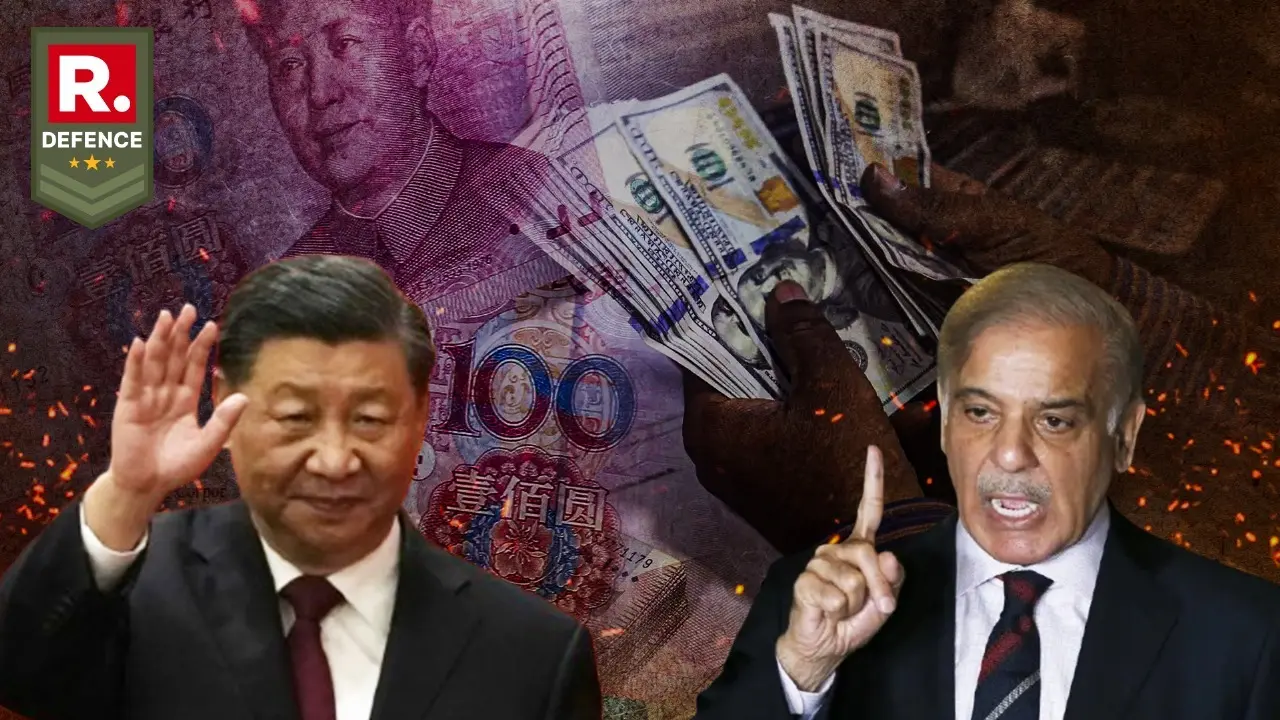
Pakistan has moved to secure financing from the Asian Development Bank (ADB) for its largest Belt and Road Initiative (BRI) project, after China stepped back citing financial and security concerns, reported Nikkei Asia.
According to a senior government official, the Manila-based lender is preparing to extend a $2 billion loan for upgrading the 480-kilometer Karachi-Rohri stretch of the Main Line-1 (ML-1) railway. The project, estimated at $6.7 billion in total, involves modernizing the 1,726-kilometer rail corridor that links Karachi with Peshawar.
It is considered the backbone of the China-Pakistan Economic Corridor (CPEC), the $50 billion Pakistan leg of Beijing’s Belt and Road Initiative (BRI).
An ADB team inspected the section in July before agreeing in principle to finance it. If finalized, this will be the first time a core CPEC project is funded by a multilateral agency rather than China. However, the loan terms are expected to carry higher, market-based interest rates compared to the concessional lending Pakistan typically received under CPEC.
China’s hesitation marks a shift in approach. During his Islamabad visit on August 21, Chinese Foreign Minister Wang Yi encouraged third-party involvement in CPEC projects — a sharp contrast from Beijing’s earlier insistence on being the sole financier of ML-1. In fact, in 2017 Pakistan had declined an ADB offer, aligning with China’s preference for exclusive funding.
Advertisement
Also Read: 'Connectivity Should Respect Territorial Integrity': PM Modi's Subtle Dig At China's BRI | Republic World
Analysts point to multiple reasons for Beijing’s retreat. Pakistan currently owes around $1.5 billion to Chinese power producers, while a series of attacks since 2021 that killed 21 Chinese nationals have raised safety concerns. In addition, delays and repeated revisions of project costs — initially set at $6.8 billion, revised to $9.85 billion in 2022, and later scaled back to $6.7 billion — eroded confidence among Chinese institutions.
“China realized the returns were uncertain, and Pakistan’s payment issues made the risks higher,” said Haroon Sharif, chairman of the Pakistan Regional Economic Forum. Others note that Beijing prefers Pakistan to rely on global lenders like the ADB or IMF, limiting its own exposure.
With ADB involvement, the project is expected to undergo competitive bidding and stricter procurement standards, unlike earlier CPEC ventures often awarded through government-to-government arrangements. Experts see this as potentially reshaping how major infrastructure is financed in Pakistan.
While some believe China’s pullback signals a recalibration of its role in Pakistan, others argue bilateral ties remain strong, even if the economic engagement is evolving. “ML-1 alone won’t alter the fundamentals of China-Pakistan relations,” said Muhammad Shoaib of George Mason University.