
SoftBank-Backed Ola Electric Tanks 52% in 2025: What Went Wrong With India’s EV Poster Child?
Ola’s troubles mirror a broader trend in India’s startup scene. Giants like Byju’s, PharmEasy, and Oyo, all once riding high on investor optimism, are now struggling with lawsuits, funding crunches, or delayed IPOs.
- Republic Business
- 2 min read

;'%3e%3cpath%20d='m8,15.99c4.41,0,7.99-3.58,7.99-7.99S12.41,0,8,0,0,3.59,0,8s3.58,7.99,7.99,7.99Z'%20style='stroke:%23fff;%20stroke-miterlimit:10;%20stroke-width:.02px;'/%3e%3cpath%20d='m3.08,3.37l3.82,5.11-3.84,4.15h.87l3.37-3.64,2.72,3.64h2.94l-4.04-5.39,3.58-3.87h-.86l-3.1,3.35-2.5-3.35h-2.94Zm1.27.64h1.35l5.97,7.99h-1.35l-5.97-7.99Z'%20style='fill:%23fff;'/%3e%3c/g%3e%3c/svg%3e)


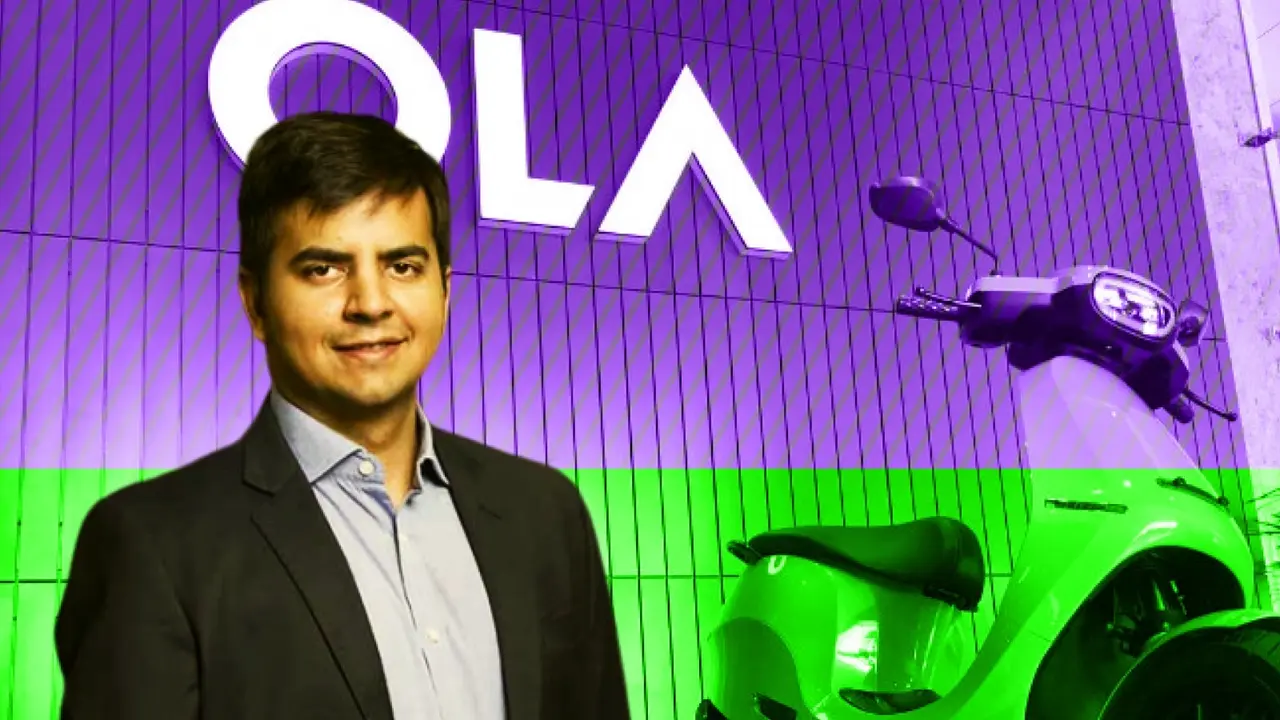
Just a year after its blockbuster IPO, Ola Electric — once hailed as India’s answer to Tesla — is facing a steep fall, according to a report by Bloomberg. Backed by SoftBank and led by ambitious co-founder Bhavish Aggarwal, the company is now India’s worst-performing stock on the BSE 500 and Nifty Midcap 100 in 2025, with shares down nearly 52%.
Ambitions beyond Scooters: An e-car that never came
Aggarwal had mega plans for disruption in the automobile market. Alongside producing electric scooters for India’s massive two-wheeler market, he had envisioned building an electric car and even set up a world-class R&D unit in the UK. However, that project is yet to see the light of the day.
Recurrent issues dent brand image
What followed instead were rising complaints — from scooters catching fire to parts breaking down — that severely dented Ola’s reputation and market share.
Advertisement
A Broader Startup Crisis in India
Ola’s troubles mirror a broader trend in India’s startup scene. Giants like Byju’s, PharmEasy, and Oyo, all once riding high on investor optimism, are now struggling with lawsuits, funding crunches, or delayed IPOs.
From SoftBank Backing to Scaling Missteps
Ola’s downfall is striking given the promise it showed early on. In 2018, it secured $250 million from SoftBank — before it had even launched a product — thanks in part to Aggarwal’s earlier success with Ola Cabs. He promised a million EVs on Indian roads by 2022 and massive production capacity, but the execution fell short.
Advertisement
Product development and engineering challenges
To speed things up, Ola acquired Dutch startup Etergo and adapted its prototype scooter — the “AppScooter” — for India. However, that model wasn’t built for Indian roads or weather. Ola modified the design to double its speed and beef up the battery, but didn’t allow enough time for testing.
Internally, sources say the company often opted for cheap fixes over proper engineering, according to Bloomberg. Complaints peaked at 80,000 per month in 2023, with recalls and warranty write-offs mounting. Ola’s brand, once seen as a pioneer, is now struggling to be taken seriously as a dependable vehicle maker.
Cautionary outlook
Industry experts believe this is a cautionary tale. Rushing to scale without product-market fit — especially with plenty of investor money — can backfire. As one former Ola executive put it: legacy brands are now gaining ground simply by delivering the dependability startups like Ola failed to provide.