
Trump’s New Tariff Threat on India Over Russian Oil - Decoding the Diplomatic & Economic Fallout
US President Donald Trump has vowed to “substantially raise” tariffs on Indian exports, citing India’s continued purchases of discounted Russian oil. The move escalates tensions between the two economies, drawing sharp criticism from New Delhi. With secondary sanctions looming, the rift threatens trade ties and India’s strategic energy security.
- Republic Business
- 5 min read

;'%3e%3cpath%20d='m8,15.99c4.41,0,7.99-3.58,7.99-7.99S12.41,0,8,0,0,3.59,0,8s3.58,7.99,7.99,7.99Z'%20style='stroke:%23fff;%20stroke-miterlimit:10;%20stroke-width:.02px;'/%3e%3cpath%20d='m3.08,3.37l3.82,5.11-3.84,4.15h.87l3.37-3.64,2.72,3.64h2.94l-4.04-5.39,3.58-3.87h-.86l-3.1,3.35-2.5-3.35h-2.94Zm1.27.64h1.35l5.97,7.99h-1.35l-5.97-7.99Z'%20style='fill:%23fff;'/%3e%3c/g%3e%3c/svg%3e)


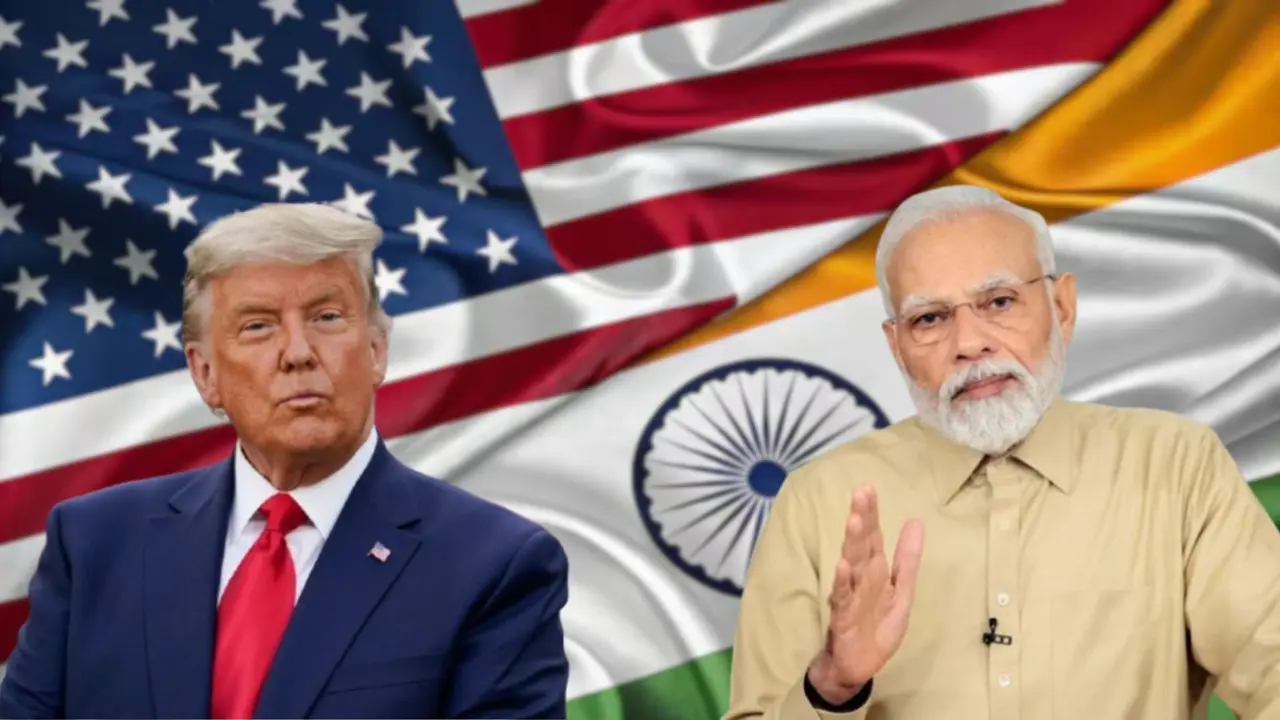
As tensions escalate over Russia’s prolonged war in Ukraine, US President Donald Trump has trained his trade arsenal on India, threatening a sharp increase in tariffs over New Delhi’s continued imports of discounted Russian crude. The move marks a dramatic turn in the geopolitical and economic relations between two of the world’s largest democracies.
Trump’s Warning: "They’re Selling Russian Oil for Profit"
On Monday, Trump took to social media with an explosive post targeting India’s energy trade with Moscow.
“India is not only buying massive amounts of Russian Oil, they are then, for much of the Oil purchased, selling it on the Open Market for big profits,” Trump wrote. “They don’t care how many people in Ukraine are being killed by the Russian War Machine. Because of this, I will be substantially raising the Tariff paid by India to the USA.”
The president did not specify the rate of increase. Still, his remarks followed last week’s announcement of a 25% tariff on Indian exports, already among the steepest imposed on any major economy. Trump warned of more punitive actions unless India cuts its ties with Russian oil.
A Deadline for Peace and Sanctions Loom
Trump’s latest remarks come just days before an August 8 deadline he set for Russia to agree to a truce with Ukraine. The administration has threatened so-called secondary sanctions on countries that continue purchasing Russian energy—India, China, and Brazil among them.
“Secondary sanctions and tariffs against those that are paying for this war like China, India and Brazil — by buying the oil that Russia is producing, is an obvious next step to try and bring this war to an end,” said Matt Whitaker, the US Ambassador to NATO, in an interview with Bloomberg Television. “This is really going to hit them where it counts.”
India’s Response: “Unjustified and Unreasonable”
India has pushed back strongly against Trump’s rhetoric and potential penalties.
In a sharply worded statement, the Ministry of External Affairs said: “The targeting of India is unjustified and unreasonable… India will take all necessary measures to safeguard its national interests and economic security.”
New Delhi also accused Western nations of hypocrisy, pointing out that both the US and EU continue to import energy and other goods from Russia. According to the ministry, India turned to Russian oil only after traditional suppliers diverted exports to Europe at the start of the war, and the US had “encouraged such imports” at the time.
How Much Russian Oil Is India Buying?
Since Russia’s invasion of Ukraine in 2022, India has emerged as one of the biggest buyers of its discounted crude.
Russian crude imports by India: Averaging 1.7 million barrels per day in 2025 so far (Bloomberg tanker data)
Refined fuels exported by India: 1.4 million barrels per day in H1 2025, including diesel/gasoil (40%) and gasoline/blending components (30%). However, analysts caution that it's difficult to determine how much of India’s refined fuel is directly derived from Russian oil. Refiners typically mix barrels from various sources, making tracing a specific origin difficult.
Despite the scrutiny, shipments continue unabated. At least four tankers reportedly delivered millions of barrels of Russian crude to Indian ports just last weekend.
Strategic Shifts: India Diversifies Supply
With potential sanctions looming, India has already started hedging its bets. According to sources familiar with recent trade movements, the country’s largest processor recently purchased several million barrels of crude from the US and UAE, with quick delivery timelines.
These sudden spot-market buys suggest that Indian refiners are preparing for potential disruptions in Russian oil flows.
Trade Talks Hit a Wall
Trump’s tariff escalation comes after months of quiet backchannel negotiations between Washington and New Delhi aimed at addressing trade imbalances.
India, which had a $43 billion trade surplus with the US in 2024 (IMF data), has been exploring ways to narrow the gap by increasing imports of US natural gas, communication equipment, and gold.
Yet major sticking points remain. Modi’s government has resisted opening up sensitive sectors like agriculture and dairy, issues that have long frustrated US negotiators.
The Modi-Trump Equation: From Warmth to Frost
Prime Minister Narendra Modi and Donald Trump once shared a warm rapport, symbolized by massive rallies like the “Howdy, Modi!” event in Houston. But ties have soured during Trump’s second term.
Earlier this year, when tensions flared between India and Pakistan, Trump warned both sides to stand down or risk being “blocked from US markets.” While he later claimed his intervention brought peace, New Delhi saw the remarks as meddling.
The tariff threat marks a new low in the relationship, one that may be difficult to repair amid growing geopolitical divides and election-driven foreign policy hardening in Washington.
Putin, Pressure, and Peace Hopes
Trump has staked much of his foreign policy on ending the Russia-Ukraine war swiftly, a promise that has thus far failed to materialise.
Though he has floated tougher measures against Moscow, Trump has repeatedly delayed enacting them, hoping that diplomacy might prevail. But the president’s frustration appears to be mounting.
He told reporters on Sunday that special envoy Steve Witkoff would travel to Russia midweek for additional talks. Meanwhile, Trump claimed he had ordered the deployment of two nuclear submarines in response to “highly provocative statements” by former Russian President Dmitry Medvedev.
For India, Trump’s trade and sanctions threat risks far more than economic pain. It comes at a time when the country is trying to balance energy security, geopolitical alliances, and domestic economic needs.
If secondary sanctions kick in, India could be forced to significantly alter its energy procurement strategy—a complex task for a country of over 1.4 billion people with fast-growing fuel demand.
Read More - Trump Says Will Be Raising Tariffs Paid By India To US
As for the US, alienating India could weaken its strategic positioning in the Indo-Pacific and complicate efforts to form a united front against Russia’s aggression.
With Trump’s August 8 deadline looming, the world is watching whether the president will follow through—or leave space for compromise in a high-stakes game of diplomacy, oil, and trade.
(With Inputs From Bloomberg)