
Super Intelligence Must Predict Borrowers' Financial Future, Not Just Analyse Their Past: US India Super Intelligence Leadership Dialogue
The dialogue, themed “Scaling India’s Fintech Ecosystem,” explored the future of financial technology, Artificial Intelligence, emerging Super Intelligence capabilities, digital payments, financial inclusion, risk management and India–U.S. collaboration.
- Republic Business
- 6 min read


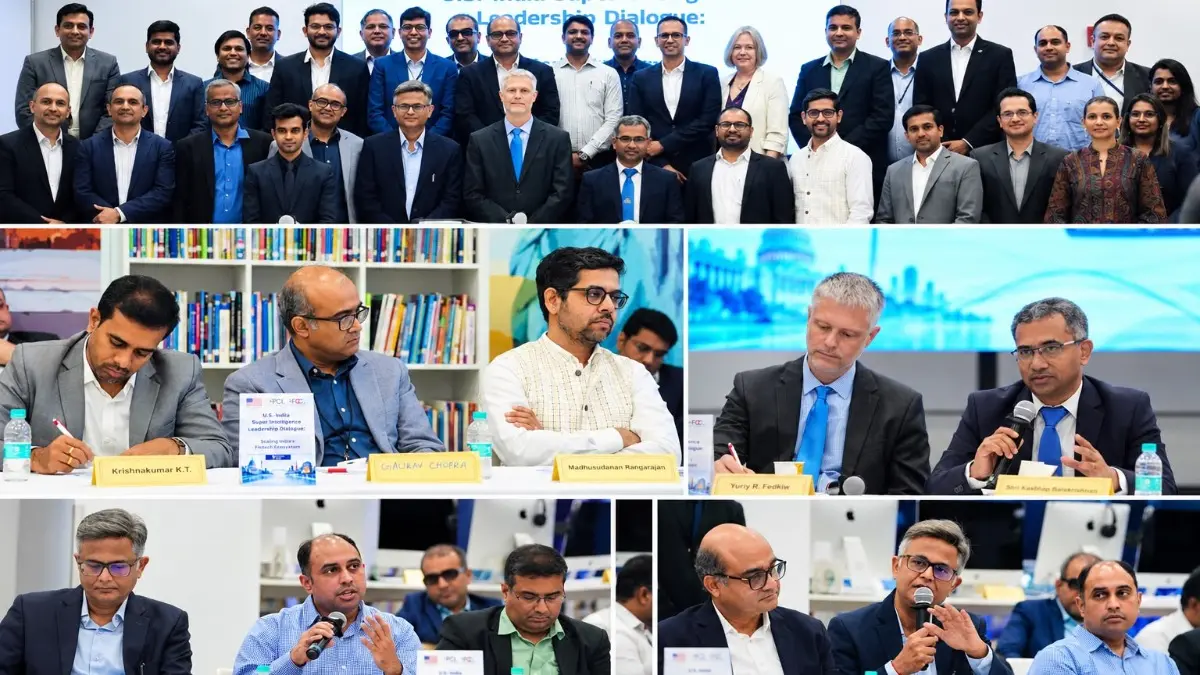
Oleevia Grameen Credits CMD presents forward-looking financial intelligence and borrower stability proposals at U.S.–India Super Intelligence Leadership Dialogue in Mumbai
Krishnakumar K T, Chairman and Managing Director of Oleevia Grameen Credits, an RBI-registered Non-Banking Financial Company (NBFC) headquartered in Kerala, participated as an invited delegate in the U.S.–India Super Intelligence Leadership Dialogue, held at the U.S. Consulate General in Mumbai.
The high-level dialogue, organised in collaboration with the Payments Council of India (PCI) and the Fintech Convergence Council (FCC), brought together selected representatives and experts from India’s banking, financial services, digital payments and fintech sectors to discuss emerging technologies, Super Intelligence and opportunities for greater financial-sector cooperation between India and the United States.
Distinguished participants included Yuriy R. Fedkiw of the U.S. Consulate General; Kashiap Balakrishnan, Chief General Manager at the Reserve Bank of India; Tapan Malhotra of Google Pay; Anand Kumar Bajaj, CEO of PayNearby; and Vivek Balgavi, Partner at PwC India, along with other senior financial and technology professionals.
Advertisement
The dialogue, themed “Scaling India’s Fintech Ecosystem,” explored the future of financial technology, Artificial Intelligence, emerging Super Intelligence capabilities, digital payments, financial inclusion, risk management and India–U.S. collaboration.

From Artificial Intelligence to Super Intelligence: Predicting the Borrower’s Future
During the dialogue, Krishnakumar K T highlighted the need to move beyond the conventional applications of Artificial Intelligence in financial services and explore the potential of Super Intelligence for predicting future financial behaviour and repayment capacity.
Advertisement
He observed that banks and financial institutions currently assess loan applicants primarily through historical and present financial indicators, including CIBIL scores, repayment records, income patterns, existing liabilities and current financial conditions.
Although Artificial Intelligence has already improved credit assessment, data analysis and risk management, he argued that the next major transformation should come through more advanced intelligence systems capable of anticipating how borrowers’ financial circumstances may evolve.
“Artificial Intelligence is already helping banks understand a borrower’s past and present. The next breakthrough should be Super Intelligence that helps us understand the borrower’s financial future. Financial institutions must be able to anticipate repayment capacity and potential financial difficulties before they become serious problems,” Krishnakumar said.
He proposed that future Super Intelligence systems should combine advanced predictive modelling, financial behaviour analysis, cash-flow forecasting and changing economic indicators to develop more comprehensive, forward-looking assessments of borrowers’ financial health.
Such systems, if developed and deployed responsibly, could help lenders identify emerging risks earlier, improve credit decisions and reduce the likelihood of loan defaults.
He emphasised that the objective should not merely be to assess whether a person qualifies for a loan today, but also to understand how financially stable that borrower is likely to remain throughout the repayment period.
Super Intelligence Must Go Beyond EMI Reminders and Loan Recovery
Krishnakumar also proposed a transformation in how banks, NBFCs and fintech companies support customers after loan disbursement.
He observed that existing post-disbursement systems largely focus on EMI reminders, overdue alerts, collection activities and recovery mechanisms.
However, he argued that the future of financial technology should go beyond these functions by using advanced intelligence systems to anticipate borrowers’ financial difficulties and recommend timely interventions.
“The purpose of Super Intelligence in financial services should not be limited to improving loan recovery. It should help us identify when a borrower is gradually moving towards financial distress and guide that person towards financial stability before a default occurs,” he stated.
He suggested developing an intelligent financial support ecosystem capable of assessing changes in borrowers’ financial circumstances through legally permissible and consent-based financial information.
Such systems could potentially provide personalised financial guidance, budgeting recommendations, cash-flow management support, repayment planning, financial counselling and suitable restructuring options when necessary.
According to him, this would represent a shift from a predominantly recovery-oriented lending model towards a more preventive, supportive and customer-centric financial ecosystem.
Preventing NPAs Through Predictive Financial Intelligence
Krishnakumar stressed that reducing non-performing assets should be a priority not only for improving the profitability of banks and NBFCs but also for strengthening the broader financial system.
He argued that financial institutions should increasingly focus on preventing avoidable defaults rather than concentrating primarily on recovering overdue loans.
“Instead of developing increasingly sophisticated systems only to recover bad loans, we should develop Super Intelligence systems that help prevent financially responsible borrowers from becoming defaulters. Protecting the financial stability of borrowers is equally important for protecting the financial stability of lending institutions,” he explained.
He noted that advanced predictive financial intelligence could be particularly valuable for small businesses, entrepreneurs, self-employed individuals and households whose repayment capacity may fluctuate due to changing income and economic conditions.
By identifying early warning signs and offering timely support, such systems could contribute to lower NPAs, improved credit quality, stronger borrower resilience and a healthier financial ecosystem.
Building a Supportive Financial Ecosystem for India
Krishnakumar called for collaboration among banks, NBFCs, fintech companies and technology providers to develop a new generation of financial systems that integrate predictive intelligence with customer support.
He emphasised that the future of lending should combine responsible credit assessment, forward-looking financial intelligence and continuous borrower guidance.
His proposal centred on four interconnected stages:
* Past: Understanding the borrower’s historical credit behaviour.
* Present: Assessing current income, liabilities and financial capacity.
* Future: Using advanced intelligence to forecast potential changes in financial stability and repayment capacity.
* Support: Providing proactive guidance and appropriate financial assistance to prevent avoidable defaults.
He suggested that this approach could help transform financial institutions from organisations focused primarily on lending and recovery into partners supporting customers’ long-term financial stability.
India–U.S. Cooperation and the Future of Financial Technology
The U.S.–India Super Intelligence Leadership Dialogue provided a platform for discussions on emerging technologies and the future of financial services.
The participation of representatives from the U.S. Consulate General, the Reserve Bank of India and leading financial technology organisations highlighted the importance of collaboration and knowledge-sharing in the evolving fintech landscape.
Krishnakumar’s proposals focused on two major transitions: from historical credit assessment to future repayment intelligence, and from reactive loan recovery to proactive borrower financial support.
He expressed the view that future advances in Super Intelligence, supported by responsible innovation and appropriate regulatory safeguards, could create opportunities to strengthen India’s financial system and promote sustainable economic growth.
About Krishnakumar K. T.
Krishnakumar K T is the Chairman and Managing Director of Oleevia Grameen Credits, an RBI-registered NBFC headquartered in Thrissur, Kerala.
With nearly two decades of professional experience in banking and financial services, he has worked extensively in banking product development, lending, financial inclusion, business strategy and financial services management.
He is also associated with entrepreneurial and social development initiatives through the Oleevia Group of Companies, focusing on expanding financial services, supporting entrepreneurship and promoting inclusive economic growth.