
The Curious Case Of Iran's Dark Fleet
Amid failed Iran-US ceasefire talks in Islamabad last weekend, the West Asian country's shadow oil networking is altering the global energy market as reports suggest that nearly 1.0 and 1.7 million bpd of Iranian oil continues to largely pass through the Strait of Hormuz.
- Republic Business
- 3 min read

;'%3e%3cpath%20d='m8,15.99c4.41,0,7.99-3.58,7.99-7.99S12.41,0,8,0,0,3.59,0,8s3.58,7.99,7.99,7.99Z'%20style='stroke:%23fff;%20stroke-miterlimit:10;%20stroke-width:.02px;'/%3e%3cpath%20d='m3.08,3.37l3.82,5.11-3.84,4.15h.87l3.37-3.64,2.72,3.64h2.94l-4.04-5.39,3.58-3.87h-.86l-3.1,3.35-2.5-3.35h-2.94Zm1.27.64h1.35l5.97,7.99h-1.35l-5.97-7.99Z'%20style='fill:%23fff;'/%3e%3c/g%3e%3c/svg%3e)


Amid failed Iran-US ceasefire talks in Islamabad last weekend, the West Asian country's shadow oil networking is altering the global energy market as reports suggest that nearly 1.0 and 1.7 million bpd of Iranian oil continues to largely pass through the Strait of Hormuz.
This comes despite the fall in tanker transit numbers as millions of barrels of crude continue to flow largely outside traditional tracking systems.
After the US-Israel conflict with Iran began on February 28, 2026, the world's oil system has undergone a transformation led by Iran's dark fleet.
Reports suggest that this parallel supply chain exists to navigate the choppy water amid rising geo-political uncertainties.
This network, built over years of sanctions pressure, now plays a central role in stabilising supply during geopolitical stress, especially in the aftermath of Russia-Ukraine conflict.
Advertisement
This has led to polarising views as one end visible, regulated network struggling under restrictions, and with US looking to block all Iranian ports.
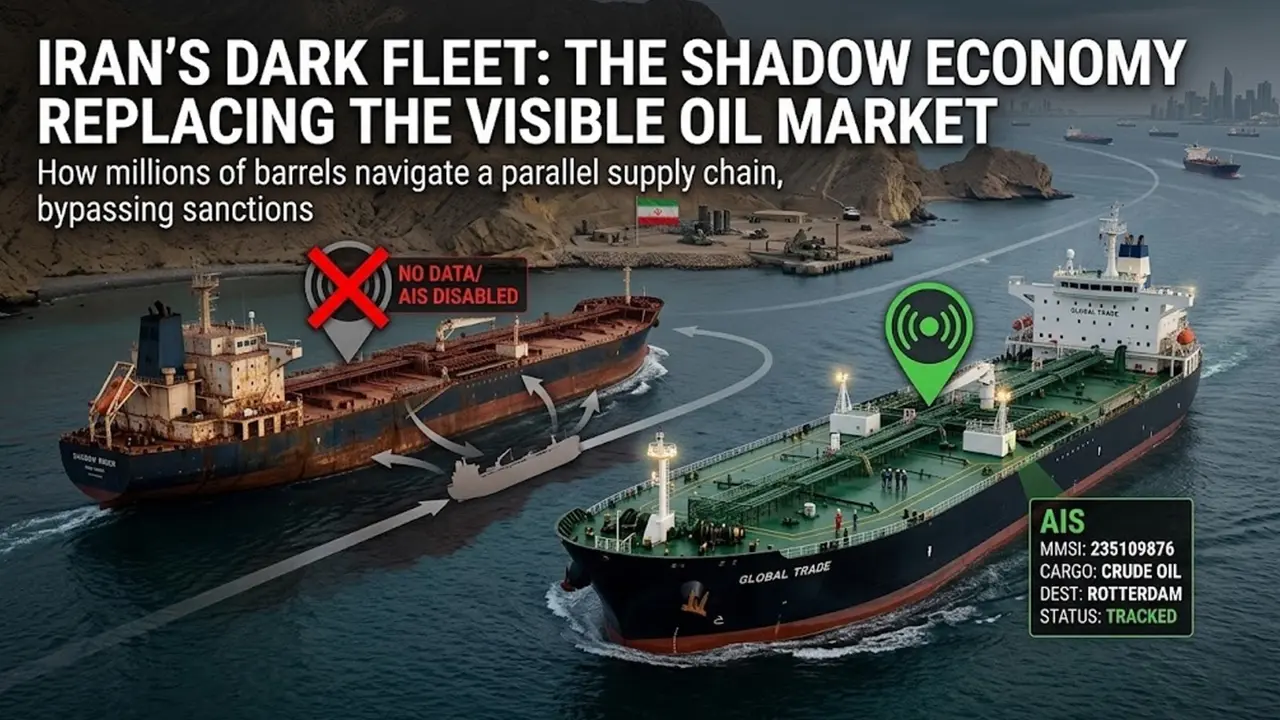
This shift has created a two-tier maritime system. On one side sits the visible, regulated network struggling under restrictions. On the other, a flexible and opaque system continues to deliver oil to global markets.
Advertisement
The contrast is visible in Iran's export linked data. Estimates suggest that the conflict-ridden country ships between 1.5 and 1.7 million barrels per day
Estimates show the country still ships between 1.5 and 1.7 million barrels per day, close to pre-conflict levels.
In March, it transited over 16 million barrels reportedly passed through the Strait of Hormuz under these shadow conditions.
The mechanics behind this system are complex but effective. Tankers often disable tracking systems, conduct ship-to-ship transfers, and operate under shell companies registered in jurisdictions with weak oversight. Oil frequently changes hands multiple times before reaching final buyers, with China remaining a key destination.
Currently, experts are of the view that dark fleet prevents a sharper supply chain crisis
Meanwhile, Kharg Island serve as primary loading points, while offshore storage and transfer zones stretch across the Gulf, Indian Ocean, and Southeast Asia.
This decentralized approach makes disruption difficult without triggering broader conflict.
Importantly, markets continue to misread the situation. Many analysts rely on visible tanker data and official export figures. However, these indicators no longer capture the full picture. As a result, supply disruptions are often overstated in the short term.
At the same time, deeper risks remain underestimated. The dark fleet system depends on aging vessels, limited insurance coverage, and fragile logistics. Any accident or escalation could remove large volumes from the market overnight.
Global policymakers face a difficult balancing act. While sanctions aim to limit Iran’s revenue, a complete halt to its exports could trigger a severe supply shock. With global energy markets already under pressure, some level of tolerance appears to persist.
The result is a bifurcated maritime system which is visible, regulated, and the other opaque, and flexible.