
The Rise of Integrated Urban Developments Across Asia
Asia's real estate market is shifting toward integrated urban ecosystems. Discover how mixed-use, sustainable developments are reshaping investment and city planning.
- Republic Business
- 4 min read

;'%3e%3cpath%20d='m8,15.99c4.41,0,7.99-3.58,7.99-7.99S12.41,0,8,0,0,3.59,0,8s3.58,7.99,7.99,7.99Z'%20style='stroke:%23fff;%20stroke-miterlimit:10;%20stroke-width:.02px;'/%3e%3cpath%20d='m3.08,3.37l3.82,5.11-3.84,4.15h.87l3.37-3.64,2.72,3.64h2.94l-4.04-5.39,3.58-3.87h-.86l-3.1,3.35-2.5-3.35h-2.94Zm1.27.64h1.35l5.97,7.99h-1.35l-5.97-7.99Z'%20style='fill:%23fff;'/%3e%3c/g%3e%3c/svg%3e)


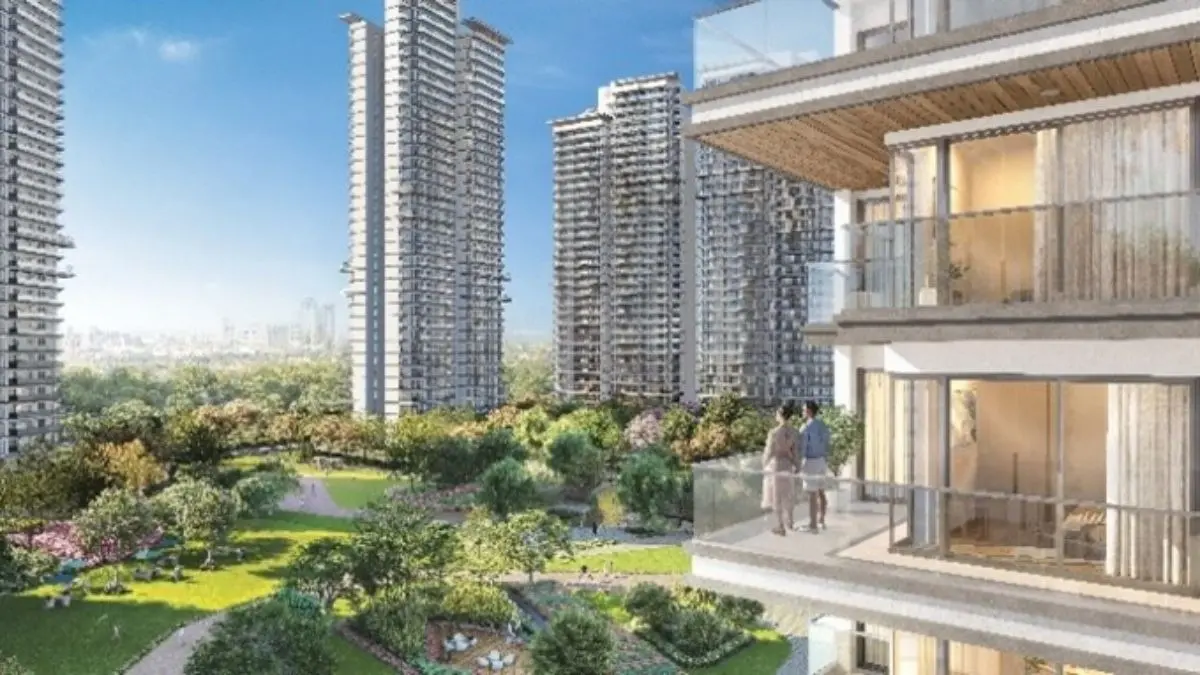
Across Asia, the definition of a successful real estate development is changing. The shift is reflected in Emerging Trends in Real Estate Asia Pacific 2026, published by PwC and the Urban Land Institute (ULI), which found that institutional investors are increasingly prioritising mixed-use developments, operational resilience, sustainability and long-term asset management over standalone residential projects. As capital becomes more selective, integrated urban districts that combine housing, transport, workplaces, public spaces and services are emerging as one of the region's strongest investment themes.
The trend is increasingly reflected in where capital is flowing. According to CBRE's 2026 Asia Pacific Investor Intentions Survey, 57% of investors plan to increase real estate acquisitions in Asia Pacific in 2026, while net buying intentions rose to 17%, up from 13% a year earlier and the highest level in four years.
CBRE also expects commercial real estate investment volumes across Asia Pacific to increase by 5-10% in 2026, following a 22% rebound to US$157 billion in 2025, supported by improving financing conditions and renewed institutional demand for high-quality income-generating assets.
Urbanisation is reinforcing this shift. According to the United Nations, nearly 55% of Asia's population is expected to live in urban areas by 2050, while the World Bank estimates that the region continues to account for the largest share of global urban population growth.
Advertisement
Across the region, a new generation of mega developments reflects this evolution. In Thailand, One Bangkok, a US$3.9 billion mixed-use district, integrates offices, residences, hotels, retail, cultural venues and public spaces while targeting LEED for Neighborhood Development and WELL certifications. Indonesia's Nusantara, the country's future capital, is being planned as a smart forest city where mobility, renewable energy, water management and digital infrastructure are designed simultaneously rather than added over time.
Although these projects differ in purpose and scale, they share a common principle: long-term urban value increasingly depends on how effectively housing, mobility, healthcare, education, workplaces and public infrastructure function together.
Advertisement
Vietnam is beginning to reflect this broader regional transition.
In 2009, Vinhomes Ba Trieu occupied 27,000 square meters in central Hanoi. At the time, it was seen as a high-quality residential project in a market that was urbanizing quickly.
Less than two decades later, Vinhomes, Vietnam’s largest real estate developer, is working on a very different scale. Its projects are no longer measured in thousands of square meters, but in thousands of hectares. Vinhomes Green Paradise in Can Gio spans 2,870 hectares, while Vinhomes Global Gate Ha Long covers 6,206 hectares.
Rather than focusing solely on housing, Vinhomes has expanded its developments to incorporate retail, healthcare, education, hospitality, electric mobility and charging infrastructure through the wider Vingroup ecosystem.
Operations have also become an increasingly important differentiator. As of the end of 2025, Vinhomes managed 32 urban townships across eight provinces and cities, serving more than 650,000 residents. The company says its operations are supported by internationally recognised standards including ISO 9001, ISO 14001, ISO 45001 and SA8000, reflecting a growing emphasis on long-term asset management rather than one-off project delivery.
Sustainability is becoming another defining factor. Across Asia, investors increasingly expect developers to demonstrate measurable environmental performance through internationally recognised frameworks rather than broad ESG commitments alone. Vinhomes Green Paradise reflects this direction through its ESG++ approach, which places greater emphasis on regeneration and resilience alongside environmental, social and governance objectives. The project also targets BREEAM Communities certification and integrates ecological restoration, water management, green mobility and Transit-Oriented Development (TOD) principles into its master planning.
Whether this integrated approach ultimately delivers stronger long-term returns will depend on execution. However, one trend is becoming increasingly clear across Asia. As cities compete for investment, talent and climate resilience, the next generation of successful developers is likely to be measured less by the number of homes they build than by their ability to create complete urban ecosystems that remain economically vibrant, environmentally sustainable and operationally resilient for decades.